


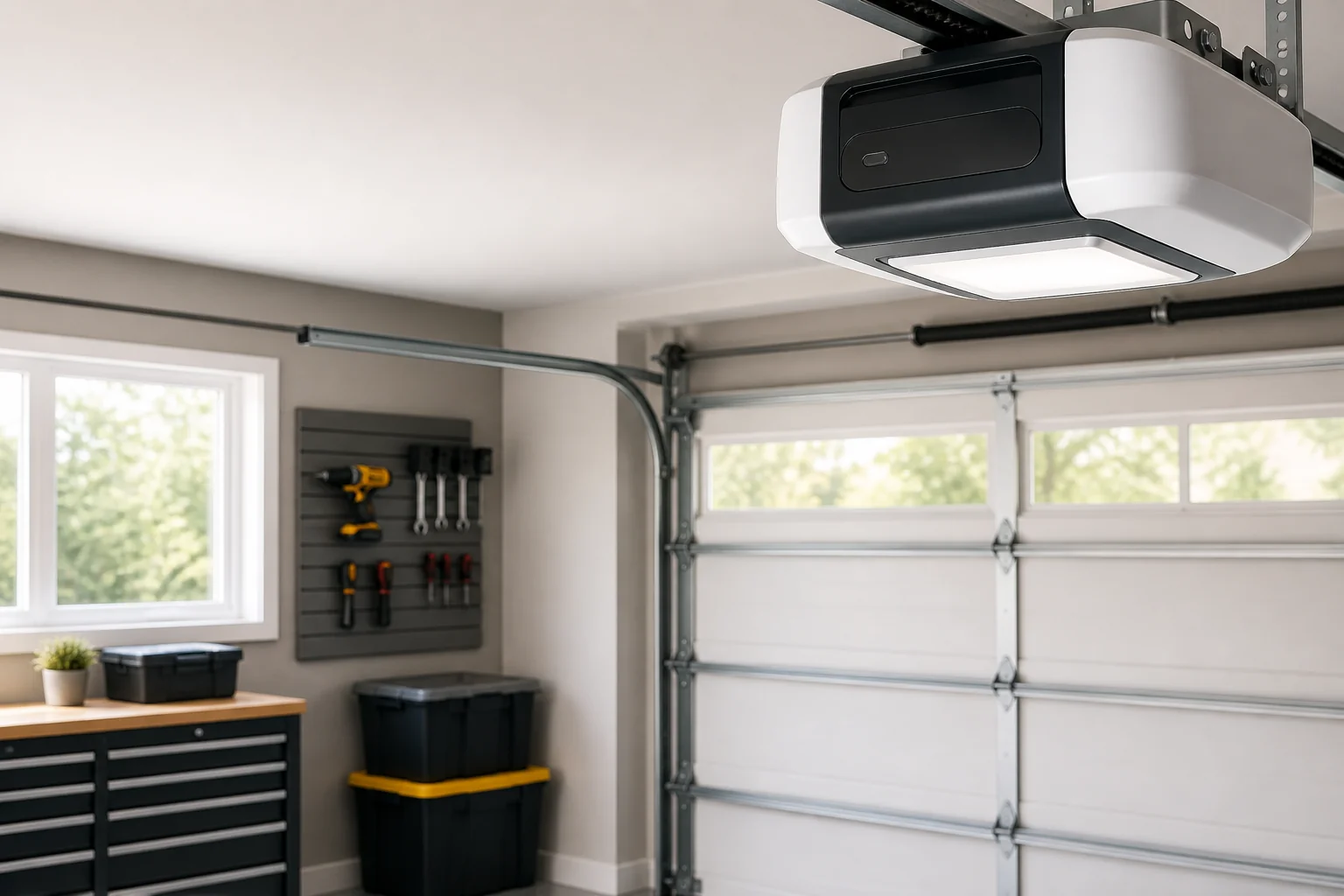
Have you ever looked at garage door openers and wondered whether more horsepower automatically means better performance?
If so, you are not alone. When comparing a 1/2 hp vs 1 1/4 hp garage door opener, it is easy to assume that the 1 1/4 hp model must be the better option. After all, four times the horsepower sounds like a major upgrade.
However, garage door openers are not simply about horsepower. Door weight, balance, size, construction, track condition, travel distance, and the opener’s drive system all affect performance.
In this guide, we will break down the differences between these two power levels in simple terms. You will learn when a 1/2 hp opener makes sense, when a 1 1/4 hp model may be useful, and why choosing the right horsepower is only one part of buying a reliable garage door opener.
1/2 hp vs 1 1/4 hp garage door opener: What’s the Difference?
The most obvious difference is motor power.
A 1/2 hp garage door opener is a common choice for many residential garages. It can provide enough lifting power for a properly balanced single or double garage door, depending on the door’s design and the opener manufacturer’s specifications.
A 1 1/4 hp garage door opener, on the other hand, offers substantially more motor capacity. It may be designed for heavier doors or demanding applications, although the exact performance depends on the specific model.
The important point is this: horsepower should not be considered in isolation.
For example, a lightweight, well-balanced garage door may work perfectly with a 1/2 hp opener. Installing a much more powerful motor will not necessarily make that door open four times faster.
Quick comparison
| Feature | 1/2 hp opener | 1 1/4 hp opener |
| Typical residential use | Very common | More specialized |
| Power | Moderate | High |
| Lightweight doors | Excellent | Usually more than needed |
| Heavier doors | Depends on specifications | Potentially better suited |
| Energy use | Often lower | May be higher |
| Cost | Often more affordable | Usually more expensive |
| Best advantage | Balanced everyday performance | Greater motor capacity |
These are general comparisons. Always check the manufacturer’s specifications for your particular door and opener.
What Does 1/2 HP Mean for a Garage Door?
Horsepower, or hp, is a measurement associated with the motor’s ability to perform work. However, the horsepower number on a garage door opener does not tell the entire story.
A modern opener’s actual lifting performance also depends on its drive mechanism, gear system, motor design, rail system, and door balance.
A 1/2 hp opener can therefore be a practical choice for many homeowners.
When 1/2 hp may be enough
A 1/2 hp model may be suitable when you have:
- A standard residential garage door
- A properly balanced door
- A relatively lightweight steel door
- A typical single-car garage
- A conventional sectional door
- A garage without unusually demanding conditions
For example, imagine a homeowner with a standard sectional steel garage door that moves smoothly by hand and has properly adjusted springs.
There may be little reason to install an extremely powerful opener simply because the horsepower number is larger.
The door itself should determine the requirement, not marketing alone.
When Might a 1 1/4 HP Garage Door Opener Make Sense?
A 1 1/4 hp model provides considerably more motor capacity. That can become relevant when dealing with heavier or larger garage doors, but the manufacturer’s specifications remain the deciding factor.
Potential applications may include:
- Heavy custom garage doors
- Large doors
- Doors with substantial insulation or construction materials
- High-use installations
- Situations where the manufacturer specifically recommends a higher-capacity opener
However, more horsepower does not fix mechanical problems.
If a garage door is dragging, binding, or has worn rollers, installing a larger motor may simply place more stress on the system.
A powerful motor cannot fix a poorly balanced door
This is one of the most important points in the 1/2 hp vs 1 1/4 hp garage door opener debate.
A properly functioning garage door should be reasonably balanced by its spring system. If the door is unusually difficult to move manually, the problem may involve springs, rollers, hinges, tracks, or other hardware.
In that situation, upgrading the motor should not be the first solution.
Fix the mechanical problem before increasing motor power.
1/2 hp vs 1 1/4 hp: Which Is Better for Heavy Doors?
For a heavy garage door, a higher-capacity opener may appear to be the obvious choice.
However, there is an important distinction between motor horsepower and the opener’s rated door specifications.
Manufacturers design specific opener systems for particular door sizes, weights, and configurations. Therefore, you should look at the complete specification sheet rather than choosing solely by hp.
For example, two openers with different horsepower ratings may have different rail systems, lifting mechanisms, safety features, and drive systems.
That means the higher horsepower model is not automatically the better overall product.
Consider door balance first
A professional installer can check whether your door is balanced correctly.
A balanced door should not feel extremely heavy when operated manually with the opener disconnected. If it does, the spring system or other hardware may need attention.
This is particularly important with older garage doors.
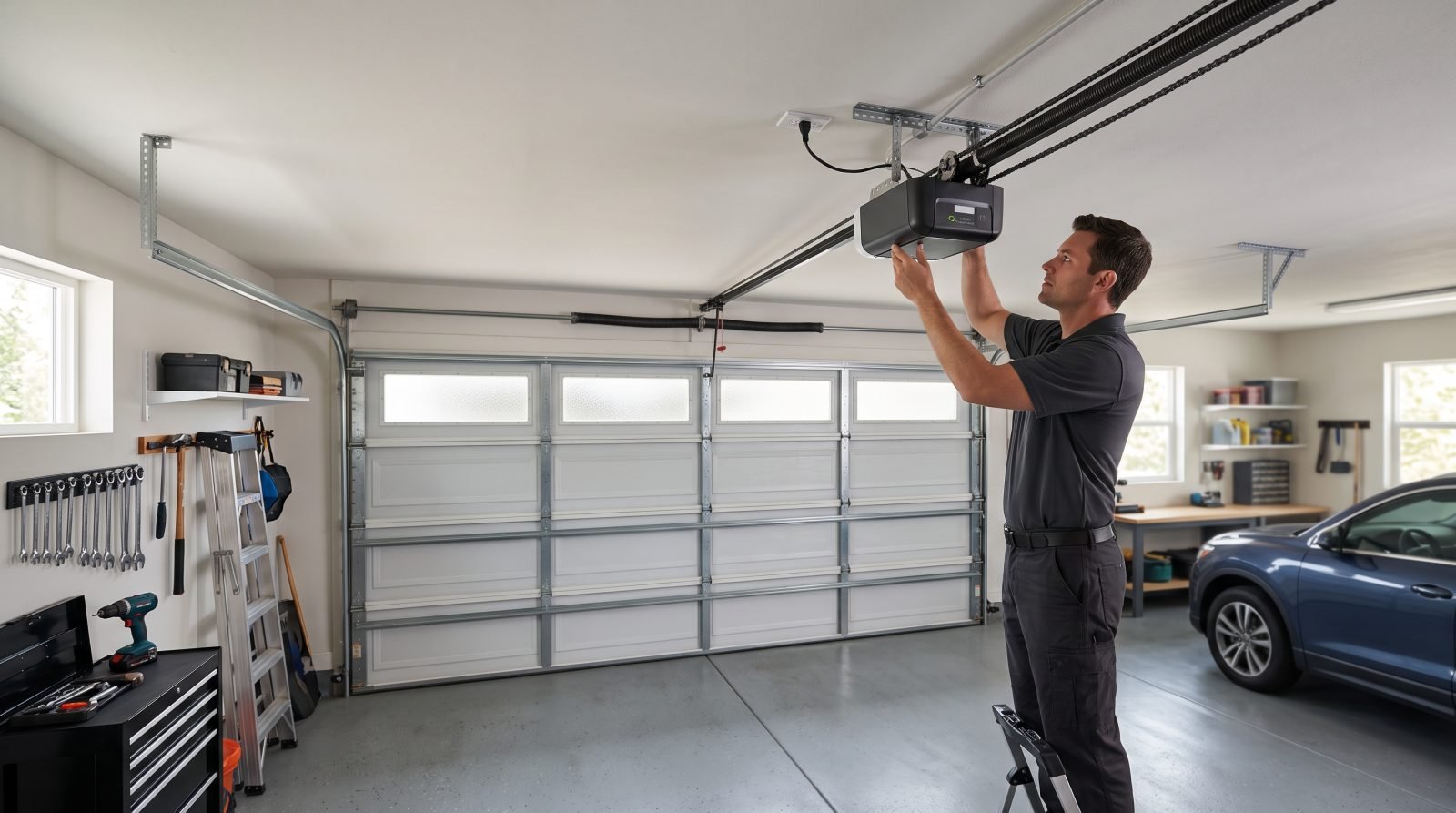
Does More Horsepower Make a Garage Door Opener Faster?
Not necessarily.
It is tempting to think that a 1 1/4 hp opener will open your garage door dramatically faster than a 1/2 hp unit. In reality, opening speed depends on the opener’s design and specifications.
Many modern garage door openers use controlled opening and closing speeds for safety and smooth operation.
Therefore, motor horsepower and opening speed are different things.
If speed is important to you, check the manufacturer’s listed opening speed rather than assuming horsepower tells you how quickly the door will move.
Noise Matters: It’s Not Just About Horsepower
If your garage is below a bedroom or next to a living space, noise may be more important than raw motor power.
This is where the drive system becomes important.
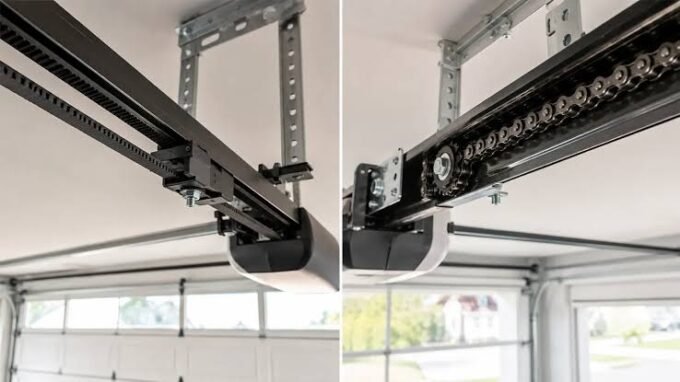
A belt-driven opener generally uses a reinforced belt rather than a metal chain. Chain-driven systems can be extremely durable, but their operating sound may differ depending on the design and installation.
If you are researching belt vs chain garage door opener, look beyond the basic idea that one is always better.
Consider:
- Noise level
- Maintenance
- Durability
- Cost
- Installation quality
- Garage location
- Frequency of use
For a bedroom located directly above the garage, quieter operation may be a higher priority than having a very powerful motor.
Wall-Mount vs Ceiling-Mount Garage Door Openers
Another important consideration is installation style.
When comparing wall mount garage door opener vs ceiling mount, the physical layout of your garage matters.
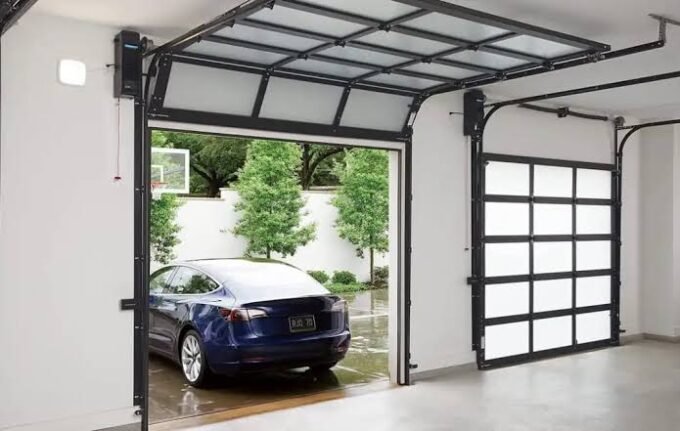
A traditional ceiling-mounted opener hangs from the ceiling and operates the door through a rail system. This is a familiar design and works well in many homes.
A wall-mounted opener, sometimes called a jackshaft opener, is installed beside the garage door rather than in the center of the ceiling.
Why choose a wall-mounted design?
Wall-mounted models can be attractive when you want:
- More ceiling space
- Better overhead storage access
- A cleaner ceiling appearance
- Reduced overhead equipment
- Compatibility with certain garage layouts
However, compatibility depends on the garage door system and manufacturer’s requirements.
Therefore, don’t select the mounting style based only on appearance.
What About Low-Clearance Garages?
Some garages have limited space above the garage door.
In these situations, homeowners often search for a low clearance garage door opener because traditional installation may be difficult.
Before purchasing an opener, measure the available headroom and inspect the existing track configuration.
A professional installer can determine whether the garage needs a specialized low-clearance setup or a different mounting solution.
This is another reason why horsepower alone should not determine your purchase.
Features That Matter More Than Horsepower
Modern garage door openers can include features that significantly improve everyday convenience.
When comparing models, consider these features alongside motor power:
Battery backup
A battery backup can allow the garage door to operate during a power outage, depending on the model and local requirements.
This can be especially useful if the garage is your primary entrance to the home.
Smartphone control
Wi-Fi-connected openers can allow homeowners to monitor or operate the garage door using a smartphone.
Some systems can also send alerts when the door opens or closes.
Automatic lighting
Bright integrated lighting can improve visibility when entering the garage at night.
LED lighting is common in newer systems and can be useful for garages without strong overhead lighting.
Safety sensors
Modern automatic garage door systems use safety mechanisms designed to help prevent the door from closing on people or objects.
These systems should be installed and tested correctly.
Manual release
An emergency release mechanism is another important feature. Homeowners should understand how to operate it safely in case of power failure or system problems.
How to Choose the Right Garage Door Opener
Instead of starting with horsepower, use this simple process.
1. Identify your garage door
Determine whether you have a:
- Single garage door
- Double garage door
- Sectional door
- Custom door
- Heavy insulated door
2. Check the manufacturer’s recommendations
Look at the recommended opener capacity for your particular door.
This is more useful than simply comparing horsepower numbers.
3. Check the door’s condition
Inspect the rollers, hinges, tracks, springs, and cables.
If the door makes unusual sounds or feels difficult to move manually, have the mechanical system inspected.
4. Decide how much noise you can tolerate
For garages attached to bedrooms or living rooms, quieter operation may be especially valuable.
5. Consider your ceiling space
If overhead storage is important, investigate whether a wall-mounted design is compatible with your door.
6. Think about long-term use
A garage door that opens several times every day may have different requirements from one used only occasionally.
In short, choose the system around your garage rather than choosing the garage around the motor.
Is a 1 1/4 HP Opener Overkill?
For some installations, it may be.
If your garage door is relatively light and properly balanced, a very high-powered opener may provide little practical advantage.
On the other hand, if the manufacturer specifies a higher-capacity model for a particular door, choosing a smaller unit simply to save money may not be appropriate.
The best garage door opener is therefore not necessarily the one with the largest horsepower number.
It is the one that matches the door, installation, usage, and features you actually need.
Common Buying Mistakes to Avoid
Many homeowners focus too heavily on horsepower.
Here are several mistakes worth avoiding:
- Choosing the largest motor automatically
More power does not guarantee better performance. - Ignoring door balance
A poorly balanced door can create problems regardless of motor size. - Forgetting noise
A powerful opener may not be the best choice if your garage is directly below a bedroom. - Ignoring headroom
Limited space can affect which opener design is practical. - Looking only at price
A cheaper opener may lack useful features such as battery backup or smart connectivity. - Forgetting professional installation
Incorrect installation can affect safety, noise, performance, and longevity.
My Practical Take on 1/2 hp vs 1 1/4 hp Garage Door Openers
From a practical homeowner perspective, I would start with the garage door rather than the motor.
If the door is standard, well balanced, and relatively light, a 1/2 hp opener may provide everything you need.
If the door is unusually large or heavy and the manufacturer recommends a higher-capacity system, a 1 1/4 hp model may make more sense.
Moreover, I would pay close attention to drive type, noise, warranty, safety features, smart controls, installation requirements, and manufacturer support.
These factors can have a greater impact on daily satisfaction than the horsepower number printed on the box.
Example: Two different homeowners
Consider Homeowner A.
They have a standard insulated sectional garage door, use the garage twice a day, and have bedrooms above the garage. For them, smooth and quiet operation may be more important than maximum motor power.
Now consider Homeowner B.
They have a large, heavy custom garage door and use it frequently. Their opener’s recommended capacity may be significantly different.
These two homeowners should not necessarily buy the same type of opener.
Final Verdict: Focus on the Whole System
The 1/2 hp vs 1 1/4 hp garage door opener comparison is useful, but horsepower should never be the only factor in your decision.
A 1/2 hp opener can be an excellent match for many standard residential doors. A higher-capacity opener may be appropriate for certain heavier or more demanding applications.
However, the right choice depends on the door’s weight and balance, opener specifications, drive system, installation space, noise requirements, and desired features.
Before buying, check the manufacturer’s specifications and inspect the condition of your garage door.
In short, don’t buy the biggest motor just because it has the biggest number. Choose an opener that is properly matched to your garage, and you will have a better chance of getting reliable, smooth, and convenient performance for years to come.
Frequently Asked Questions
Is 1/2 hp enough for a garage door opener?
For many standard residential garage doors, a 1/2 hp opener can be sufficient when the door is properly balanced and the opener is rated for that door.
Is a 1 1/4 hp garage door opener better?
Not automatically. A higher-capacity motor can be useful for certain heavy or demanding doors, but the manufacturer’s specifications and the complete opener design matter more than horsepower alone.
Does higher horsepower make a garage door opener faster?
No. Opening speed depends on the opener’s design and specifications, not simply its horsepower rating.
Should I choose a belt or chain garage door opener?
Consider your priorities. Belt systems are often attractive for homeowners who value quieter operation, while chain systems can offer durability and may be suitable for many residential applications.
What should I check before buying a garage door opener?
Check the door size, weight, balance, headroom, usage frequency, noise requirements, drive system, safety features, warranty, and manufacturer’s compatibility recommendations.







Leave a comment