


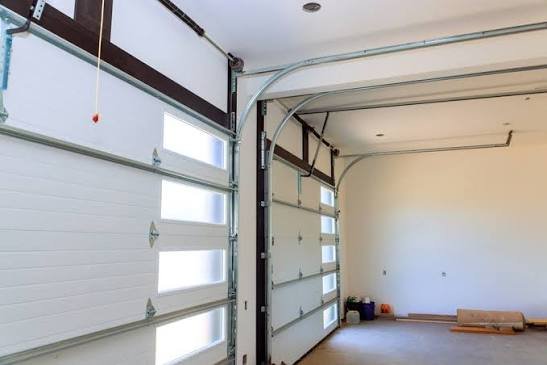
Have you ever looked at your garage ceiling and wondered, “Where am I supposed to fit a garage door opener?” If your garage has a low ceiling, exposed beams, storage racks, or limited overhead space, choosing the right system can be more complicated than it first appears.
A low clearance garage door opener is designed to work in spaces where a traditional overhead opener may not fit comfortably. However, simply choosing a compact model is not always enough. The garage door’s track layout, ceiling height, available side space, door weight, and lift mechanism all matter.
In this guide, we’ll look at the most important factors to consider. You’ll also learn how wall-mounted and ceiling-mounted systems differ, how drive systems affect noise, and which features are worth paying attention to.
Why Choose a Low Clearance Garage Door Opener?
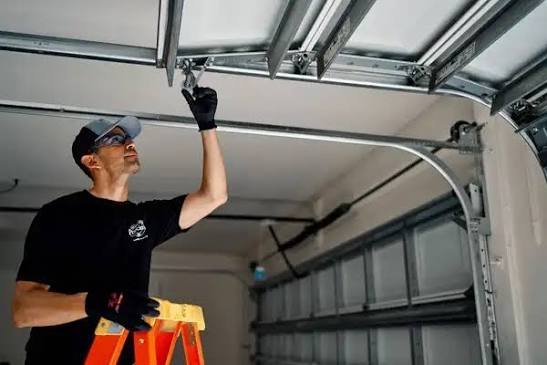
A standard garage door opener is normally installed near the center of the garage ceiling. While this setup works well in many homes, it can create problems when overhead space is limited.
For example, you may have:
- A garage ceiling lower than expected
- Overhead storage shelves
- Large ceiling lights
- Structural beams
- A tall vehicle requiring additional clearance
- An unusual garage door track configuration
In these situations, a low clearance garage door opener can make better use of the available space.
Moreover, the opener should not interfere with the movement of the garage door. A system that technically fits but creates unnecessary clearance problems isn’t a practical solution.
Measure Before You Buy
Before shopping, measure the following:
- Ceiling height
- Garage door height
- Available headroom above the door
- Distance between the door and ceiling
- Side clearance
- Distance from the garage door to the back wall
These measurements can help determine whether a traditional trolley opener or a wall-mounted system is more suitable.
How a Low Clearance Garage Door Opener Works
A garage door opener uses an electric motor and a drive mechanism to move the door along its tracks.
Traditional systems use a rail positioned above the garage door. A trolley travels along this rail and pulls or pushes the door.
However, wall-mounted or jackshaft-style openers work differently.
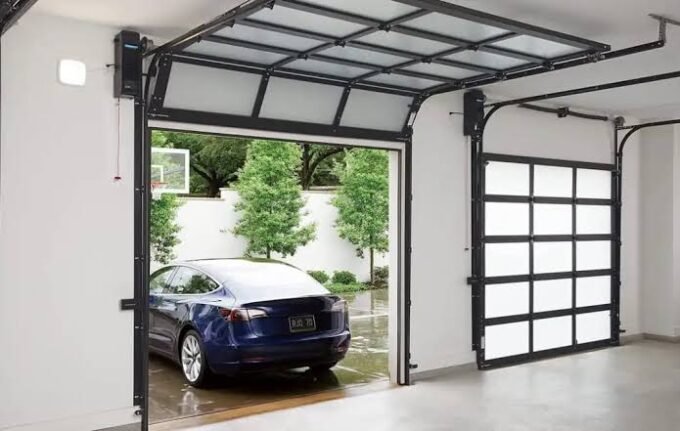
Instead of hanging from the ceiling, the motor is mounted beside the garage door. It operates the torsion bar directly, which can free up valuable overhead space.
This is one reason side-mounted garage door openers have become increasingly attractive for garages with unusual layouts.
When a Wall-Mounted Opener Makes Sense
A wall-mounted system may be worth considering when:
- Overhead clearance is extremely limited
- You want to keep the ceiling open
- Storage is installed above the garage door
- You have high or custom garage doors
- You prefer a cleaner ceiling
- Side clearance is available
However, wall-mounted systems are not automatically compatible with every garage door. The door must use the appropriate spring and torsion-bar configuration.
When comparing wall mount garage door opener vs ceiling mount, focus on your garage’s actual layout rather than choosing based only on appearance.
Low Clearance Garage Door Opener Types to Consider
There isn’t just one type of opener for low-clearance garages. Your best option depends on how much room you have and how your door operates.
1. Wall-Mounted Jackshaft Openers
Wall-mounted openers are often the first option homeowners consider when ceiling space is limited.
The motor sits beside the garage door instead of hanging from the ceiling. This leaves the center of the ceiling open.
Advantages include:
- Excellent overhead clearance
- Clean installation
- Good for garages with storage
- Direct operation of the torsion bar
- Often quieter than older chain-driven systems
The main limitation is that you need sufficient side space and a compatible door system.
2. Compact Ceiling-Mounted Openers
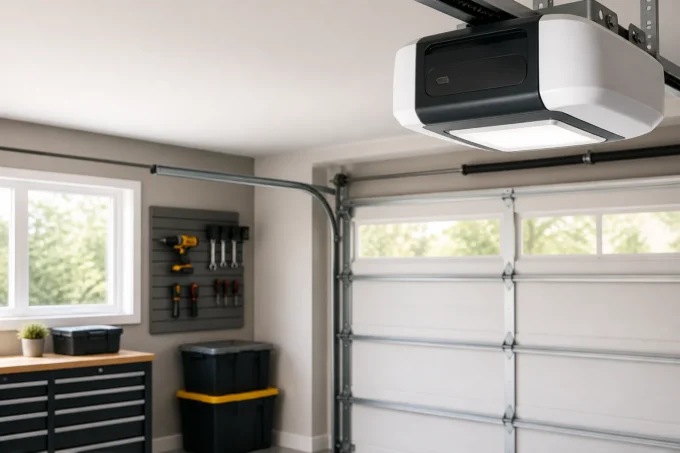
If your garage has some overhead space but not enough for a bulky traditional opener, a compact ceiling-mounted unit may work.
These models still use an overhead rail but may have a smaller motor housing or more space-efficient design.
Before purchasing, check the manufacturer’s required clearance rather than relying on the product’s dimensions alone.
3. Low-Headroom Garage Door Systems
Sometimes the problem isn’t the opener itself. Instead, the garage door has very little space between its top edge and the ceiling.
A low-headroom garage door conversion can change how the door travels and may create more room for an opener.
This is a job where professional installation can be especially useful because spring and cable arrangements can be under significant tension.
Choosing the Right Drive System
Drive type affects noise, maintenance, cost, and overall operation.
The three common choices are:
- Chain drive
- Belt drive
- Screw drive
Belt Drive
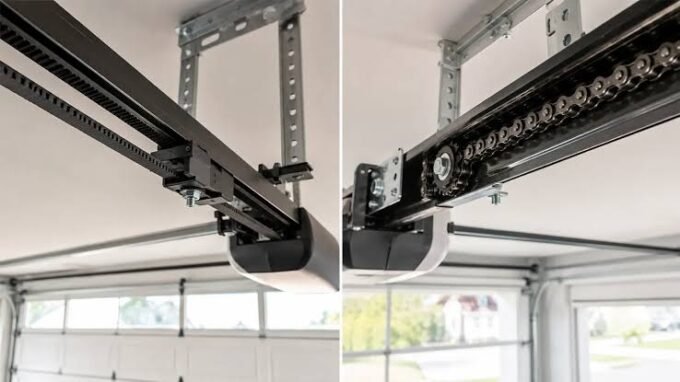
Belt-drive openers use a reinforced belt rather than a metal chain.
They are generally known for smooth and quiet operation. This makes them appealing if there is a bedroom or living area close to the garage.
Chain Drive
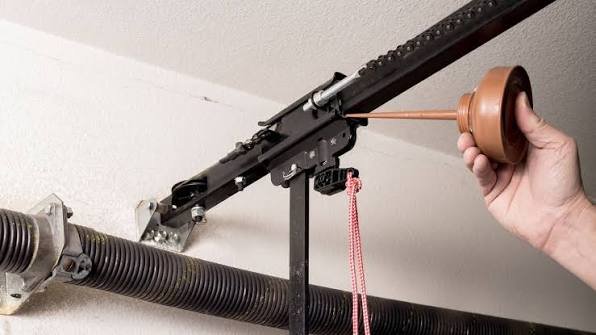
Chain-drive openers use a metal chain to move the trolley.
They are commonly chosen for their durability and ability to handle demanding garage doors. However, they can produce more vibration and mechanical noise.
If you’re researching belt vs chain garage door opener, don’t look only at price. Think about where your garage is located and how often the door operates.
Screw Drive
Screw-drive systems use a threaded steel rod to move the trolley.
They have fewer moving components than some other designs, although suitability depends on the specific opener and garage environment.
How Much Horsepower Do You Need?
Horsepower is another area where buyers often become confused.
You may see ratings such as 1/2 HP, 3/4 HP, or higher. However, a larger horsepower rating doesn’t automatically mean a better opener.
The correct rating depends on the door size, weight, balance, construction, and opener design.
For example, a properly balanced residential garage door may not need an extremely powerful motor.
When researching 1/2 hp vs 1 1/4 hp garage door opener, consider the manufacturer’s recommended door specifications rather than simply selecting the largest motor.
What About Heavy Garage Doors?
If you have an unusually large or heavy door, you may need a heavy duty garage door opener designed for that application.
However, an opener should never be used to compensate for a poorly balanced garage door.
A properly functioning garage door should move relatively smoothly before the opener is installed.
Important Features in a Low Clearance Garage Door Opener
Modern openers offer considerably more than basic open-and-close operation.
When comparing models, look for features that genuinely improve convenience and safety.
Battery Backup
A battery backup can allow the door to operate during a power outage.
This can be particularly useful if your garage is the main entrance to your home.
Smartphone Control
Wi-Fi-enabled openers can allow homeowners to monitor and operate their garage door through a smartphone app.
Depending on the model, you may also receive notifications when the door opens or closes.
This can be useful when you’re away from home and aren’t sure whether the garage door was left open.
Automatic Reversal
Modern garage door openers use safety sensors to detect objects in the door’s path.
If the system detects an obstruction, it should reverse according to the manufacturer’s safety requirements.
Never disable or bypass these safety features.
LED Lighting
Integrated LED lighting is another useful feature.
A bright built-in light can improve visibility when entering the garage at night, especially when the garage has limited natural light.
Noise Matters More Than You Might Expect
A garage door opener can operate several times every day.
Consequently, even a moderate amount of mechanical noise can become annoying, particularly when the garage shares a wall or ceiling with living areas.
For example, a bedroom directly above a garage may make noise a much bigger concern than a detached garage at the end of a driveway.
In these situations, a belt-drive or appropriately designed wall-mounted opener may be worth considering.
However, installation quality matters too. Loose hardware, worn rollers, poor lubrication, and an unbalanced door can create significant noise regardless of the opener type.
What Makes the Best Garage Door Opener for Low Ceilings?
There is no single opener that is perfect for every low-ceiling garage.
Instead, look for a model that matches your exact clearance and door configuration.
A good buying checklist includes:
- Correct headroom requirements
- Compatible door type
- Suitable weight capacity
- Appropriate drive system
- Adequate side clearance
- Battery backup
- Safety sensors
- Smartphone connectivity, if desired
- Warranty coverage
- Availability of replacement parts
The best garage door opener for one garage may not be the right choice for another.
That is especially true when the garage has limited clearance.
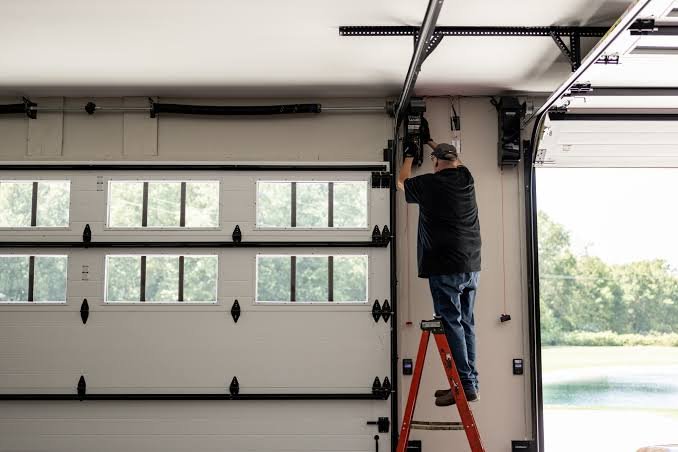
Installation: Can You Do It Yourself?
Some homeowners install garage door openers themselves, especially when the manufacturer provides detailed instructions.
However, low-clearance installations can be more complicated than standard installations.
The biggest concern is often not the opener itself but the garage door’s spring and lifting system.
When Professional Installation Is Better
Consider professional installation when:
- The door uses a torsion spring system
- The headroom is unusually low
- The tracks need modification
- The garage door is heavy
- The opener requires special mounting
- You’re unsure about the door’s balance
A professional can also identify problems that might not be obvious to a homeowner.
For example, if the door is difficult to lift manually, installing a stronger motor isn’t necessarily the correct solution.
The underlying mechanical problem should be addressed first.
Common Mistakes When Buying a Low Clearance Garage Door Opener
A few mistakes appear again and again.
Mistake 1: Measuring Only the Ceiling
Ceiling height alone doesn’t tell you whether an opener will fit.
You also need to measure the space directly above the garage door and check the track configuration.
Mistake 2: Choosing the Highest Horsepower
More power isn’t always better.
An oversized opener can be unnecessary if the garage door is properly balanced and within the manufacturer’s specifications.
Mistake 3: Ignoring Side Clearance
Wall-mounted openers need adequate space beside the garage door.
Always check the installation diagram before purchasing.
Mistake 4: Focusing Only on Price
A cheaper opener may look attractive initially, but features such as battery backup, warranty coverage, quiet operation, and smart connectivity can affect long-term value.
Mistake 5: Forgetting the Door Itself
Your garage door is part of the system.
If rollers are worn or springs are damaged, even a high-quality opener won’t make the entire setup operate correctly.
How to Compare Models More Effectively
Instead of asking, “Which opener has the most features?” ask a more useful question:
“Which opener fits my garage and solves my specific clearance problem?”
Create a simple comparison table before buying.
| Feature | What to Check |
| Clearance | Required headroom |
| Mounting | Ceiling or wall |
| Drive | Belt, chain, or screw |
| Power | Door size and weight |
| Noise | Location of garage |
| Connectivity | Wi-Fi/app support |
| Backup | Battery availability |
| Safety | Sensors and reversing system |
| Warranty | Coverage period |
| Installation | DIY or professional |
This approach makes the decision much easier.
Personal Insight: Why Measurements Matter Most
One of the most useful lessons when choosing garage equipment is that real-world measurements beat product marketing.
A product may be described as compact, quiet, powerful, or space-saving. Those claims can be useful, but they don’t tell you whether it will fit your particular garage.
For example, imagine a homeowner with an eight-foot garage door, low headroom, overhead storage, and only a few inches of space above the door.
A conventional trolley opener might create a clearance problem.
A wall-mounted system could potentially solve that issue—but only if the door and torsion-bar setup are compatible.
That’s why measuring first is so important.
How to Get Better Results From Your Opener
After installation, basic maintenance can make a noticeable difference.
Keep the door tracks clean and inspect rollers regularly. Also, follow the manufacturer’s recommendations for lubrication.
Avoid spraying random lubricants onto every component. Some parts require specific products or should not be lubricated at all.
You should also test the safety reversal system periodically according to the manufacturer’s instructions.
If the door suddenly becomes noisy, slow, uneven, or difficult to operate, don’t simply increase the opener’s force.
Instead, have the garage door system inspected.
Smart Garage Technology Is Changing Opener Features
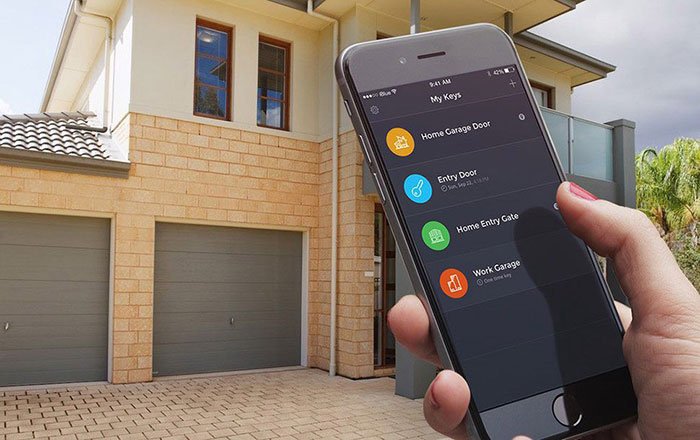
Garage door openers are becoming more connected.
Smartphone apps, activity notifications, voice-assistant compatibility, and remote monitoring are increasingly common.
For homeowners who travel frequently, these features can provide useful information about garage activity.
However, smart features should come after the basic requirements.
A Wi-Fi-connected opener that doesn’t fit your garage isn’t a good purchase.
Fit, safety, reliability, and compatibility should come first.
Final Thoughts
Choosing a low clearance garage door opener is less about finding the most powerful or expensive model and more about finding the right match for your garage.
Start with measurements. Then consider mounting style, drive system, door weight, noise level, safety features, and available side space.
For a garage with extremely limited overhead room, a wall-mounted jackshaft opener may be worth investigating. For garages with moderate clearance limitations, a compact ceiling-mounted system may be enough.
Moreover, don’t overlook the garage door itself. A balanced, well-maintained door allows the opener to work more efficiently and can reduce unnecessary strain.
In short, measure first, compare carefully, and choose an opener designed for your specific garage configuration. That approach can save you money, installation headaches, and future maintenance problems.
FAQs
What is a low clearance garage door opener?
A low clearance garage door opener is designed for garages where overhead space is limited. Depending on the setup, it may be a compact ceiling-mounted model or a wall-mounted jackshaft opener.
Can a garage door opener work with a low ceiling?
Yes. However, the correct solution depends on the amount of headroom, track design, door type, and available side space. A wall-mounted system may work particularly well when overhead space is restricted.
Is a wall-mounted opener better for low ceilings?
A wall-mounted opener can be useful because the motor sits beside the garage door rather than taking up central ceiling space. However, the garage door must be compatible with this type of installation.
Is a belt-drive opener quieter than a chain-drive model?
Generally, belt-drive systems are designed for smoother and quieter operation than traditional chain-drive systems. However, rollers, tracks, springs, and installation quality also affect overall garage-door noise.
How much horsepower does a low-clearance opener need?
There is no universal horsepower requirement. The correct rating depends on the garage door’s size, weight, balance, and the manufacturer’s specifications. Higher horsepower is not automatically better.







1 Comment