


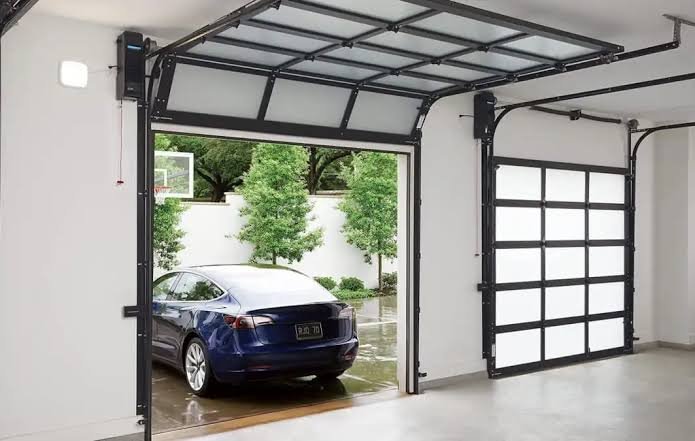
Have you ever pressed your garage remote and waited longer than expected for the door to open? Or perhaps your opener makes so much noise that everyone in the house knows when someone has arrived home.
A garage door opener may seem like a small home upgrade, but it affects security, convenience, noise, energy use, and daily comfort. Modern models have also become more connected, with features such as smartphone control, automatic lighting, battery backup, and built-in safety sensors.
The challenge is knowing which features actually matter.
In this guide to the Best Garage Door Openers, we’ll look at the major opener types, drive systems, safety features, smart technology, installation options, and factors that can affect long-term performance. We’ll also explain how to choose an opener based on your garage door, home layout, budget, and personal priorities.
What Makes the Best Garage Door Openers Stand Out?
Not every garage door opener is designed for the same situation.
A basic chain-drive model may be perfectly suitable for a detached garage. However, a homeowner with a bedroom directly above the garage may care much more about vibration and noise.
In my experience researching home equipment, the most useful way to compare garage door openers is to look beyond the advertised horsepower. Motor strength matters, but it is only one part of the equation.
A good opener should provide a balance of:
- Reliable operation
- Strong safety features
- Appropriate lifting capacity
- Low noise and vibration
- Smart-home compatibility
- Battery backup when needed
- Suitable installation options
- Easy maintenance
- Long-term reliability
Moreover, the opener should match the actual garage door rather than simply being selected because it has the largest motor.
Best Garage Door Openers: Start With the Drive System
The drive system is one of the biggest differences between garage door openers.
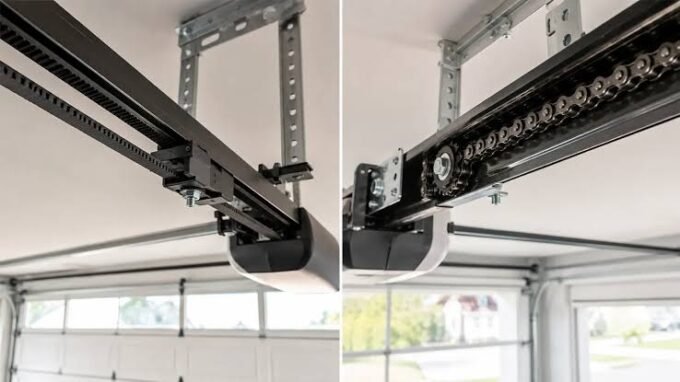
The three common options are chain drive, belt drive, and screw drive. Each has advantages depending on the garage and homeowner.
Chain-Drive Garage Door Openers
Chain-drive systems use a metal chain to move the trolley along the rail.
They have been popular for years because they are generally durable and can handle many residential garage doors effectively.
Advantages include:
- Strong performance
- Proven design
- Often lower purchase cost
- Good option for heavier doors
- Widely available
The main drawback is noise. A metal chain can produce noticeable vibration, particularly if the garage is attached to the house.
Therefore, chain drive can make sense for a detached garage where noise is less important.
Belt-Drive Garage Door Openers
Belt-drive openers use a reinforced belt instead of a metal chain.
The result is generally smoother and quieter operation. This makes belt drive especially attractive for garages located below bedrooms or living areas.
If you are comparing a belt vs chain garage door opener, think about the location of the garage as much as the price.
For example, paying more for a belt-drive system may be worthwhile when reducing vibration is a major priority.
Screw-Drive Garage Door Openers
Screw-drive openers use a threaded steel rod to move the trolley.
They have fewer moving parts than some traditional systems, although their suitability depends on the specific door and opener design.
Temperature and maintenance requirements can also vary between models.
In short, don’t choose a drive type simply because it sounds more powerful. Consider noise, climate, door weight, maintenance, and installation conditions.
Choosing the Right Motor Power
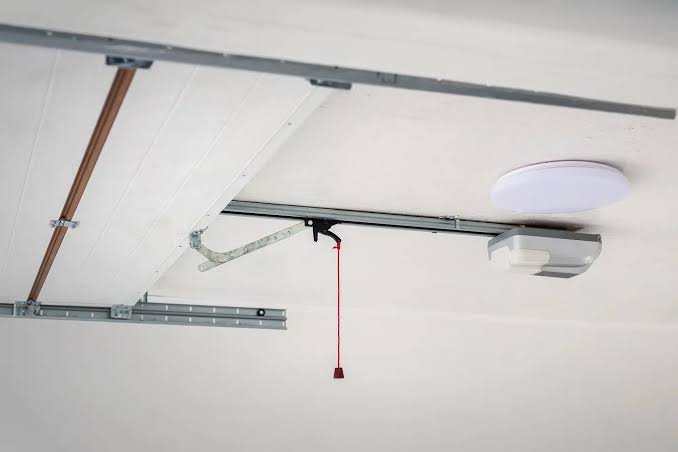
Horsepower is one of the most visible specifications when shopping for a garage door opener.
However, bigger is not automatically better.
Most residential garage doors can be operated by appropriately sized openers, while heavier doors may require more lifting capability.
Before buying, consider:
- The weight of the garage door
- The door material
- The door size
- How frequently the door is used
- The manufacturer’s recommended capacity
For example, a lightweight single garage door doesn’t necessarily need the same motor capacity as a large, insulated double garage door.
A heavy duty garage door opener can be useful for demanding applications, but it should still be correctly matched to the door.
Most importantly, don’t use horsepower as a substitute for proper garage door maintenance. A door with damaged springs, worn rollers, or excessive friction can put unnecessary stress on the opener.
Best Garage Door Openers for Quiet Homes
Noise is one of the most overlooked factors when buying an opener.
If the garage sits directly underneath a bedroom, home office, or living room, every vibration can travel through the structure.
That’s why belt-drive systems are frequently considered when quiet operation is important.
When searching for the quietest garage door opener, don’t look only at motor noise.
The overall sound level can also be influenced by:
- Garage door rollers
- Hinges
- Springs
- Tracks
- Door balance
- Mounting hardware
- Ceiling structure
This is an important practical insight: a quiet opener cannot completely compensate for a noisy garage door.
If your current door squeaks, rattles, or shakes heavily, servicing the door may produce a noticeable improvement even before you replace the opener.
Wall-Mount vs Ceiling-Mount Garage Door Openers
Installation style can dramatically change how a garage feels.
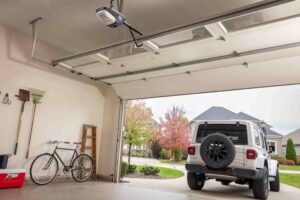
Traditional openers are mounted overhead, with a rail extending from the motor toward the garage door.
Wall-mounted models, sometimes called jackshaft openers, are installed beside the garage door rather than in the center of the ceiling.
When researching wall mount garage door opener vs ceiling mount, consider three things: available ceiling space, storage needs, and noise.
Ceiling-Mount Advantages
Traditional ceiling-mounted systems are widely used and can be suitable for many residential garages.
They can offer:
- Familiar installation
- Broad model availability
- Different drive options
- Straightforward replacement in many garages
Wall-Mount Advantages
Wall-mounted systems can free up ceiling space.
This can be particularly helpful if you use the ceiling for:
- Storage racks
- Hanging equipment
- Lighting
- Bikes
- Overhead storage systems
They can also eliminate the long overhead rail found in traditional systems.
However, wall-mounted units may have different installation requirements and aren’t automatically suitable for every garage door.
Always verify compatibility with the manufacturer before purchasing.
Smart Garage Door Openers Are Changing Daily Convenience
One of the biggest changes in the garage door market has been the addition of connected technology.
Modern smart openers can allow homeowners to monitor or control the garage door using a smartphone app.
Depending on the model, features may include:
- Remote opening and closing
- Door status notifications
- Guest access
- Activity history
- Integration with smart-home systems
- Voice assistant compatibility
- Security alerts
Imagine leaving home and suddenly wondering, Did I close the garage door?
Instead of driving back, a compatible smart system may let you check the door status remotely.
However, smart features shouldn’t distract from the basics. A connected opener still needs reliable mechanical operation and proper safety equipment.
Security Features to Look For
A garage door is often one of the largest moving entrances to a home.
Consequently, security deserves serious attention.
Look for features such as rolling-code technology, secure remote controls, smartphone notifications, and automatic lighting.
Some systems can also provide temporary access to family members, service workers, or guests.
However, smart security depends partly on good account practices. Use a strong password, enable available two-factor authentication, and keep the app and connected devices updated.
Safety Is Different From Security
These two terms are sometimes confused.
Security is about preventing unauthorized access.
Safety is about reducing the risk of injury when the door operates.
The U.S. Consumer Product Safety Commission says automatic residential garage door operators are subject to a mandatory federal safety standard under 16 CFR Part 1211.
Modern systems also use safety reversing mechanisms and external entrapment protection.
That distinction matters when comparing the Best Garage Door Openers. A product can have excellent smart-home features but still require proper installation, testing, and maintenance.
Battery Backup Can Matter More Than You Think
A power outage can make a normal garage door opener inconvenient.
If your garage is the primary entrance to your home, losing electrical power can become more than a minor annoyance.
A battery backup allows certain openers to continue operating during an outage, although the number of cycles depends on the system and battery.
This feature may be especially useful for:
- Homes with attached garages
- Areas affected by storms
- Households that rely heavily on garage access
- People who need reliable emergency access
However, battery backup should be viewed as a convenience and resilience feature—not a replacement for other security measures.
How to Choose the Best Garage Door Opener for Your Home
Rather than choosing the first highly rated product you see, use a simple decision process.
Step 1: Check Your Garage Door
Identify whether you have:
- A single or double door
- A sectional or another door style
- A lightweight or heavy door
- An insulated or non-insulated door
Then check the opener manufacturer’s compatibility requirements.
Step 2: Consider Your Garage Location
Is the garage:
- Attached to the house?
- Directly below a bedroom?
- Detached?
- Used several times a day?
If it is attached and living spaces are nearby, noise and vibration may become important.
Step 3: Decide Whether You Need Smart Features
Smart control is useful if you want remote monitoring or integration with your existing home technology.
But if you rarely use smartphone controls, paying extra for advanced connectivity may not be necessary.
Step 4: Think About Power Outages
If the garage is your main entrance, battery backup may be worth considering.
Step 5: Compare Long-Term Value
Don’t compare only the purchase price.
Consider:
- Installation
- Maintenance
- Replacement parts
- Warranty
- Battery replacement
- Connectivity features
- Expected usage
A slightly more expensive opener may provide better value if it better matches your home and usage.
Top Features Worth Paying Attention To
When comparing top rated garage door openers, focus on practical specifications rather than marketing language.
Here’s a useful checklist:
| Feature | Why It Matters |
| Belt drive | Usually smoother and quieter |
| Chain drive | Durable and often cost-effective |
| Battery backup | Helps during power outages |
| Smartphone control | Remote monitoring and control |
| Safety sensors | Help detect objects in the door path |
| Rolling-code remote | Improves access security |
| LED lighting | Better visibility inside the garage |
| Soft start/stop | Can provide smoother operation |
| Wall-mounted design | Frees ceiling space |
| Strong warranty | Can reduce long-term risk |
Not every household needs every feature.
For instance, a homeowner with a detached garage may prioritize durability and price over smartphone integration.
Meanwhile, someone with bedrooms above the garage may put quiet operation near the top of the list.
Don’t Ignore Garage Door Maintenance
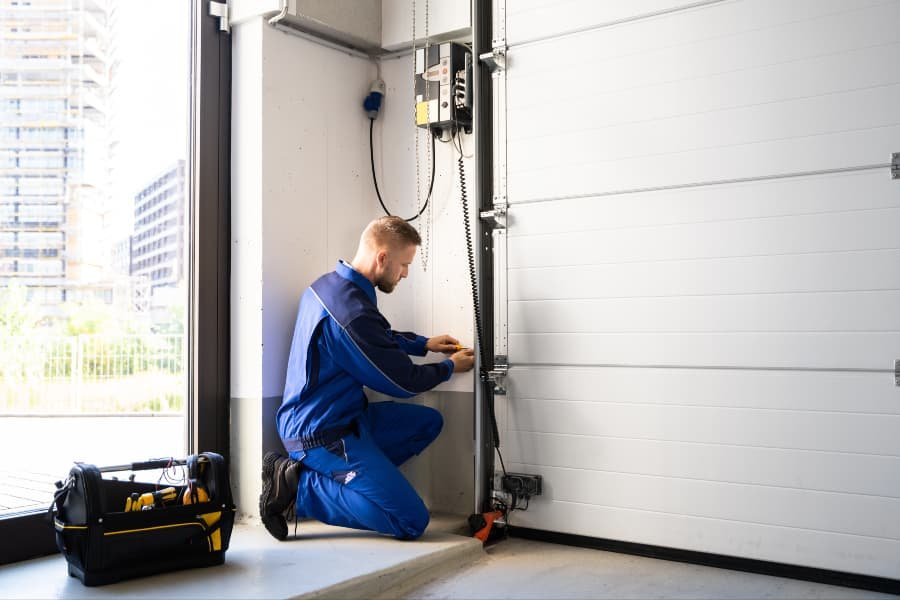
A new opener won’t solve every garage door problem.
The door itself contains several mechanical components that need attention.
Look at:
- Springs
- Rollers
- Hinges
- Tracks
- Cables
- Brackets
- Weather seals
If the door is difficult to lift manually or appears unbalanced, the problem may not be the opener.
Never attempt to repair or adjust high-tension torsion springs yourself unless you have the required training. These components can store substantial mechanical energy.
Instead, contact a qualified garage door professional when spring or cable problems are suspected.
Garage Door Opener Safety: A Simple Monthly Check
Safety testing should be part of routine maintenance.
The CPSC recommends checking the reversing function of automatic garage door openers according to the manufacturer’s instructions.
A practical maintenance routine includes:
- Check that the photoelectric safety sensors are aligned.
- Make sure the door opens and closes smoothly.
- Listen for unusual grinding or excessive vibration.
- Inspect the remote controls and wall control.
- Test the safety reversal system according to the owner’s manual.
- Contact a professional if the opener behaves unexpectedly.
CPSC guidance also emphasizes that garage doors should be kept in view while operating and that children should be taught about garage door hazards.
These checks take little time but can reveal problems before they become expensive repairs.
Common Garage Door Opener Buying Mistakes
Even experienced homeowners can focus on the wrong specifications.
Choosing Only by Horsepower
A bigger motor doesn’t automatically mean a better opener.
Compatibility, drive design, installation quality, and door condition are equally important.
Ignoring Noise
If your bedroom is above the garage, noise can become a daily frustration.
Buying Without Checking Compatibility
Not every opener works with every door configuration.
Always check manufacturer specifications before purchasing.
Forgetting Battery Backup
A power outage can make a garage opener unusable if there is no backup system or alternative access method.
Prioritizing Smart Features Over Safety
A smartphone app is convenient, but proper safety sensors and reliable mechanical operation come first.
When Should You Replace a Garage Door Opener?
Age alone doesn’t always determine whether replacement is necessary.
However, replacement deserves consideration when an opener:
- Repeatedly fails
- Lacks modern safety features
- Makes unusually loud noises
- Opens or closes inconsistently
- Has obsolete remote technology
- Requires frequent repairs
- Is no longer compatible with your needs
Older non-reversing openers are a particular safety concern. CPSC guidance recommends replacing automatic openers that do not have appropriate reversing protection.
If you’re unsure about an older system, have it inspected by a qualified professional rather than guessing.
Personal Insight: The Best Opener Is the Right Opener
One of the easiest mistakes when shopping for home equipment is searching for the product with the longest feature list.
But more features don’t necessarily create a better experience.
A homeowner with a detached garage might be perfectly happy with a dependable chain-drive opener.
Another homeowner may prefer a quiet belt-drive unit with smartphone control because the garage is located directly below a bedroom.
Someone with limited ceiling space might choose a wall-mounted design.
The best garage door opener is therefore the one that fits the door, the home, and the way you actually use the garage.
That is a more useful approach than simply following a generic “best” list.
Conclusion
Choosing among the Best Garage Door Openers doesn’t have to be complicated.
Start with the basics: understand your garage door, consider the drive system, evaluate noise levels, check compatibility, and decide which smart features you genuinely need.
For attached garages, quiet operation can make a major difference. For homes in areas with frequent power interruptions, battery backup may be valuable. For people who want remote access, smart technology can add another layer of convenience.
Most importantly, don’t overlook safety. Proper installation, functioning safety sensors, regular testing, and routine garage door maintenance are just as important as the opener itself.
In short, choose based on your home’s actual needs—not simply the biggest motor or the longest feature list. A properly matched, correctly installed opener can make one of the most frequently used parts of your home quieter, safer, and much easier to manage.
FAQs About the Best Garage Door Openers
1. What is the best type of garage door opener?
The right type depends on your garage. Belt-drive models are often attractive when quiet operation matters, while chain-drive models can be a practical choice when durability and cost are priorities.
2. Are belt-drive garage door openers quieter?
Generally, yes. Belt-drive systems typically produce less mechanical noise and vibration than traditional chain-drive systems, making them useful for garages attached to living spaces.
3. Is a wall-mounted garage door opener better?
A wall-mounted opener can be useful when ceiling space is limited or when you want to keep overhead storage clear. However, compatibility with the garage door should be checked before installation.
4. Do garage door openers need battery backup?
Not necessarily, but battery backup can be valuable when the garage is a primary entrance or when power outages are common. It allows compatible systems to operate during an electrical outage.
5. How often should a garage door opener be tested?
Safety features should be checked regularly according to the manufacturer’s instructions. CPSC guidance specifically recommends testing the reversing function periodically and addressing any failure before continuing normal use.







2 Comments