


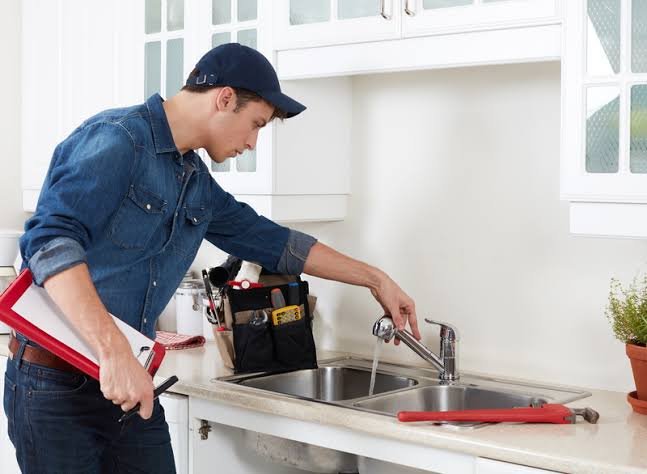
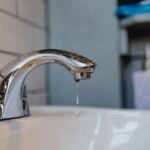
Have you ever heard a faucet dripping in the middle of the night and wondered whether those tiny drops really affect your water bill? It is easy to ignore a slow leak, especially when the sink still works normally. However, a dripping faucet can waste water every day and may increase your monthly expenses.
The actual cost depends on how quickly the water escapes, your local water and wastewater rates, and whether your utility charges a fixed fee or a usage-based price. A slow drip may cost only a small amount, while a steady stream can waste much more.
In this guide, you will learn how much a dripping faucet costs per month, how to calculate the expense, what causes faucet leaks, and when repairing the problem can save money.
How Much Does a Dripping Faucet Cost Per Month?
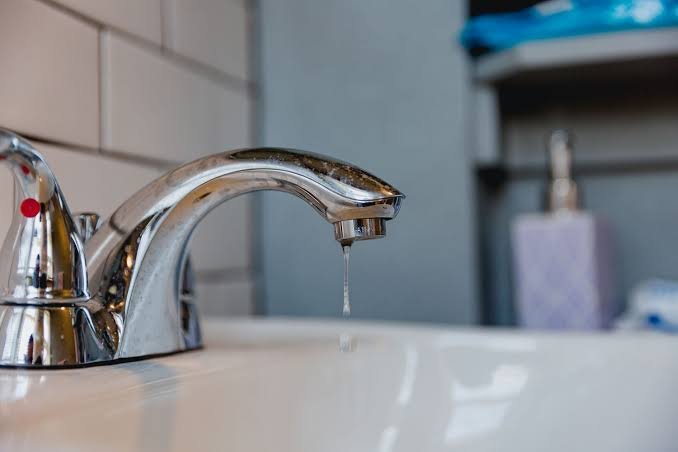
The monthly cost of a dripping faucet depends mainly on its flow rate. A faucet that releases one small drop every few seconds wastes much less water than one that produces a constant stream.
To understand the cost, start by estimating how much water escapes over time.
Example: A slow dripping faucet
Suppose a faucet releases approximately one drop per second. If each drop contains around 0.25 milliliters of water, the estimated waste would be:
- Per minute: 15 milliliters
- Per hour: 0.9 liters
- Per day: 21.6 liters
- Per 30-day month: 648 liters
These figures are estimates because actual drop sizes vary. Some faucets release larger drops, and others drip at a much faster rate.
Now imagine that your combined water and wastewater charge is €4 per cubic meter. Since 1 cubic meter equals 1,000 liters, wasting 648 liters would cost approximately €2.59 per month.
That may not sound like much. However, a faster leak could waste several times more water, and the expense can continue month after month until the faucet is repaired.
Monthly costs at different water rates
Using the estimated monthly waste of 648 liters, here is how the cost changes at different usage rates.
| Combined water and wastewater rate | Estimated monthly cost |
| €2 per cubic meter | €1.30 |
| €4 per cubic meter | €2.59 |
| €6 per cubic meter | €3.89 |
| €8 per cubic meter | €5.18 |
These examples assume the same leak rate and exclude fixed service charges. Your actual bill will depend on your utility’s pricing structure.
What Factors Affect the Cost of a Dripping Faucet?
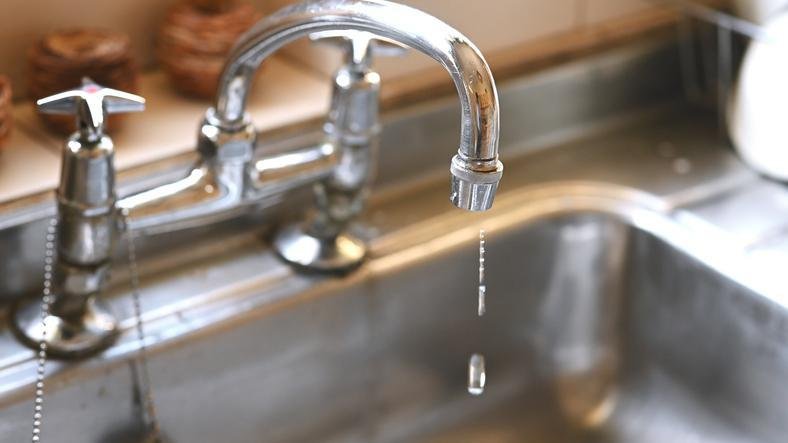
Two households can have the same type of faucet leak but pay different amounts. Several factors determine how much money is lost.
1. The speed of the leak
The flow rate is one of the most important factors. A faucet that releases a drop every second uses less water than one that produces a continuous trickle.
Even a small increase in the flow rate can significantly increase water waste over a full month.
For example, a leak that fills a one-liter container in one hour wastes 24 liters per day, or about 720 liters over 30 days.
By comparison, a faucet that fills the same container in ten minutes wastes approximately 144 liters per day if that rate continues.
This simple test can help you understand whether the leak is a slow drip or a more serious flow. Do not leave the leak unattended simply to measure it; a short test is usually enough to estimate the rate.
2. Your local water price
Water rates vary by country, city, and utility provider. Some bills include wastewater treatment charges based on water consumption, which can increase the total cost of a leak.
In other areas, the bill may include a fixed monthly fee regardless of how much water you use.
Therefore, check your latest bill to find the variable price per cubic meter rather than relying on a national average.
3. The type of leak
A slow drip from the spout is different from a leaking supply pipe beneath the sink. A damaged connection may release water much faster, even if the leak is difficult to see.
Water leaking inside a cabinet can also damage wood, flooring, or nearby materials. In these cases, repair costs may be much higher than the water bill alone.
4. How long you ignore the problem
A small leak may seem inexpensive over one month. However, the total cost increases when it continues for several months or years.
For example, a leak costing €3 per month adds up to €36 over a year. If the same leak becomes faster, the cost will rise accordingly.
Fixing the issue early can prevent unnecessary water waste and reduce the risk of property damage.
How to Calculate Your Dripping Faucet Water Bill
You do not need special plumbing equipment to estimate the cost of a leaking faucet. A simple calculation using the leak rate and your water price can give you a useful estimate.
Step 1: Estimate the amount of water wasted
If you know the approximate number of liters lost per day, multiply that number by 30 to estimate monthly waste.
Formula:
Monthly water waste = liters wasted per day × 30
For example, a leak that wastes 20 liters daily uses approximately 600 liters in a 30-day month.
Step 2: Convert liters to cubic meters
Water bills commonly use cubic meters as the measurement unit.
To convert liters to cubic meters, divide the number of liters by 1,000.
For example:
600 liters ÷ 1,000 = 0.6 cubic meters
Step 3: Multiply by your water rate
Multiply the monthly volume in cubic meters by your combined variable water and wastewater rate.
If your rate is €5 per cubic meter:
0.6 × €5 = €3 per month
This estimate assumes that the stated rate applies to all the water wasted. It does not include fixed charges or any other fees.
Step 4: Consider the yearly cost
Multiply the monthly cost by 12 to estimate the annual expense.
In this example:
€3 × 12 = €36 per year
This is a useful way to compare the ongoing cost of a leak with the price of repairing it.
How Much Water Can a Leaking Faucet Waste?
The amount of water wasted depends on the leak’s speed, the size of each drop, and how long the problem continues.
A few occasional drops may have little effect on your bill. However, a faucet that drips continuously can waste hundreds or thousands of liters over time.
A practical example
Imagine three faucets with different leak rates:
| Estimated water waste per day | Water wasted in 30 days |
| 5 liters | 150 liters |
| 20 liters | 600 liters |
| 100 liters | 3,000 liters |
These are illustrative examples, not fixed categories for every faucet.
The comparison shows why it is useful to measure the leak rather than assuming that every dripping faucet wastes the same amount of water.
Moreover, if several faucets leak at the same time, the total water waste can increase significantly.
What Causes a Dripping Faucet?
If you are wondering what causes a dripping faucet, the answer often involves a worn internal component. Fortunately, many common faucet leaks can be repaired without replacing the entire fixture.
Worn washers and seals
Rubber washers and seals help prevent water from escaping when the faucet is closed. Over time, these components may become hard, cracked, or worn.
When the seal no longer fits properly, water can continue to drip from the spout.
Damaged cartridges
Many modern faucets use a cartridge to control water flow and temperature. If the cartridge becomes damaged, water may pass through even when the handle is turned off.
Replacing the correct cartridge often solves the problem, provided that another component is not responsible.
Mineral buildup
Hard water can leave mineral deposits inside faucet components. These deposits may affect moving parts and prevent the faucet from closing completely.
Cleaning suitable components may help, but badly worn or corroded parts usually need replacement.
Loose connections
Sometimes the water does not drip from the spout at all. Instead, it escapes around the handle, faucet base, or supply line beneath the sink.
These leaks require a different repair, so identify the source before buying replacement parts.
How to Stop a Dripping Faucet and Save Money
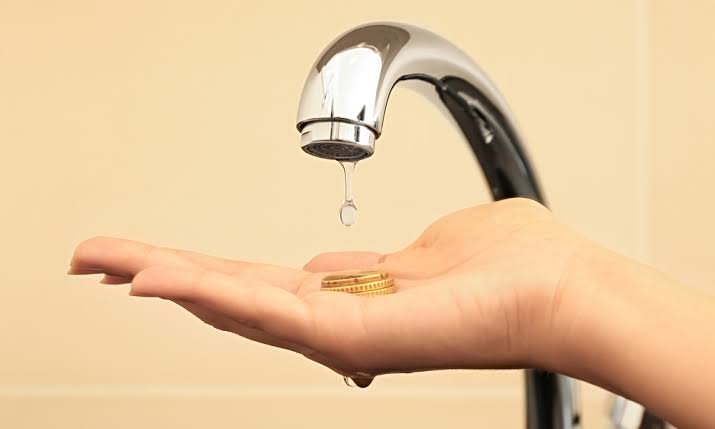
Once you identify the cause, repairing the leak can help reduce unnecessary water use.
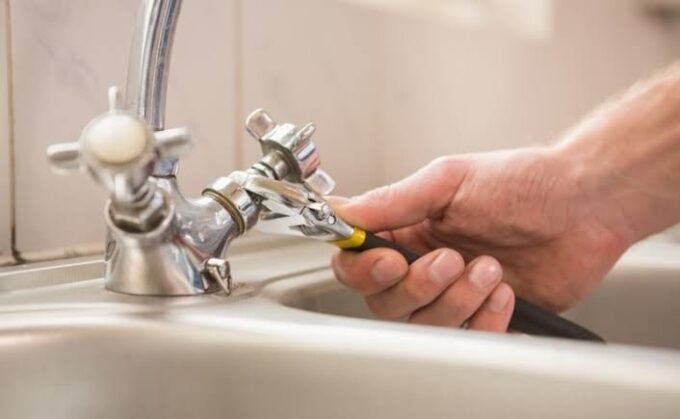
If you are researching how to stop a dripping faucet, start with a careful inspection rather than tightening every visible screw.
Step 1: Turn off the water supply
Locate the hot and cold shutoff valves beneath the sink. Turn the appropriate valve clockwise without forcing it.
If a valve is stuck, damaged, or leaking, stop and contact a plumber. If there are no working local shutoff valves, the main water supply may need to be turned off.
Step 2: Identify the faucet type
Determine whether your faucet has one handle or two. Also check the brand and model if possible.
Different faucets use different cartridges, washers, and seals. Choosing a compatible replacement part helps prevent further problems.
Step 3: Inspect the internal components
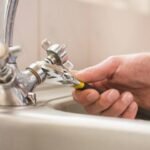
After shutting off the water and releasing pressure, remove the handle according to the manufacturer’s instructions.
Look for cracked washers, damaged cartridges, corrosion, or mineral deposits. Take a photo before removing parts so you can remember how they fit together.
Step 4: Replace the damaged component
Install the correct replacement part and reassemble the faucet carefully. Avoid excessive force, which can damage fittings or threads.
Restore the water supply slowly, then check the spout, handle, faucet base, and connections beneath the sink.
Step 5: Confirm that the leak has stopped
Turn the faucet on and off several times. Watch for new moisture and listen for any continuing dripping.
If the leak remains, another component may be damaged or the replacement part may not fit correctly. A plumber can diagnose the issue if the source is unclear.
How to Fix a Dripping Faucet With Two Handles
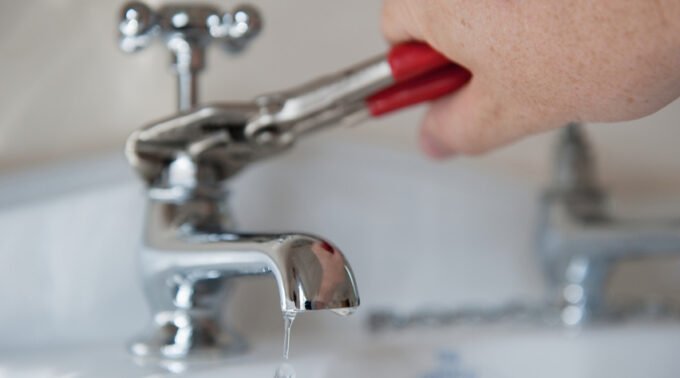
A two-handle faucet usually has separate controls for hot and cold water. If water continues to drip from the spout, the problem may involve the washer, stem, cartridge, or valve seat on one side.
If you are searching for how to fix a dripping faucet with two handles, follow these general steps:
- Turn off both hot and cold water supplies.
- Open the faucet briefly to release pressure.
- Remove the handle on the affected side.
- Inspect the washer, stem, cartridge, and seals.
- Replace the damaged component with a compatible part.
- Reassemble the faucet and restore the water supply.
- Test the faucet and check for leaks.
Some two-handle faucets use ceramic cartridges rather than traditional washers. Therefore, check the manufacturer’s instructions before purchasing parts.
If the valve is badly corroded or the leak continues after repair, professional help may be the most practical option.
Does a Dripping Faucet Ever Have a Benefit?
In most situations, a dripping faucet is a plumbing problem that should be fixed. However, there is one exception worth understanding: during certain freezing conditions, a small flow of water may help reduce the risk of ice blocking vulnerable pipes.
If you are asking how does dripping faucet prevent freezing, the basic idea is that moving water may reduce the chance of freezing in some exposed plumbing and may provide an outlet that helps relieve pressure.
However, dripping water does not guarantee protection. Insulation, suitable indoor heating, and sealing cold-air gaps are important preventive measures.
Follow local utility or plumbing guidance during severe cold. Do not leave a faucet dripping indefinitely when it is not needed, because doing so wastes water without guaranteeing that the pipes will remain safe.
Is It Better to Repair or Replace a Leaking Faucet?
The right choice depends on the age of the fixture, the source of the leak, and the cost of replacement parts.
| Problem | Recommended approach |
| Worn washer or replaceable seal | Usually repair |
| Damaged cartridge | Usually repair |
| Loose handle | Tighten or repair carefully |
| Cracked faucet body | Usually replace |
| Severe internal corrosion | Compare repair and replacement |
| Repeated leaks from several parts | Evaluate the total cost |
A simple washer replacement may cost relatively little if you can do the work safely. A complex repair involving corroded fittings or unavailable parts may cost more.
When comparing prices, consider both the parts and labor. Also remember that delaying a repair can create additional costs if water damages the cabinet or floor.
When Should You Call a Plumber?
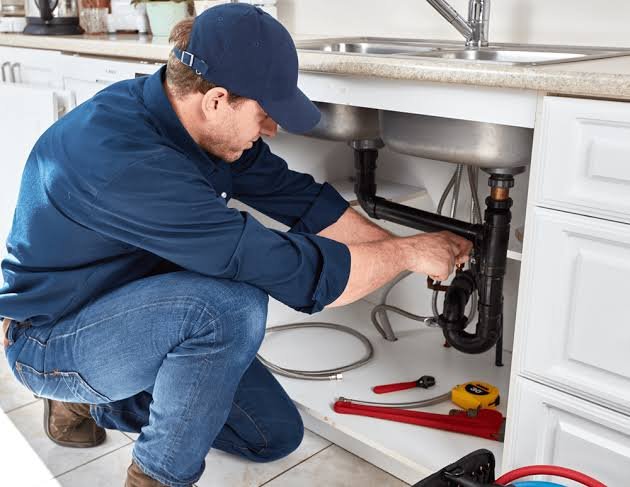
Some faucet repairs are manageable for homeowners, but others require professional tools or experience.
Contact a plumber if:
- The leak continues after you replace the suspected part.
- A shutoff valve is stuck or leaking.
- Water is escaping from inside a wall or beneath the floor.
- The faucet body or supply pipe is cracked.
- You cannot locate the source of the leak.
- Water damage is spreading around the sink cabinet.
If you notice a sudden increase in your water bill without an obvious explanation, inspect visible fixtures and check your water meter if your utility provides one. A plumber can investigate hidden leaks when necessary.
Conclusion: Fix the Drip Before It Costs More
So, how much does a dripping faucet cost per month? A slow leak may cost only a few euros or dollars, while a faster leak can waste much more water and increase your utility bill.
The best way to estimate the cost is to measure or approximate the leak rate, check your local water price, and calculate the monthly volume. Then compare the ongoing expense with the cost of a suitable repair.
Most importantly, do not ignore a dripping faucet simply because the immediate cost seems small. Repairing the problem early can reduce water waste, protect your bathroom or kitchen, and prevent avoidable damage.
Frequently Asked Questions
1. Does a dripping faucet increase your water bill?
Yes. A dripping faucet uses water continuously, and the cost depends on its leak rate and your local water and wastewater charges.
2. How much does a dripping faucet cost in a year?
The annual cost depends on the monthly water waste. For example, a leak costing €3 per month would cost approximately €36 over 12 months if the rate remained unchanged.
3. Is it cheaper to repair or replace a dripping faucet?
Repairing a worn washer or cartridge is often cheaper than replacing the whole faucet. However, a badly corroded or cracked fixture may be more practical to replace.
4. Can a dripping faucet waste hundreds of liters of water?
Yes. Depending on its flow rate, a continuously dripping faucet can waste hundreds of liters in a month. A faster leak may waste substantially more.
5. Should I ignore a slow dripping faucet?
No. Although the immediate cost may be small, the water waste continues until the leak is repaired. A leak beneath the sink can also cause damage that costs much more than the water itself.





Leave a comment