


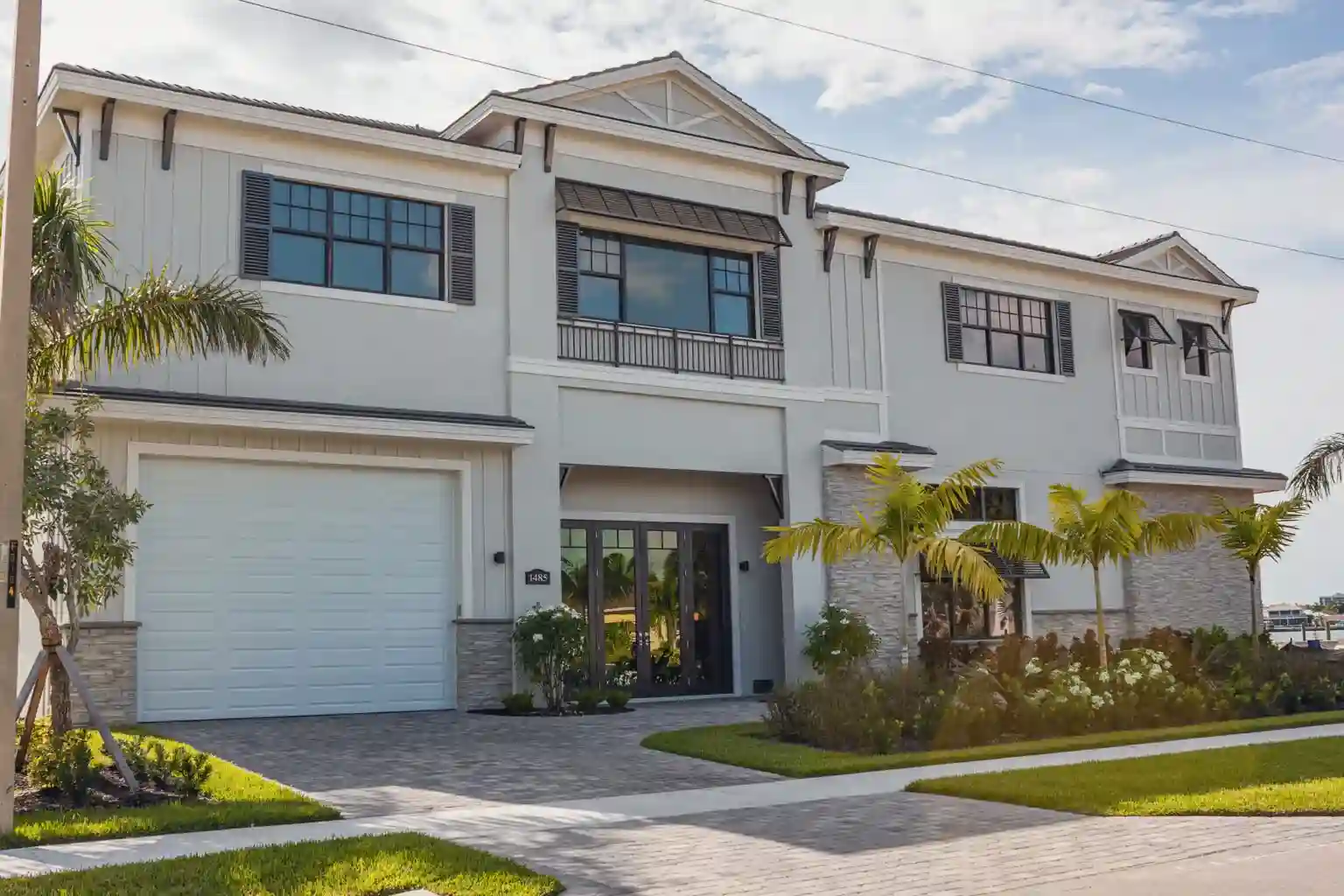
A garage door may seem like a small detail, but it can change the entire look and function of your home. An outdated door can make an otherwise attractive property feel tired, while a modern design can improve curb appeal and make daily use more convenient.
Choosing 10×7 garage doors requires more than picking a color or material. You also need to consider the available opening, vehicle clearance, insulation, security, and the space needed for the door to operate.
Fortunately, today’s garage doors offer plenty of options for homeowners who want a clean, modern appearance without unnecessary complexity. From minimalist steel panels to glass designs and realistic wood finishes, there is a style for many types of homes.
In this guide, you will learn which designs are worth considering, how to compare materials, what modern features offer real value, and how to select a door that fits your garage and lifestyle.
Why 10×7 Garage Doors Are Worth Considering
A door measuring approximately 10 feet wide and 7 feet high may suit certain single-car garages, depending on the vehicle, opening, and available clearance.
However, the right dimensions depend on how you use the garage. A compact car may fit comfortably, while a wider vehicle, large mirrors, or storage placed near the entrance could make access more difficult.
Before selecting a design, measure the opening carefully and consider the vehicle’s width and height. Also check the space required for tracks, springs, the opener, and any ceiling-mounted storage.
Balance appearance with everyday function
Modern garage design is about combining attractive looks with practical features. A simple panel door, for example, can complement contemporary architecture while remaining easy to clean.
Similarly, an insulated steel door may provide a useful balance of durability, comfort, and maintenance. The best option is one that works well every day rather than simply looking impressive in a photograph.
1. Minimalist Panel Designs for a Modern Exterior
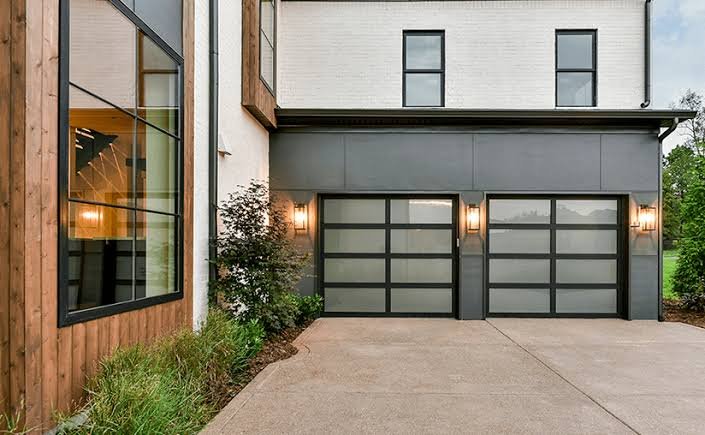
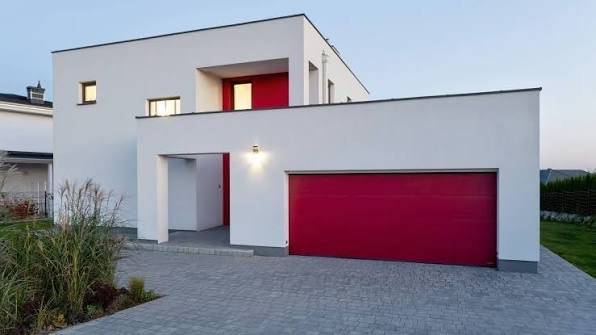
Minimalist garage doors are popular because they create a neat appearance without too much decoration. They often feature flat panels, subtle horizontal lines, and simple hardware.
This style works especially well with modern homes that use straight rooflines, large windows, and neutral exterior colors.
Why choose a minimalist design?
A simple door allows other parts of the house to stand out. For example, a charcoal door can complement black window frames, while a white door can blend into pale siding.
Minimalist panels are also flexible enough to work with different exterior materials, including brick, stone, stucco, and fiber-cement siding.
Consider these popular color combinations:
- Charcoal and white: A crisp contrast for contemporary homes.
- Black and gray: A bold combination for minimalist architecture.
- Warm beige and brown: A softer look for homes with natural materials.
- White and natural wood: A balanced design that feels bright and welcoming.
Moreover, a simple design can remain attractive even when exterior trends change. If you want a door that will not look dated quickly, minimalist panels are a sensible starting point.
2. Steel Garage Doors for Strength and Low Maintenance
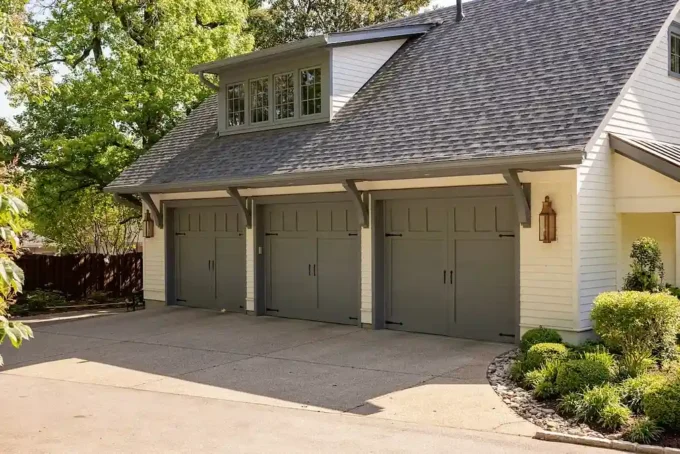
Steel is one of the most practical materials for residential garage doors. It is available in many colors and panel styles, and well-made products can provide years of reliable service.
For homeowners who want a modern appearance without demanding maintenance, steel deserves serious consideration.
Main benefits of steel
Durability: Properly constructed steel panels can withstand normal everyday use and many minor impacts.
Design flexibility: Manufacturers offer smooth finishes, raised panels, horizontal patterns, and wood-grain effects.
Easy care: Routine cleaning and occasional inspections are generally simpler than maintaining natural wood.
Insulation options: Many steel doors are available with insulated cores that can help reduce heat transfer and outside noise.
However, steel is not completely maintenance-free. Scratches that expose bare metal can lead to corrosion, particularly in damp environments. The protective coating and the quality of the steel construction therefore matter.
How to choose the right steel door
Compare panel thickness, reinforcement, finish quality, insulation, and warranty coverage. Also ask whether the door is designed for your local weather conditions.
For example, a homeowner in a rainy area may benefit from a corrosion-resistant finish and regular checks around the bottom seal.
Rather than choosing the cheapest model, compare the complete door system, including tracks, springs, rollers, and opener compatibility.
3. Glass and Aluminum Designs for Contemporary Homes
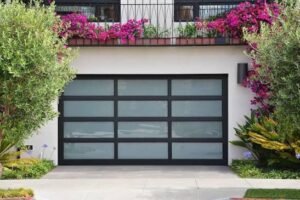
Glass and aluminum garage doors can create a distinctive modern appearance. They are often chosen for homes with minimalist architecture, large windows, and clean exterior lines.
Aluminum frames are relatively lightweight and naturally resist rust better than ordinary unprotected steel. Glass panels can allow daylight into the garage, making the space feel brighter.
Clear, frosted, or tinted glass?
The type of glazing affects both appearance and privacy.
- Clear glass: Allows more natural light but offers less privacy.
- Frosted glass: Softens visibility while allowing daylight through.
- Tinted glass: Can reduce glare, depending on the product and glazing specification.
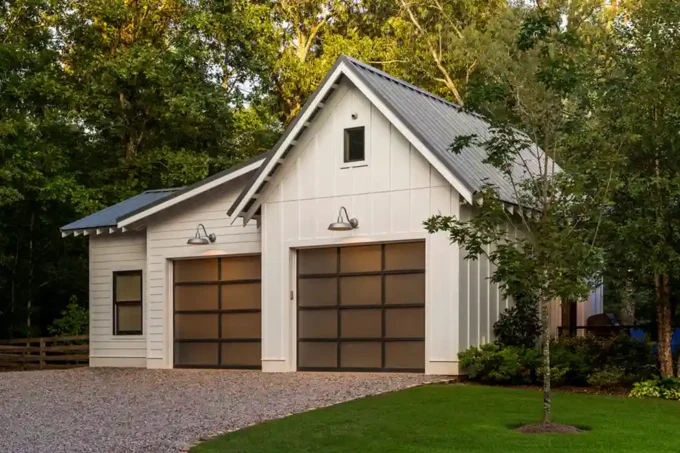
- Opaque panels: Provide a more private appearance with limited light transmission.
For a garage facing the street, frosted or opaque glazing may be more practical than clear glass.
What are the disadvantages?
Aluminum panels can dent, depending on their thickness and design. Glass doors may also cost more than basic steel models, especially when they use specialized glazing or custom frames.
Thermal performance varies considerably. If the garage connects to living space, ask about the complete door’s insulation performance rather than assuming that a modern appearance guarantees energy efficiency.
4. Wood and Wood-Look Finishes for a Warmer Appearance
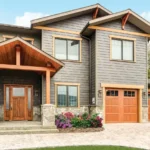
Not every modern home needs a black or metallic garage door. Wood finishes can add warmth and texture while maintaining a clean, contemporary style.
Natural wood works particularly well with stone walls, timber accents, earthy exterior colors, and homes inspired by Craftsman or Scandinavian design.
Natural wood versus wood-look steel
Natural wood provides unique grain patterns and a distinctive appearance. However, it generally needs more care because sunlight, moisture, and temperature changes can damage its finish.
Wood-look steel offers another option. It can reproduce the appearance of timber while generally requiring less maintenance than natural wood.
When comparing these products, examine the finish in person if possible. Printed or embossed wood patterns can look very different depending on the manufacturer and viewing distance.
Practical tip: Coordinate the garage door’s undertone with the front entrance, roof, and exterior trim. The colors do not need to match exactly, but they should work together.
5. Choosing the Best Color for 10×7 Garage Doors
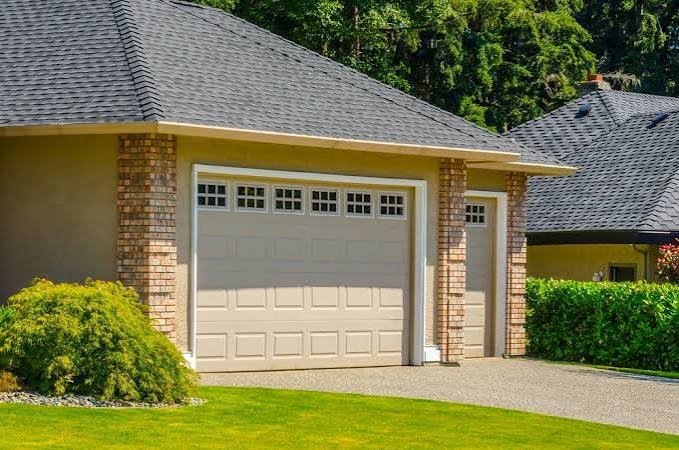
Color has a major effect on how a garage door looks against the rest of the house.
For smaller garages, the goal is usually to create a balanced appearance without making the door seem disconnected from the facade.
Popular colors and where they work best
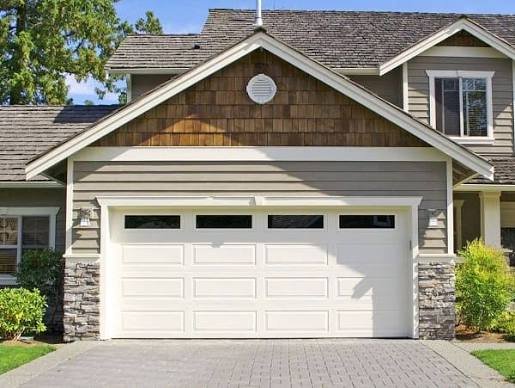
White: A classic choice for traditional houses, coastal properties, and light-colored exteriors.
Black: A strong option for modern homes with dark window frames and simple architectural details.
Gray: A flexible neutral that pairs well with many types of siding and roofing.
Brown: A natural choice for brick, stone, and warm exterior colors.
Beige: A softer alternative to white that works well with cream siding and earthy materials.
Should the door match the siding?
Matching the garage door to the siding creates a quieter appearance. A contrasting color, however, can make the garage an architectural feature.
For example, a white house with black window frames may look balanced with either a white garage door that blends into the siding or a charcoal door that repeats the window color.
Before ordering, compare physical samples outdoors. Natural light can make a finish look very different from the way it appears on a computer screen.
6. Insulation and Weather Protection
An attractive garage door should also perform well throughout the year. Insulation and weather seals can be especially useful when the garage connects directly to the house.
Understanding insulation ratings
The R-value measures resistance to heat flow. In general, a higher R-value indicates greater resistance to heat transfer through the material or assembly being measured.
However, product ratings may use different testing methods. Ask whether the stated value applies to the door panel alone or the complete garage door.
Weather seals also deserve attention. Gaps around the sides, top, and bottom can allow drafts, dust, and moisture to enter even when the door itself is insulated.
When is insulation worthwhile?
Consider an insulated door if you:
- Use the garage as a workshop or hobby space.
- Have a bedroom or living room beside the garage.
- Store items that are sensitive to temperature changes.
- Experience very hot summers or cold winters.
- Want to reduce some outside noise.
For a detached garage used only for parking, insulation may be less important. Your decision should reflect the climate and how you actually use the space.
7. Space-Saving Opening Systems
The opening mechanism affects how much usable space remains inside and around the garage.
For many residential garages, sectional overhead doors are a practical option. Their panels travel along tracks and move overhead when the door opens.
Roll-up designs may also suit certain buildings, while side-hinged doors can work where there is enough clearance outside the garage.
Compare the main options
Sectional overhead doors: A versatile choice for many residential properties. However, they need suitable ceiling space for the tracks and opener.
Roll-up doors: Often useful where a compact overhead arrangement is preferred, although product suitability depends on the building and opening.
Side-hinged doors: Offer straightforward access but require enough space for the panels to swing open.
Tilt-up doors: Use a single large panel that moves outward and upward, so the driveway clearance must be checked carefully.
The best opening system depends on headroom, side clearance, driveway length, and the location of lights or storage racks.
A professional installer can confirm which mechanism fits your garage without creating avoidable clearance problems.
8. Smart Features That Make Garage Doors More Convenient
Modern garage doors can include connected features that improve daily convenience. However, a smart system does not need to be complicated to be useful.
Smartphone control
Compatible smart openers allow homeowners to check the door’s status and operate it through an app. Some systems also provide activity notifications and remote access sharing.
This can be helpful when you are away from home and cannot remember whether you closed the garage.
Automatic closing and alerts
Some systems can notify you when the door remains open or offer an automatic closing function.
However, automatic closing should only be enabled when the opener’s safety mechanisms are working correctly and the manufacturer supports that function. Smart controls never replace obstacle detection or proper supervision.
Battery backup
A compatible battery backup can allow certain openers to operate during a power outage. The number of operations available depends on the model, battery condition, and door system.
Before buying smart features, confirm compatibility with the opener and check for subscription fees, Wi-Fi requirements, and ongoing software support.
9. Comparing Garage Door Sizes Before Buying
Garage door dimensions affect the vehicle clearance, door weight, and hardware needed for safe operation.
You may see listings for 10 x 8 garage doors, 10×10 garage doors, or 10×12 garage doors. These sizes have different proportions, and the correct choice depends on the available opening and the intended use.
The description of 10 ft garage doors may refer to width or height, depending on the seller’s naming convention. Always confirm the actual dimensions instead of relying on the product title.
For a smaller opening, the vehicle’s width, mirror clearance, and ease of entry should guide the decision. For a larger opening, the door’s weight, track arrangement, and opener capacity become especially important.
Measure before placing an order
Follow these steps:
- Measure the opening’s width at several points.
- Measure the opening’s height on both sides.
- Check the available headroom above the opening.
- Measure the side clearance and garage depth.
- Confirm the opener and track requirements with the installer.
Do not assume that the nominal door size is the same as the rough opening size. The manufacturer or installer should confirm the required measurements.
10. Installation, Safety, and Long-Term Maintenance
Even the best garage door may perform poorly if it is installed incorrectly.
A qualified installer should check the opening, tracks, springs, cables, rollers, safety sensors, and opener settings. The door should travel smoothly and remain properly balanced according to the manufacturer’s instructions.
A simple maintenance checklist
- Clean the door with suitable products.
- Inspect visible panels for scratches, dents, and corrosion.
- Check weather seals for wear or gaps.
- Keep the tracks free of debris.
- Test safety sensors according to the opener manual.
- Arrange professional service if the door becomes noisy or moves unevenly.
If the door has automatic operation, make sure its safety features work correctly. Never bypass sensors or attempt to repair high-tension springs and cables yourself.
These parts can cause serious injuries when handled without the right training and equipment.
11. How to Get the Best Value From Your Garage Door
The cheapest door is not always the most affordable choice over time. A lower-priced product may lack insulation, have a less durable finish, or require more frequent repairs.
Instead, compare the total cost of ownership.
Ask suppliers for itemized quotes that include the door, installation, hardware, opener compatibility, weather seals, and removal of the existing door if necessary.
Also review warranty terms carefully. Some warranties cover panels but offer different coverage for finishes, hardware, and moving parts.
Prioritize what matters most
For most homeowners, a sensible order is:
- Correct dimensions and safe operation.
- Suitable construction and weather resistance.
- A design that complements the home.
- Insulation appropriate for the garage’s use.
- Smart features that solve everyday problems.
- Warranty coverage and available replacement parts.
This approach helps you avoid paying for extras while overlooking essential features.
Conclusion
Modern garage doors can improve both the appearance and function of a smaller garage. Minimalist steel panels, glass and aluminum designs, warm wood finishes, insulation, and smart controls each offer different benefits.
When choosing 10×7 garage doors, begin with accurate measurements and the available operating space. Then compare materials, colors, insulation, security, and maintenance requirements.
Remember that the most attractive option is not always the most practical one. A well-chosen door should fit the house, work reliably, and meet your needs without creating unnecessary costs.
The best result comes from combining thoughtful design with dependable performance. By comparing your options carefully, you can choose a garage door that looks modern and serves your home well for years.
Frequently Asked Questions
1. What is the best material for 10×7 garage doors?
Steel is a practical choice because it offers durability, design flexibility, and relatively low maintenance. Wood, aluminum, and fiberglass may be better for specific styles, climates, or appearance preferences.
2. Are 10×7 garage doors suitable for one car?
They may suit certain single-car garages, but the actual opening and vehicle dimensions must be checked. Allow enough space for mirrors, entry clearance, and safe movement.
3. What is the best color for a modern garage door?
Black, charcoal, gray, white, and natural wood tones are popular choices. Select a color that complements the siding, roof, window frames, and front entrance.
4. Should I choose an insulated garage door?
Insulation is especially useful when the garage connects to living space or serves as a workshop. For a detached garage used only for parking, its benefits may be more limited.
5. Can I add smart features to an existing garage door?
Often, yes. A compatible smart controller may add remote monitoring or operation without replacing the entire door. Check compatibility with your opener and make sure all safety features work correctly.





Leave a comment