


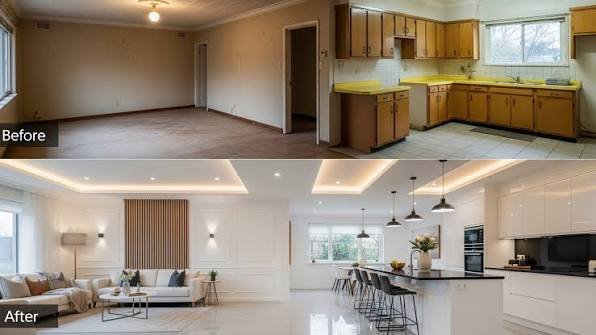
How much should you budget for a kitchen renovation?
That question sounds simple, but the answer depends on much more than the size of the kitchen. Cabinets, countertops, appliances, labor, flooring, plumbing, electrical work, and even the location of the room can change the final price.
Understanding the residential renovation cost per square foot can give homeowners a useful starting point. However, a square-foot estimate should never replace a detailed project budget.
For example, two kitchens with the same 150-square-foot floor area can have completely different renovation costs. One might only need new cabinets and paint, while the other may require new wiring, plumbing, flooring, and a completely different layout.
In this guide, we will break down kitchen renovation costs, explain what drives prices higher, and show how to plan a realistic budget without overspending.
What Is the Residential Renovation Cost Per Square Foot for a Kitchen?
Kitchen renovation costs can vary widely depending on the project’s scope.
A broad planning range for a residential kitchen remodel may fall around $100 to $300+ per square foot, although actual prices can be lower or considerably higher depending on the quality of the renovation.
A simple cosmetic update may sit near the lower end. A luxury kitchen with custom cabinets, premium appliances, stone countertops, and structural changes can exceed the upper end.
For example:
150 sq. ft. × $150 = $22,500
That calculation can provide a starting budget, but it does not tell you exactly what your contractor will charge.
The most important question is not simply, “How big is the kitchen?”
Instead, ask:
“What exactly am I changing?”
Residential Renovation Cost Per Square Foot by Kitchen Type
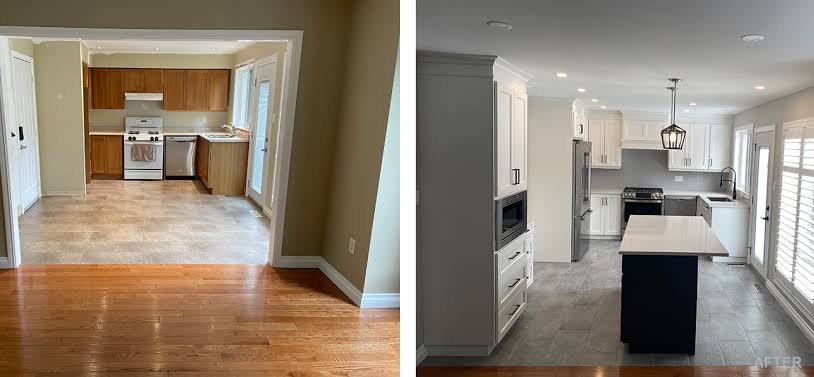
Not every kitchen renovation follows the same budget.
Small Kitchen
A small kitchen may measure between 70 and 120 square feet.
Although the room is smaller, some costs remain fixed. You still need cabinets, appliances, lighting, plumbing, and installation.
Therefore, small kitchens can sometimes have a higher cost per square foot than larger kitchens.
Medium Kitchen
A medium kitchen may range from roughly 120 to 200 square feet.
This size gives homeowners more flexibility with layout and storage.
A mid-range renovation might include:
- New cabinets
- Quartz or laminate countertops
- New flooring
- Updated lighting
- New sink and faucet
- Several new appliances
- Fresh paint
Large Kitchen
Large kitchens can exceed 200 square feet.
The additional space creates opportunities for islands, larger cabinets, seating areas, and more appliances.
However, more square footage also means more flooring, cabinets, countertops, lighting, and labor.
So, bigger does not automatically mean better value.
What Takes Up Most of the Kitchen Renovation Budget?
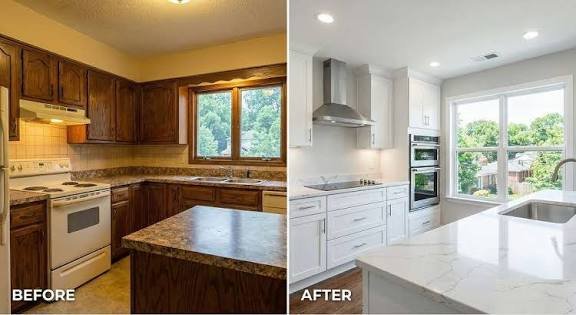
Understanding where your money goes can help you make smarter decisions.
Cabinets
Cabinetry is often one of the largest expenses in a kitchen renovation.
You can generally choose between:
- Stock cabinets
- Semi-custom cabinets
- Custom cabinets
Stock cabinets are usually the easiest to budget for.
Custom cabinets offer more flexibility but can substantially increase the project price.
A practical tip: If the existing cabinets are structurally sound, consider repainting or refacing them instead of replacing everything.
Countertops
Countertops can range from budget-friendly laminate to premium natural stone and engineered surfaces.
The final cost depends on:
- Material
- Thickness
- Edge design
- Total surface area
- Cutouts
- Installation
For example, adding a sink cutout or cooktop opening can require additional fabrication.
Appliances
Appliances can quickly expand a kitchen budget.
A basic appliance package might include:
- Refrigerator
- Range
- Dishwasher
- Microwave
Premium appliances can cost several times more than standard models.
Therefore, decide early which appliances are essential and which are upgrades.
Labor
Labor is another major part of the renovation budget.
A kitchen may require several professionals, including:
- General contractor
- Electrician
- Plumber
- Cabinet installer
- Countertop installer
- Flooring installer
- Painter
Moreover, coordination between different trades can add time to the project.
Layout Changes Can Increase the Residential Renovation Cost Per Square Foot
Changing the kitchen layout is one of the decisions most likely to increase renovation costs.
Moving a sink may require new plumbing.
Moving a range can require electrical or gas changes.
Removing a wall may require structural engineering and additional permits.
For example, a homeowner might initially plan a $20,000 kitchen update.
Then they decide to remove a wall and move the sink, dishwasher, and range.
The project is no longer simply a cosmetic renovation.
It has become a more complex construction project.
Keeping the existing layout is often one of the simplest ways to protect your budget.
Average Renovation Cost Per Square Foot: Why Estimates Differ
Online renovation estimates can be confusing.
One website may show a relatively low average renovation cost per square foot, while another suggests a much higher figure.
This happens because renovation estimates can include very different project types.
For example:
- Cosmetic renovation
- Mid-range remodel
- High-end renovation
- Full kitchen replacement
- Structural renovation
- Luxury custom kitchen
These projects should not be compared as if they were identical.
In addition, local labor rates and material prices can change the total significantly.
How Kitchen Renovation Costs Compare With Other Home Projects
The home renovation cost per square foot can vary dramatically depending on the room.
A bedroom renovation may involve paint and flooring.
A kitchen usually involves far more components.
Bathrooms are similar because they include plumbing, waterproofing, fixtures, electrical work, and specialized finishes.
Therefore, comparing a kitchen directly with a bedroom using only square footage can give homeowners the wrong impression.
The kitchen’s function and number of components matter just as much as its physical size.
Mobile Homes Have Different Renovation Cost Factors
Homeowners should also be careful when comparing standard residential kitchen prices with manufactured or mobile homes.
The mobile home renovation cost per square foot may follow different patterns because mobile homes can use different dimensions, materials, plumbing systems, and construction methods.
For example, replacing cabinets in a manufactured home may require products that fit non-standard dimensions.
This does not mean a mobile home kitchen renovation will always be cheaper.
It simply means that homeowners should compare similar properties and similar scopes of work.
Residential Renovation Cost Per Square Foot: Regional Differences
Where you live can have a major impact on renovation costs.
Labor rates vary between cities and states.
Contractor availability can also affect pricing.
In a market with high demand for skilled trades, homeowners may pay more for electricians, plumbers, carpenters, and installers.
Material transportation can also influence prices.
Therefore, the residential renovation cost per square foot should always be adjusted for the local market.
A national online estimate is useful for planning, but a local contractor quote is much more valuable for an actual project.
How to Save Money on a Kitchen Renovation
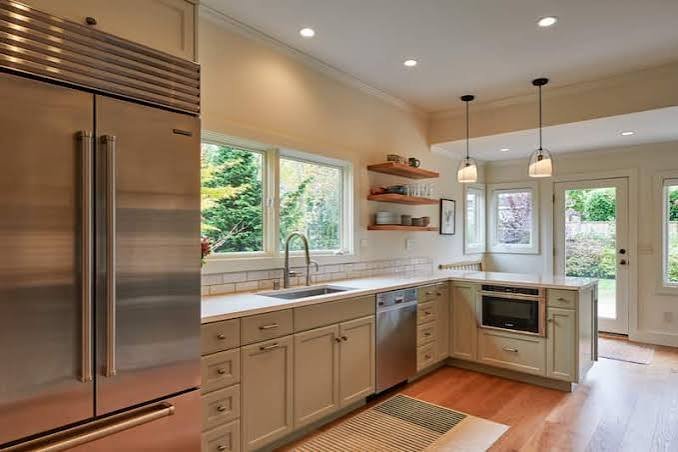
You do not need the cheapest materials to control your budget.
Instead, make strategic decisions.
1. Keep the Existing Layout
This is one of the most effective ways to reduce labor and plumbing costs.
2. Reuse What Still Works
If the refrigerator is relatively new, there may be no reason to replace it simply because the kitchen is being remodeled.
3. Refinish Cabinets
Painting or refacing existing cabinets can save money compared with full replacement.
4. Choose Mid-Range Materials
Mid-range products can offer an attractive balance between appearance, durability, and price.
5. Get Multiple Quotes
Request detailed estimates from at least several qualified contractors.
Do not compare only the final price. Compare the scope of work, materials, labor, warranty, and project timeline.
A Realistic Kitchen Renovation Example
Imagine a homeowner has a 160-square-foot kitchen.
The existing layout works well, but the room looks dated.
Instead of moving walls or plumbing, the homeowner chooses:
- New cabinet fronts
- Quartz countertop
- Updated lighting
- New backsplash
- Vinyl plank flooring
- New faucet
- One new appliance
Suppose the renovation costs $30,000.
The simple calculation is:
$30,000 ÷ 160 sq. ft. = $187.50 per square foot
That number is useful for understanding the project, but it should not be used to predict another kitchen’s exact price.
A 160-square-foot kitchen with custom cabinets and a new layout could cost significantly more.
Personal Insight: Spend Money Where You Notice It
A useful renovation strategy is to identify the features that have the biggest visual and practical impact.
For example, homeowners often notice:
- Countertops
- Cabinet fronts
- Lighting
- Flooring
- Backsplash
- Hardware
You do not necessarily need premium products in every category.
Instead, choose one or two focal points and keep the rest within a sensible mid-range budget.
This creates a polished appearance without turning the entire renovation into a luxury project.
Conclusion: Build Your Kitchen Budget Around the Work
The residential renovation cost per square foot is a useful starting point, but it should never be the only number in your kitchen budget.
Cabinets, countertops, appliances, labor, plumbing, electrical work, flooring, and layout changes can all influence the final price.
Moreover, the size of the kitchen does not automatically determine its renovation cost.
A smaller kitchen with premium cabinets and a complex layout can cost more per square foot than a larger kitchen with standard materials.
The smartest strategy is to define the scope first, keep the layout when possible, compare detailed contractor quotes, and reserve money for unexpected work.
When you plan around the actual work instead of relying on a single average, your renovation budget becomes much more realistic.
FAQs
What is the residential renovation cost per square foot for a kitchen?
A broad planning range can be around 100–300+ per square foot, but actual costs depend on materials, labor, location, kitchen size, and project complexity.
What is usually the most expensive part of a kitchen renovation?
Cabinets, labor, countertops, and appliances are often among the largest expenses. Structural and layout changes can increase the budget further.
Is it cheaper to keep the existing kitchen layout?
Usually, yes. Keeping plumbing, electrical connections, and major appliances in their existing locations can reduce labor and construction costs.
Does a larger kitchen cost more to renovate?
Not necessarily on a per-square-foot basis. However, a larger kitchen usually requires more flooring, cabinetry, countertops, lighting, and labor.
How can I reduce kitchen renovation costs?
Keep the existing layout, reuse functional appliances, consider cabinet refacing, choose mid-range materials, and obtain several detailed contractor estimates.












Leave a comment