


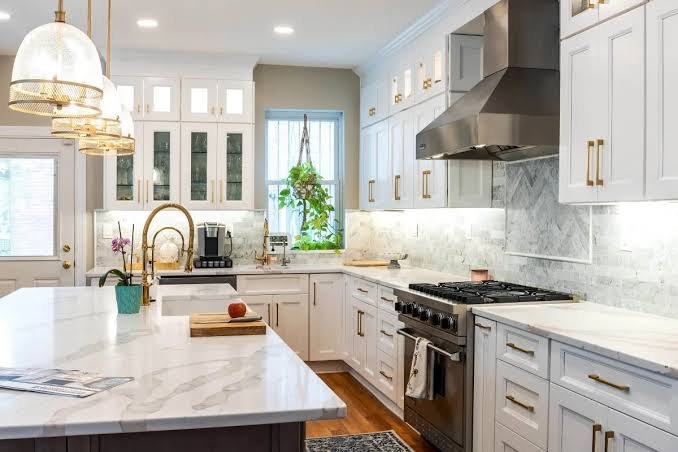
Have you ever looked at a beautiful kitchen online and wondered, “How much would something like this actually cost?”
Kitchen renovations are among the most popular home improvement projects, but their prices can vary widely. A simple refresh with new paint and hardware is very different from a luxury kitchen with custom cabinets, stone countertops, new appliances, and a completely redesigned layout.
That is why the average kitchen renovation cost per square foot can be useful when you begin planning. However, square footage alone does not tell the whole story.
In this guide, we will compare kitchen renovation costs by design style, explain the biggest price factors, and show how materials, labor, appliances, and layout changes affect your budget. You will also learn practical ways to get a modern kitchen without paying for upgrades you do not really need.
What Does Kitchen Renovation Cost Per Square Foot Mean?
Cost per square foot is a simple way to estimate how much a renovation may cost based on the size of the space.
For example, imagine a 200-square-foot kitchen.
If your estimated renovation budget is $40,000, the basic calculation would be:
$40,000 ÷ 200 square feet = $200 per square foot
This number is useful for comparison.
However, it does not mean that every part of the kitchen costs the same amount.
Cabinets, appliances, plumbing, electrical work, countertops, flooring, and labor have different prices. Therefore, cost per square foot should be treated as a planning tool rather than a guaranteed quote.
Average Kitchen Renovation Cost Per Square Foot by Style
Your chosen design style can have a major effect on the final budget.
Budget kitchen renovation
A budget renovation focuses on improving the existing kitchen without changing everything.
Common upgrades include:
- Painting cabinets
- New cabinet handles
- Affordable countertops
- New faucet
- Updated lighting
- Simple backsplash
- New flooring
This approach works particularly well when the existing cabinets and layout are still in good condition.
Mid-range kitchen renovation
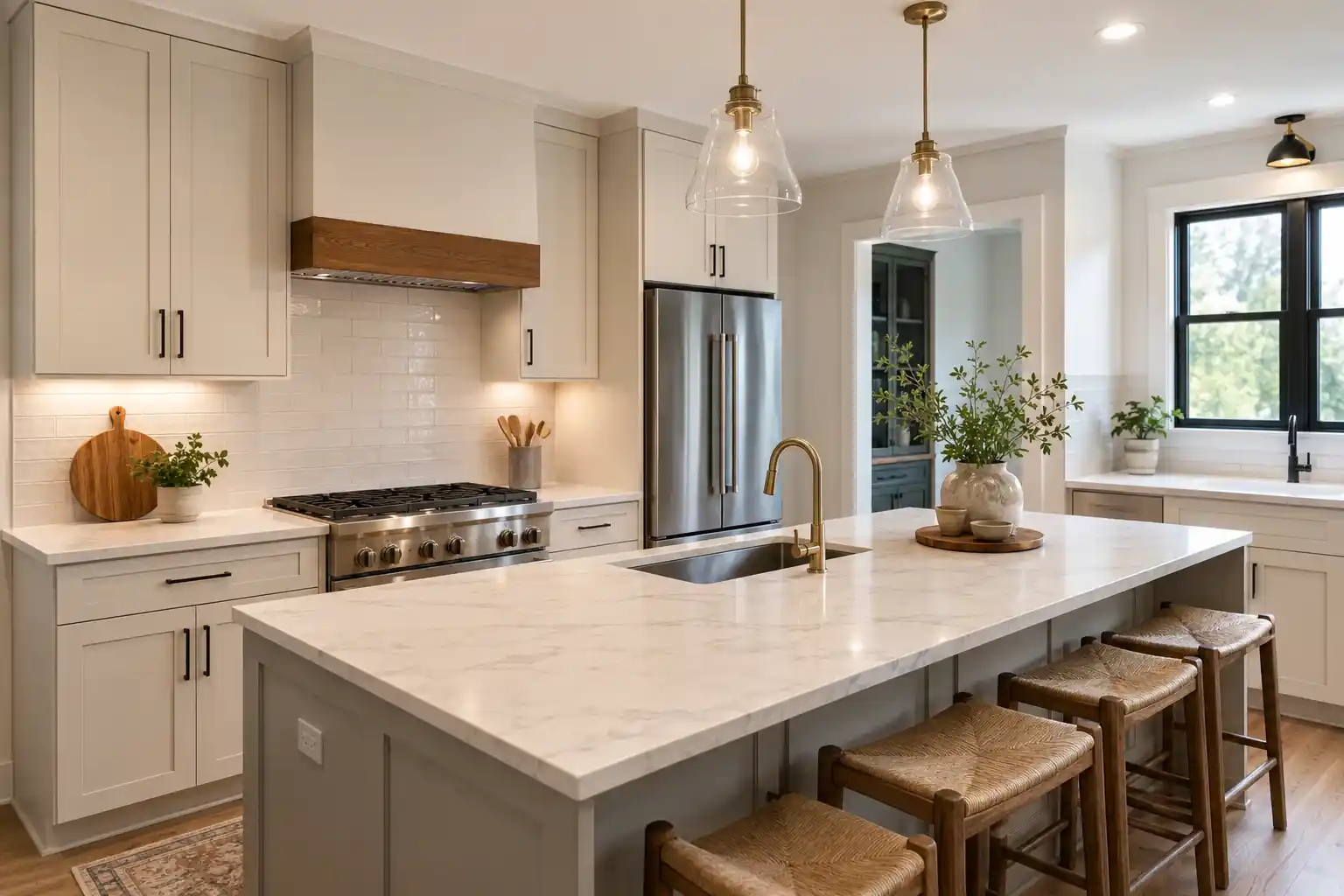
A mid-range kitchen typically includes a stronger mix of new materials and appliances.
You might install:
- New cabinets
- Durable countertops
- Modern appliances
- Updated flooring
- New lighting
- New sink and faucet
- Decorative backsplash
This style offers a balance between appearance, functionality, and budget.
Luxury kitchen renovation
Luxury kitchens often include custom cabinetry, premium countertops, professional appliances, designer lighting, large islands, and specialized storage.
At this level, the cost can rise quickly.
Custom work is particularly expensive because cabinets and other components are made specifically for the room rather than selected from standard sizes.
Modern Kitchen Renovation Cost
Modern kitchens usually focus on clean lines, simple colors, efficient storage, and minimal decoration.
Popular features include:
- Flat-panel cabinets
- Large-format flooring
- Quartz countertops
- Under-cabinet lighting
- Integrated appliances
- Large kitchen islands
- Minimal hardware
One advantage of a modern style is flexibility.
You can create a modern appearance using moderately priced materials. You do not necessarily need the most expensive products to achieve clean, contemporary design.
Traditional Kitchen Renovation Cost
Traditional kitchens tend to include more decorative details.
Examples include:
- Raised-panel cabinets
- Decorative hardware
- Wood finishes
- Detailed trim
- Classic lighting
- Patterned backsplashes
The cost depends heavily on the level of detail.
A simple traditional kitchen can remain affordable, while custom millwork and premium cabinetry can significantly increase the budget.
Farmhouse Kitchen Renovation Cost
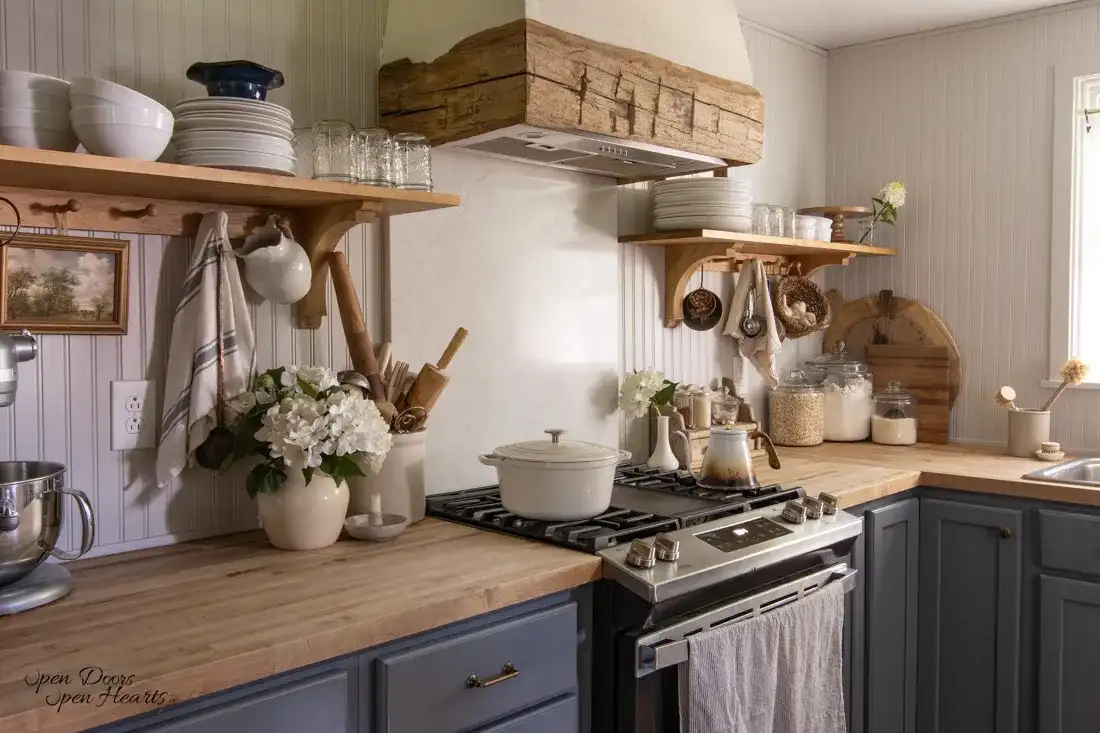
Farmhouse kitchens remain popular because they combine a relaxed appearance with practical materials.
Common features include:
- Shaker cabinets
- Wood accents
- Farmhouse sinks
- Open shelving
- Natural countertops
- Pendant lighting
One of the biggest advantages is that farmhouse design can work across different price levels.
For example, open shelving can replace some upper cabinets, while reclaimed-looking materials can create character without requiring expensive antique products.
How Kitchen Size Affects Cost
It is tempting to assume that a larger kitchen will always cost proportionally more.
That is not necessarily true.
Some costs are relatively fixed.
For example, you may need one refrigerator, one range, one sink, and one dishwasher regardless of whether the kitchen is 120 or 220 square feet.
However, a larger kitchen may require more cabinets, flooring, countertops, lighting, and labor.
Small kitchen
A small kitchen can be surprisingly expensive per square foot.
Why?
Because essential components still have to be purchased even when the room is small.
This is why cost per square foot can sometimes appear higher in compact kitchens.
Large kitchen
Larger kitchens provide more space but can also require more materials.
Large islands and extensive cabinetry can increase the total budget quickly.
Home Renovation Cost Per Square Foot vs. Kitchen Cost
Homeowners researching renovation budgets may also search for home renovation cost per square foot.
That figure is different from the kitchen renovation cost.
A whole-house renovation may include bedrooms, hallways, bathrooms, living spaces, exterior areas, and structural work.
A kitchen contains a much higher concentration of expensive components.
For example, a bedroom may need paint and flooring, while a kitchen can require cabinets, countertops, appliances, plumbing, electrical work, lighting, and ventilation.
Therefore, kitchen renovation cost per square foot is often not directly comparable with a simple bedroom renovation.
Residential Renovation Cost Per Square Foot
Another useful comparison is residential renovation cost per square foot.
This broader measure can help homeowners understand general remodeling budgets.
However, it should not replace a detailed kitchen estimate.
The kitchen has specialized requirements, especially around plumbing, electrical systems, cabinetry, and appliances.
For accurate planning, divide your budget into categories rather than relying on one number.
Where Does the Kitchen Renovation Budget Go?
A typical kitchen budget may be divided among several major categories.
Cabinets
Cabinetry can represent one of the largest expenses.
Prices depend on:
- Stock vs. custom
- Material
- Size
- Hardware
- Interior storage
- Finish
If your existing cabinets are structurally sound, refinishing them can save substantial money.
Countertops
Popular countertop materials include:
- Laminate
- Quartz
- Granite
- Marble
- Solid surface
- Butcher block
Each material has different maintenance needs and price levels.
Appliances
Appliances can consume a significant portion of the budget.
Think carefully about which appliances actually improve your daily routine.
A professional-grade range may be worthwhile for someone who cooks every day. For another homeowner, a standard appliance package may provide better value.
Labor
Labor includes much more than installation.
It can cover demolition, carpentry, plumbing, electrical work, flooring, painting, countertop installation, and cleanup.
Always check whether your contractor’s quote includes all these services.
Average Renovation Cost Per Square Foot: Why Estimates Differ
Searches for average renovation cost per square foot can provide a useful starting point.
However, online estimates often differ because they may use different assumptions.
One estimate might include appliances and labor.
Another might cover only construction materials.
A third might assume a standard kitchen while another assumes custom cabinetry.
Therefore, when comparing estimates, make sure you are comparing the same scope of work.
Layout Changes Can Increase Costs Quickly
One of the biggest budget decisions is whether to keep the existing kitchen layout.
Moving a sink may require new plumbing.
Moving a range can require changes to gas or electrical connections.
Moving walls can create structural and permit requirements.
For example, changing a kitchen from a closed layout to a large open-plan space may require structural engineering and additional construction.
If the existing layout works reasonably well, keeping it can be one of the easiest ways to control costs.
Mobile Home Kitchens Need Special Planning
Manufactured homes have their own construction characteristics.
The mobile home renovation cost per square foot may differ from traditional residential renovation because the home’s structure, dimensions, materials, and systems can be different.
Before ordering cabinets or appliances, carefully measure the space.
In compact manufactured homes, standard products may not always fit perfectly.
How to Lower Your Kitchen Renovation Budget
You can reduce costs without making the kitchen look cheap.
Keep the cabinets
If cabinet boxes are in good condition, consider painting or refacing them.
Keep the plumbing
Avoid moving sinks and dishwashers unless the new layout provides a major benefit.
Mix materials
You do not need premium materials everywhere.
For example, you could use a higher-end countertop while selecting more affordable cabinet hardware and lighting.
Upgrade strategically
Spend more on features you use every day.
That might mean investing in a durable countertop rather than expensive decorative items.
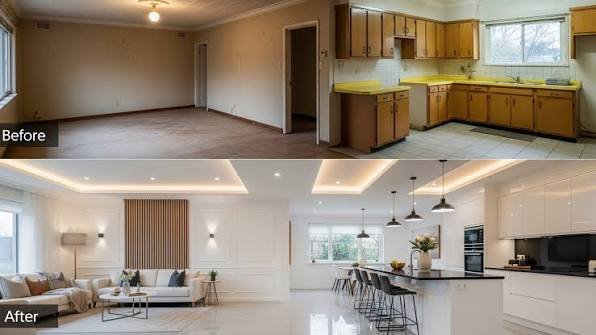
A Practical Kitchen Renovation Example
Imagine a homeowner has a 180-square-foot kitchen.
The cabinets are structurally sound, but the finish is outdated. The countertops are worn, the lighting is poor, and the flooring needs replacement.
Instead of removing the entire kitchen, the homeowner could:
- Refinish the cabinets.
- Replace the countertops.
- Add modern hardware.
- Install new lighting.
- Replace the flooring.
- Upgrade the faucet.
- Add a simple backsplash.
This approach can create a dramatic visual change without paying for a complete rebuild.
Personal insight: When a kitchen already has a functional layout, cosmetic and targeted upgrades often deliver better value than moving everything.
How Other Renovation Projects Compare
Kitchen renovation is only one part of a broader home improvement plan.
A homeowner may also be researching home theater renovation cost for an entertainment room or home office renovation cost for a dedicated workspace.
Someone building a fitness room might be comparing home gym renovation cost.
These projects have different cost structures.
A kitchen is material-heavy because of cabinets, countertops, appliances, plumbing, and electrical systems.
A theater may spend more on technology and acoustics, while an office may focus on storage, lighting, flooring, and electrical outlets.
Full Home Renovation Planning

When a homeowner is remodeling nearly every room, the full home renovation cost should be considered separately from the kitchen budget.
A kitchen may be the most expensive single room, but whole-house projects introduce additional costs such as:
- Hallway flooring
- Bedroom finishes
- Bathroom renovations
- Structural repairs
- Exterior improvements
- HVAC
- Roofing
If you are planning a whole-house renovation, create a separate budget for each room.
Conclusion
The average kitchen renovation cost per square foot can be a useful starting point, but it should never be treated as a fixed price.
Kitchen size, layout, cabinets, countertops, appliances, labor, plumbing, electrical work, and design style can all change the final budget.
Moreover, the cheapest renovation is not always the best renovation.
If the existing layout works, keeping it can save money. If the cabinets are structurally sound, refinishing them may be smarter than replacing them. At the same time, important systems such as plumbing and electrical work should not be sacrificed simply to reduce the budget.
The best kitchen renovation is one that balances appearance, durability, function, and long-term value.
FAQs
What is the average kitchen renovation cost per square foot?
There is no single price that applies to every kitchen. The cost depends on the room size, design style, materials, appliances, labor, and whether the layout changes.
Does a larger kitchen cost more to renovate?
Usually, a larger kitchen requires more cabinets, flooring, countertops, and labor. However, smaller kitchens can have a higher cost per square foot because many essential expenses remain fixed.
What is usually the most expensive part of a kitchen renovation?
Cabinets, labor, appliances, and countertops are often among the largest expenses. Custom cabinetry and major layout changes can push the budget significantly higher.
Can I renovate a kitchen without replacing the cabinets?
Yes. If the cabinets are structurally sound, painting, refacing, or replacing the doors and hardware can create a major visual improvement while reducing costs.
Does changing the kitchen layout increase the renovation cost?
Usually, yes. Moving plumbing, electrical connections, gas lines, walls, or appliances can add labor, materials, engineering, and potentially permit costs.









1 Comment