


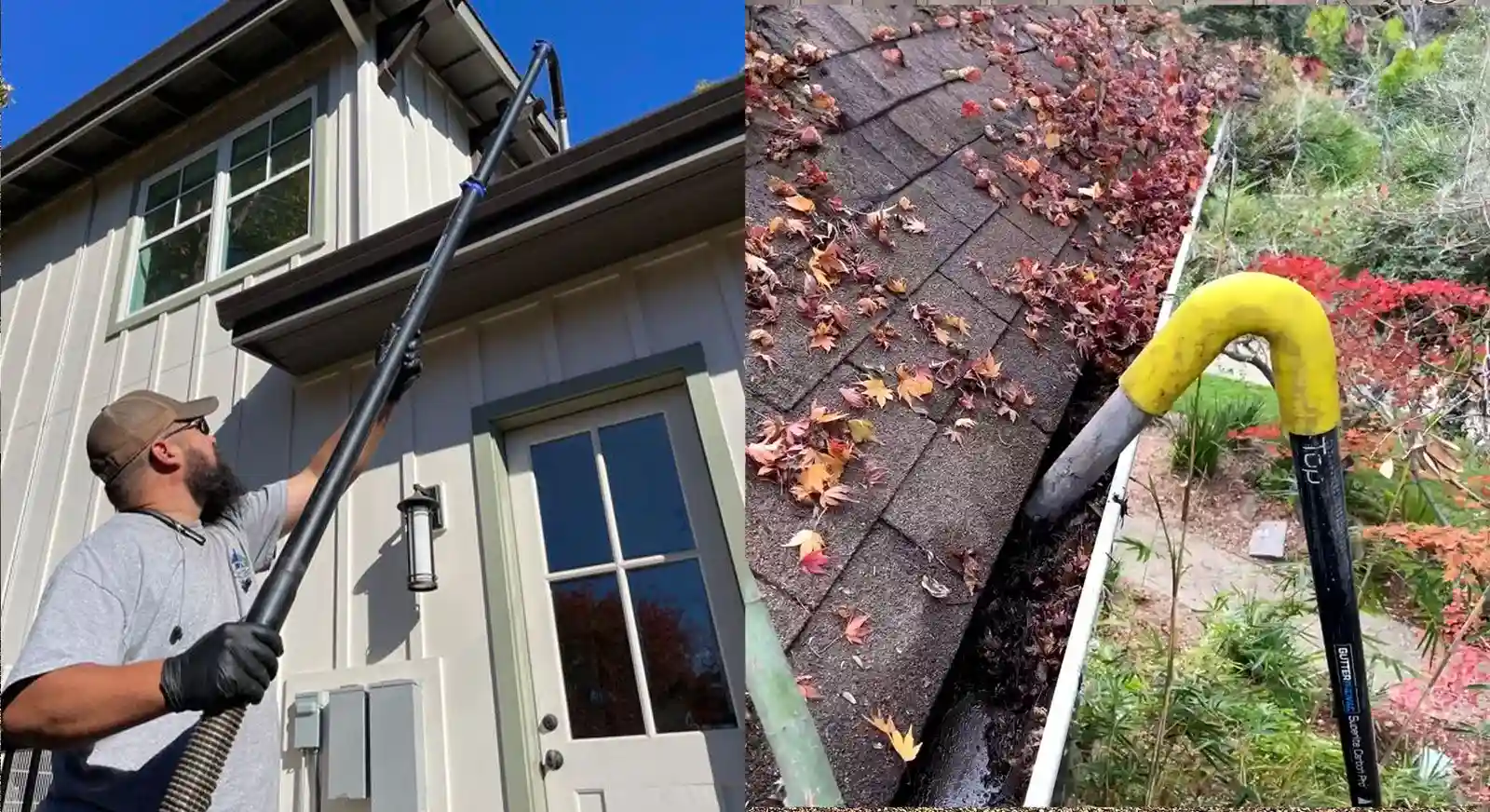
Have you ever looked at your clogged gutters and wondered whether you really need to climb a ladder to clean them? You are not alone. Many homeowners put off this important maintenance task because working at roof height feels dangerous, especially when the ground is wet or the gutters are difficult to reach.
Fortunately, modern gutter cleaning tools make it easier to remove debris while keeping your feet closer to the ground. From telescopic cleaning poles to specialized vacuum systems, several options can help you maintain your drainage system without taking unnecessary risks.
However, choosing the right equipment involves more than finding the longest pole or the cheapest attachment. You need to consider your roof height, gutter design, the type of debris, and the condition of your drainage system.
This guide explains the most useful tools, their advantages and limitations, and practical ways to make gutter maintenance safer.
Why Choosing the Right Gutter Cleaning Tools Matters
Gutters collect rainwater and direct it away from the roofline and foundations. Over time, leaves, pine needles, dirt, and small branches can block the flow of water.
When water cannot drain properly, it may overflow onto exterior walls, collect around the foundation, or contribute to moisture problems. In colder climates, standing water can also freeze and add weight to the gutter system.
Using suitable equipment helps homeowners remove debris before these problems develop.
The risks of traditional gutter cleaning
A ladder can provide access to gutters, but it introduces several hazards. Uneven ground, slippery surfaces, incorrect ladder placement, and overreaching can cause serious falls.
Carrying a bucket, scoop, or hose while climbing can make the task even more difficult. Moreover, damaged gutter brackets or unstable roof edges may create additional risks.
For this reason, it makes sense to explore ground-based cleaning options before reaching for a ladder.
How the right equipment improves safety
Well-chosen tools can help you:
- Reach accessible gutters from the ground.
- Remove leaves without repeatedly climbing up and down.
- Reduce the need to carry equipment at height.
- Clear common blockages before they become severe.
- Inspect certain parts of the drainage system from a safer position.
Nevertheless, no tool eliminates every hazard. If your gutters are very high, damaged, or heavily blocked, hiring a qualified professional may be the best decision.
1. Telescopic Gutter Cleaning Poles
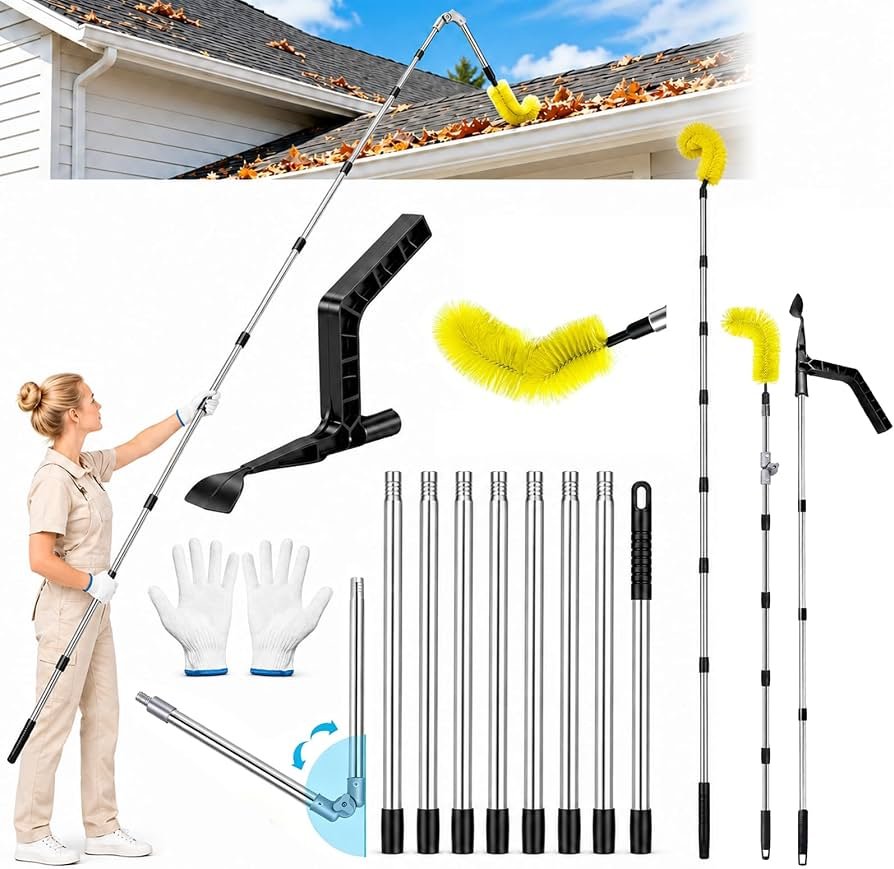
A telescopic pole is one of the most practical choices for homeowners who want to clean gutters without climbing a ladder.
These poles extend to different lengths and often accept interchangeable attachments. Depending on the model, you can use a curved cleaning head, brush, scoop, or water nozzle.
Benefits of telescopic poles
The main advantage is reach. A suitable pole allows you to work from the ground while accessing many single-story gutters and some higher sections.
Other benefits include:
- Adjustable length: Extend the pole to suit the area you are cleaning.
- Reusable attachments: Replace the cleaning head instead of buying a complete new tool.
- Easy storage: Many models collapse into shorter sections.
- Versatility: Some attachments work for both debris removal and light rinsing.
For example, a homeowner with a single-story house surrounded by deciduous trees might use a curved pole attachment to remove dry leaves from accessible gutters in autumn.
What to check before buying
Longer does not always mean better. A fully extended pole can become difficult to control, especially in windy conditions.
Look for a lightweight design, secure locking sections, a comfortable grip, and a cleaning head suited to your gutter profile. Also, make sure you can see what you are doing without standing beneath falling debris.
2. Gutter Cleaning Wands With Curved Nozzles
A gutter cleaning wand uses water pressure to loosen or flush away debris. Many models feature a curved nozzle that directs water into the gutter from below or beside the roofline.
This design can be useful when loose dirt, small leaves, and ordinary buildup are blocking the drainage channel.
When a water wand works best
Water wands are particularly useful for:
- Rinsing out light sediment.
- Flushing small amounts of loose debris.
- Washing accessible gutter sections.
- Checking whether water can move toward a downspout.
However, they are not suitable for every blockage. Wet leaves can become compacted, and forceful spraying may push debris deeper into a downspout.
Important: Avoid using excessive water pressure. Strong jets can damage weak seams, dislodge gutter sections, or force water behind the roofline.
If you suspect a downspout is blocked, use a method designed for that blockage rather than repeatedly spraying water into the gutter.
3. Gutter Cleaning Vacuums
A gutter vacuum removes leaves, dirt, and other debris through a suction system. Some models are designed specifically for exterior gutter maintenance and include long poles and curved attachments.
Professional systems may offer greater reach and suction power than basic household equipment.
Advantages of gutter vacuums
A suitable vacuum can collect debris instead of simply pushing it around. This may make cleanup easier, especially when gutters contain dry leaves, pine needles, or loose organic material.
Many systems also allow operators to inspect the cleaning process using a camera attached to the pole.
The main benefits include:
- Less manual handling of debris.
- Ground-based operation for suitable buildings.
- Better visibility with compatible inspection cameras.
- Efficient cleaning of long, accessible gutter sections.
Are household wet-dry vacuums suitable?
Some wet-dry vacuums can work with compatible gutter attachments. However, ordinary household models may lack the necessary reach, suction, or filtration for exterior maintenance.
Before connecting an extension, check the manufacturer’s instructions and weight limits. Never improvise an unstable pole assembly or use electrical equipment in wet conditions unless it is specifically designed for that purpose.
4. Gutter Scoops and Debris Removal Attachments
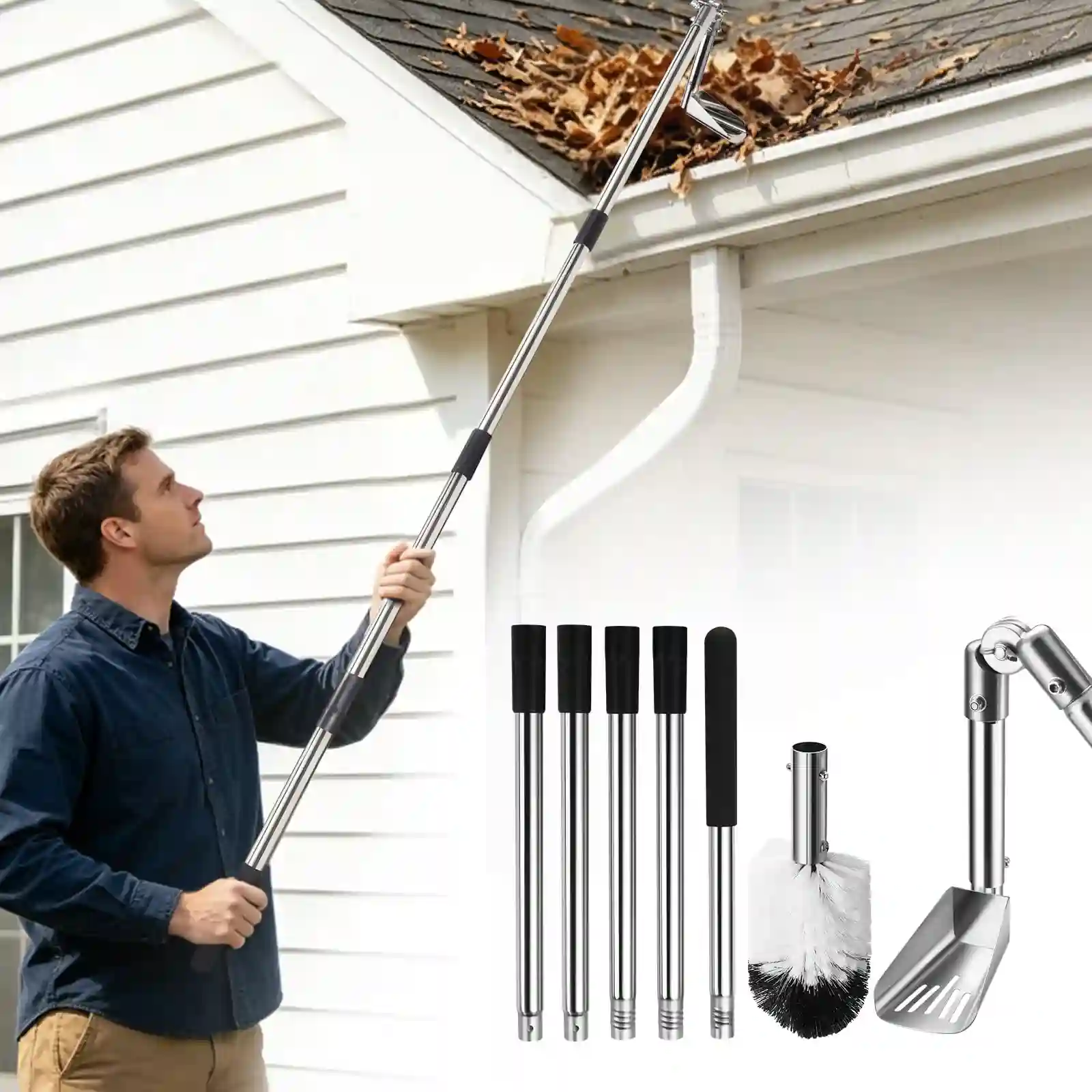
A gutter scoop is a simple tool designed to remove packed leaves, mud, and other material from a gutter channel.
Traditional scoops are usually handheld, while some models attach to extension poles. The extended versions can help reach accessible gutters from the ground.
Choosing the right scoop
Look for a scoop that fits your gutter’s shape. A narrow attachment may work well in smaller channels, while wider gutters may need a larger cleaning head.
Flexible plastic designs can help reduce scratching compared with unsuitable metal tools. Nevertheless, even a plastic scoop can damage a weak or brittle gutter if you apply too much pressure.
Use a scoop to loosen material gradually rather than forcing it through a blocked section.
For heavily compacted debris, repeated scraping may not be enough. A professional inspection can help determine whether the problem comes from accumulated dirt, damaged gutter sections, or a blocked downspout.
5. Gutter Cleaning Tools Without a Ladder
Homeowners often search for gutter cleaning tools without a ladder because they want to avoid climbing altogether.
Several tools can support this goal, but the best choice depends on how high the gutters are and whether the surrounding area provides enough space to work safely.
| Tool | Best use | Main limitation |
| Telescopic pole | Loose leaves and accessible debris | Can be difficult to control when fully extended |
| Curved water wand | Rinsing light dirt and loose material | May push compacted debris deeper |
| Gutter vacuum | Collecting leaves and dry debris | Specialized systems can be expensive |
| Pole-mounted scoop | Removing small accumulations | Requires careful positioning |
| Inspection camera | Checking visible gutter conditions | Does not remove debris by itself |
Which option should you choose?
For a single-story home with ordinary leaf buildup, a telescopic pole or compatible vacuum may be sufficient.
For a taller house, a professional-grade vacuum system may offer better reach and visibility. However, buying expensive equipment is not always worthwhile if you only clean the gutters once or twice a year.
Consider how often you will use the tool, whether you can control it comfortably, and whether it works with your gutter design.
Safety tip: Keep clear of overhead electrical lines, maintain a stable position, and avoid working in strong winds or thunderstorms. If you cannot see or control the cleaning head, stop rather than stretching to reach the gutter.
6. Leaf Blowers and Gutter Cleaning Attachments
Some leaf blowers can be fitted with curved extension tubes designed to direct air into gutters.
These attachments may help remove dry leaves and lightweight debris from accessible gutter sections. They can be especially useful during autumn, when trees shed large amounts of foliage.
When a leaf blower is useful
A blower can move dry leaves quickly, making it suitable for gutters that contain loose material rather than packed mud.
However, blowing debris out of a gutter can scatter it across patios, garden beds, windows, and neighboring properties. The airflow can also lift dust and small particles into the air.
Wear eye protection and follow the manufacturer’s instructions. Never direct debris toward people, vehicles, or open windows.
A leaf blower is generally less effective against wet leaves, sticky dirt, and compacted blockages. In those situations, a scoop or suitable vacuum may provide better results.
7. Gutter Cleaning Kits With Inspection Cameras
An inspection camera can help you see inside a gutter without placing your head close to the roofline.
Some systems combine a camera with an extension pole, allowing you to inspect debris buildup and identify areas that need attention.
Why visual inspection matters
A gutter may appear clean from the ground while a blockage remains near a downspout or behind a corner joint.
A camera can help identify:
- Accumulated leaves and twigs.
- Areas where water may be collecting.
- Visible separation at certain joints.
- Debris around gutter outlets.
- Signs that a closer professional inspection is needed.
However, an ordinary inspection camera cannot confirm every hidden defect. It may not reveal damage behind fascia boards or problems inside inaccessible drainage components.
Use the footage to guide your next step rather than treating it as a complete structural assessment.
How to Choose the Best Gutter Cleaning Tools for Your Home
The right equipment should match your property rather than simply offering the most features.
Before purchasing anything, assess the height, shape, accessibility, and condition of your gutters.
Consider your roof height
Single-story homes are often easier to maintain with ground-based extension tools. Two-story buildings may require longer, heavier, or more specialized equipment.
Do not assume a pole will be safe just because its advertised length reaches the roofline. You also need enough control to guide the cleaning head accurately.
Identify the type of debris
Different blockages require different approaches.
- Dry leaves: A scoop, blower attachment, or suitable vacuum may work well.
- Pine needles: A narrow scoop or compatible vacuum may provide better control.
- Wet leaves: A scoop or suitable suction system is often more effective than a blower.
- Mud and sediment: Gentle removal followed by controlled rinsing may be appropriate.
- Blocked downspouts: A dedicated clearing method or professional assessment may be necessary.
Avoid forcing debris deeper into the drainage system.
Check the gutter material
Aluminum, vinyl, steel, and copper gutters can respond differently to pressure and abrasion.
Older vinyl gutters may become brittle, while corroded metal sections may be more vulnerable to damage. Choose attachments that suit the material and avoid excessive force.
Compare weight and handling
A lightweight pole may be easier to control than a heavy vacuum assembly, especially when fully extended.
If possible, check the tool’s weight at its maximum working length, not only its weight when collapsed. A tool that feels comfortable at ground level may become difficult to maneuver several feet overhead.
How to Clean Gutters Safely: A Practical Checklist
If you are researching how to clean gutters safely, start with a simple preparation routine.
Before you begin:
- Check the weather forecast and wait for dry, calm conditions.
- Inspect the ground for slippery patches, loose paving, and obstacles.
- Keep children and pets away from the work area.
- Wear eye protection, gloves, and sturdy footwear.
- Read the instructions for your cleaning equipment.
- Locate overhead electrical wires and keep equipment well away from them.
- Test the tool on an accessible section before extending it fully.
Next, remove loose debris in manageable sections. Avoid forcing a cleaning head into a blocked outlet, and stop if the tool becomes stuck or difficult to control.
Finally, inspect the visible gutter line and check drainage from a safe position. If water continues to overflow or the gutter appears to sag, the problem may require more than cleaning.
Never stand on a roof or climb a ladder while carrying an extended cleaning tool unless you have the appropriate training, equipment, and safe working arrangements.
When to Hire a Professional Gutter Cleaner
Ground-based tools are helpful, but they are not a complete replacement for professional maintenance.
Consider hiring a qualified service when your home has very high gutters, steep roof sections, difficult access, extensive debris buildup, or signs of structural damage.
A professional can also assess problems that are difficult to identify from the ground, including loose brackets, leaking joints, and damaged downspouts.
Cleaning versus repair
Routine maintenance removes debris, but it does not correct every drainage problem.
If the gutter slopes incorrectly, a joint has separated, or a section is pulling away from the fascia, gutter cleaning and repair may be necessary.
Likewise, roof and gutter cleaning may be appropriate when leaves and branches accumulate across both the roof surface and the drainage channels. Roof work carries additional hazards, so it should be handled by trained professionals when access is difficult.
What about gutter guards?
Gutter guards can reduce the amount of leaves and larger debris entering a drainage channel. However, they do not make gutters maintenance-free.
Fine particles, seeds, and roof granules can still accumulate. Some guard designs also need occasional cleaning to maintain proper water flow.
If you are considering gutter cleaning and guard installation, ask the contractor whether the guard type suits your roof, the surrounding trees, and your existing gutter system.
Understanding Gutter Cleaning Costs and Equipment Prices
The cost of maintaining gutters depends on the size of the home, the height of the roofline, accessibility, local labor rates, and the amount of debris.
When comparing the gutter cleaning cost, distinguish between a basic maintenance visit and a service that includes downspout clearing, repairs, or gutter guard installation.
Equipment prices also vary considerably. A basic scoop or simple extension attachment generally costs less than a specialized vacuum system with a camera.
What affects gutter cleaning prices?
Common pricing factors include:
- Number of stories and total gutter length.
- Amount and type of accumulated debris.
- Ease of access around the property.
- Whether downspouts need additional clearing.
- Local labor and equipment costs.
- Whether repairs or protective accessories are included.
When comparing gutter cleaning prices, request a written estimate that explains which services are covered.
For homeowners who clean their own gutters, the initial equipment purchase may be economical if the tools are used regularly. However, professional service can offer better value when the work requires specialized equipment or involves substantial safety risks.
Avoid choosing a contractor on price alone. Check insurance, experience, customer feedback, and whether the quote clearly describes the work.
Common Gutter Cleaning Mistakes to Avoid
Even with suitable equipment, a few common mistakes can turn a routine task into an expensive problem.
Using too much water pressure
High pressure may loosen joints, damage fragile sections, or force water into areas where it does not belong.
Use only the pressure recommended for your equipment and gutter material.
Ignoring downspouts
A clean gutter channel does not guarantee good drainage. Water may still be unable to escape through a blocked downspout.
Check the outlet and drainage flow without placing yourself beneath falling debris.
Reaching too far with an extension pole
An extended pole can be awkward to balance. Moving it sideways may cause you to lose control or contact nearby electrical lines.
Work in small sections, reposition yourself safely, and stop if the tool becomes difficult to handle.
Treating gutter guards as permanent protection
Guards can reduce debris buildup, but they still need inspection. Skipping maintenance entirely may allow hidden blockages to develop.
Expert Tips for Maintaining Clean Gutters Throughout the Year

A simple seasonal routine can help prevent major blockages.
In spring, inspect the gutters for debris left by winter weather and check for visible damage.
During summer, look for loose fittings, signs of leakage, and areas where water may not drain properly.
In autumn, pay particular attention to falling leaves and pine needles. Homes surrounded by mature trees may need more frequent inspections than properties in open areas.
In winter, monitor visible drainage problems and avoid working on icy surfaces or during freezing weather.
The right schedule depends on your surroundings. A house beneath several large trees may require attention more often than a property with few nearby trees.
Moreover, keeping a basic maintenance record can help you identify recurring trouble spots and decide whether a different tool or professional service would be more effective.
Conclusion
The best gutter cleaning equipment is the equipment that helps you remove debris effectively without taking unnecessary risks.
Telescopic poles, curved water wands, gutter vacuums, scoops, leaf-blower attachments, and inspection cameras each serve a different purpose. Choosing the right option depends on your roof height, gutter material, type of debris, and ability to control the tool safely.
For many homeowners, ground-based equipment is a practical first choice. Nevertheless, high gutters, damaged sections, and difficult blockages may require professional attention.
In short, regular inspection and the right tools can make gutter maintenance safer and more manageable. Take time to choose suitable equipment, follow its instructions, and never put your safety at risk just to avoid the cost of professional help.
Frequently Asked Questions
1. What are the best tools for cleaning gutters without a ladder?
Telescopic poles, pole-mounted scoops, compatible gutter vacuums, and curved water wands are common options. The best choice depends on gutter height, debris type, and how easily you can control the equipment from the ground.
2. How often should gutters be cleaned?
Many homes benefit from inspection at least twice a year, often in spring and autumn. However, homes surrounded by trees or exposed to frequent storms may need more frequent attention.
3. Can a leaf blower clean gutters effectively?
A leaf blower with a suitable gutter attachment can remove dry, loose leaves. It is usually less effective for wet leaves, mud, and compacted debris, which may require a scoop or suitable vacuum.
4. Are gutter cleaning vacuums worth the money?
They can be worthwhile for homeowners with frequent debris buildup or contractors who clean gutters regularly. For occasional maintenance, a less expensive extension tool or professional service may be more practical.
5. Do gutter guards eliminate the need for cleaning?
No. Gutter guards can reduce the amount of debris entering gutters, but fine particles and other material may still accumulate. Regular inspection helps ensure that water continues to drain correctly.










Leave a comment