


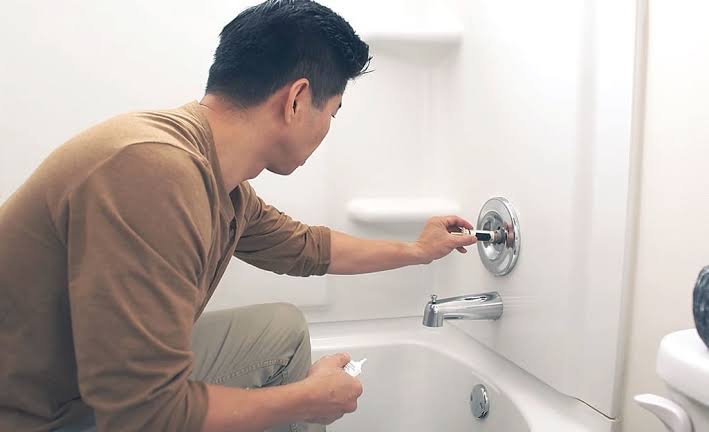
You turn off the bathroom tap, walk away, and hear it again: drip, drip, drip. A bathroom sink dripping faucet might seem harmless at first. However, even a small leak can waste water, increase your utility bill, and become more expensive if you ignore it.
The good news is that many dripping faucets can be repaired without replacing the entire fixture. The key is to understand where the water is coming from and which parts may have worn out.
In this guide, you will learn the common causes of faucet leaks, how to inspect your sink safely, which repairs you can handle yourself, and when professional help makes more sense. You will also discover how to estimate water waste and prevent the same problem from returning.
What Causes a Bathroom Sink Dripping Faucet?
Before reaching for a wrench, identify why the faucet is leaking. Different causes require different repairs, so guessing can waste both time and money.
1. Worn-out rubber washers or seals
Rubber washers and seals help keep water inside the faucet when the handle is closed. Over time, these parts can become hard, cracked, or damaged.
When a seal no longer fits properly, water may continue to escape through the spout. Replacing the damaged washer or seal often solves the problem.
2. A damaged cartridge
Many modern bathroom faucets use a cartridge to control water flow and temperature. A worn or damaged cartridge may allow water to pass through even when the handle is turned off.
Cartridge problems are common in single-handle faucets. However, the exact replacement part depends on the faucet’s brand and model.
3. Mineral buildup
Hard water contains minerals that can collect inside faucet components. Over time, this buildup may affect moving parts, damage seals, or prevent the faucet from closing completely.
Cleaning removable components may help in some cases. However, a part that is badly worn or corroded usually needs replacement.
4. A loose or damaged valve seat
The valve seat connects parts of the faucet and helps form a watertight seal. Corrosion or wear in this area can cause water to leak from the spout.
If replacing a washer does not stop the dripping, the valve seat or another internal component may need attention.
5. Excessive water pressure
High water pressure can place extra stress on plumbing fixtures and connections. Although pressure alone does not explain every dripping faucet, it can contribute to leaks and damage.
If several fixtures are leaking or making unusual noises, consider having a plumber check the home’s water pressure.
How to Identify the Source of the Leak
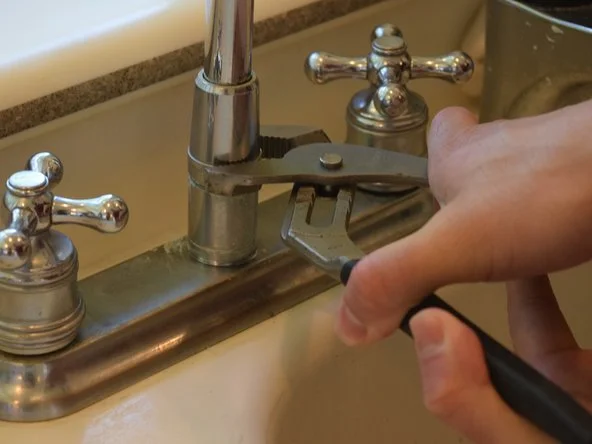
A careful inspection can help you narrow down the problem before buying replacement parts.
Start by drying the faucet, handles, and sink cabinet. Then observe where the water appears.
- Water dripping from the spout: The internal cartridge, washer, or valve may be worn.
- Water around the handle: A damaged seal or loose component may be responsible.
- Water beneath the sink: Check the supply lines, shutoff valves, and drain connections.
- Water near the faucet base: A loose fitting or failed seal may allow water to collect around the fixture.
Remember that water can travel along a surface before reaching the point where it becomes visible. Therefore, trace the moisture back to its source instead of assuming the wettest spot is the original leak.
If water is actively spraying, soaking the cabinet, or reaching electrical equipment, shut off the water supply if it is safe to do so and arrange prompt repairs.
How to Fix a Bathroom Sink Dripping Faucet
The right repair depends on the faucet design and the location of the leak. If you are researching how to fix dripping faucet problems, follow these basic steps before replacing any components.
Step 1: Turn off the water supply
Look beneath the sink for the hot and cold water shutoff valves. Turn the appropriate valve clockwise, without forcing it.
If the valves are stuck or leaking, stop and seek professional help. If there are no usable local shutoff valves, you may need to turn off the main water supply.
Open the faucet afterward to release the remaining water pressure. Place a small towel or container beneath the work area.
Step 2: Identify the faucet type
Most bathroom faucets fall into a few common categories:
- Single-handle faucet: One handle controls both water flow and temperature.
- Two-handle faucet: Separate handles control hot and cold water.
- Ceramic-disc faucet: Uses ceramic discs to control water flow.
- Compression faucet: Often uses washers that press against a valve seat.
The design matters because a cartridge from one faucet may not fit another, even when the fixtures look similar.
Step 3: Remove the handle carefully
Look for a decorative cap, screw, or small set screw holding the handle in place. Remove it with the correct tool and lift the handle away.
Keep small parts together so you can reinstall them in the right order. If the handle will not come off easily, avoid excessive force because older components may break.
Step 4: Inspect the internal parts
Look for cracked seals, damaged washers, corrosion, or mineral deposits. Take a photo before removing anything so you can remember how the components fit together.
Bring the old cartridge or washer to a plumbing supplier if you need help finding a matching replacement.
Step 5: Replace the damaged component
Install the correct replacement part according to the manufacturer’s instructions. Do not use excessive force or overtighten fittings, as this can damage threads and seals.
Reassemble the faucet, open the shutoff valves slowly, and check for leaks.
Step 6: Test the repair
Turn the faucet on and off several times. Check the spout, handles, faucet base, and connections beneath the sink.
A successful repair should stop the dripping without creating new leaks. If the problem continues, the wrong component may have been installed, or another internal part may be damaged.
How to Fix a Dripping Faucet With Two Handles
A two-handle faucet can sometimes be repaired by replacing the washer, cartridge, or stem associated with the leaking side.
If you are looking up how to fix a dripping faucet with two handles, first determine whether the leak continues when both handles are fully closed.
- Shut off both hot and cold water supplies.
- Open the faucet briefly to release pressure.
- Remove the handle on the leaking side.
- Inspect the cartridge, stem, washer, and seals.
- Replace the damaged component with the correct part.
- Reassemble the handle and test the faucet.
If the leak continues, the valve seat or another internal part may be damaged. Some modern two-handle faucets use cartridges rather than traditional rubber washers, so check the manufacturer’s repair instructions before purchasing parts.
Important: Do not assume the hot-water side is responsible simply because the water feels warm. A faucet can drip from either side, and the water temperature may change while the leak continues.
How to Stop a Dripping Faucet Without Making It Worse
If you need to know how to stop a dripping faucet, start with the simplest safe actions rather than tightening every visible screw.
First, make sure the handle is fully closed without forcing it. Excessive pressure can damage internal components and make the repair more expensive.
Next, inspect the visible connections for moisture. If the leak comes from beneath the sink, place a container or towel under the affected area while you arrange a repair.
Avoid applying glue, household sealants, or random chemicals inside the faucet. These products may interfere with moving parts or contaminate the water-contact surfaces.
If the dripping comes from a worn cartridge or washer, temporary adjustments will rarely provide a lasting solution. Replacing the faulty component is generally the better option.
How Much Water Does a Dripping Bathroom Faucet Waste?
The amount of water wasted depends on the leak rate. A slow drip may waste relatively little compared with a steady trickle, but the total can add up over time.
For example, if a faucet releases one drop every second, and each drop contains approximately 0.25 milliliters of water, the estimated waste is:
- Per minute: 15 milliliters
- Per hour: 0.9 liters
- Per day: 21.6 liters
- Per 30-day month: 648 liters
These figures are estimates, not universal measurements. Actual drops vary in size, and some leaks release water much faster.
A steady stream can waste substantially more than a slow drip. Therefore, fixing the leak promptly is a practical way to reduce unnecessary water use.
How Much Does a Dripping Faucet Cost Per Month?
If you are wondering how much does a dripping faucet cost per month, the answer depends on the leak rate, your local water and wastewater rates, and how your utility calculates charges.
Consider the example above, in which a faucet wastes approximately 648 liters in 30 days.
If your combined water and wastewater charges equal €4 per cubic meter, the estimated monthly cost would be:
648 liters ÷ 1,000 × €4 = approximately €2.59 per month.
This is an illustrative calculation, not a typical cost for every household. Your actual bill may be higher or lower.
Although a slow drip may not create a dramatic increase in one month, a faster leak can waste far more water. In addition, water escaping beneath the sink can damage cabinets, flooring, and nearby materials.
The repair itself may cost less than the damage caused by leaving a leak unresolved.
Can a Dripping Faucet Prevent Pipes From Freezing?
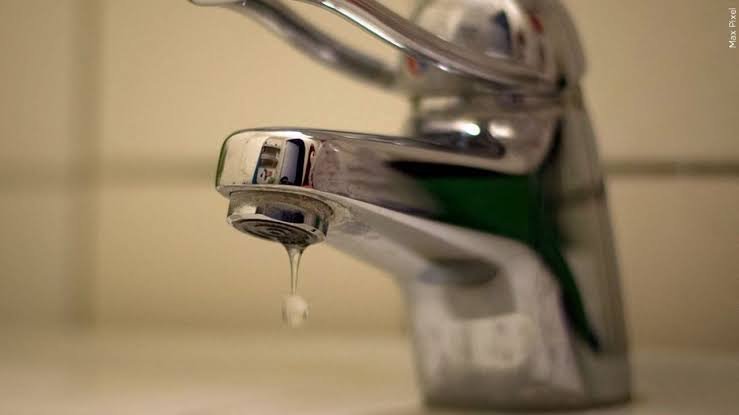
You may have heard that letting a faucet drip during freezing weather can help protect plumbing. Under certain conditions, moving water may reduce the risk of freezing in vulnerable pipes.
However, a bathroom faucet dripping because of a damaged washer is not a reliable way to protect your plumbing.
If you are asking how does dripping faucet prevent freezing, the basic idea is that a small flow of water may help reduce freezing risk in exposed pipes during severe colds. However, it does not guarantee protection, especially if temperatures remain very low.
To protect your plumbing:
- Insulate exposed pipes in unheated areas.
- Seal gaps that allow cold air to reach plumbing.
- Keep indoor temperatures sufficiently warm.
- Follow local utility or plumbing guidance during extreme cold.
- Contact a plumber if pipes repeatedly freeze.
If an official recommendation calls for temporarily running a faucet during a freeze, follow that advice for the relevant plumbing system. Repair an ordinary faucet leak separately rather than relying on it as a winter safety measure.
Should You Repair or Replace the Faucet?
Not every leaking faucet needs to be replaced. In many cases, changing one small component is enough.
| Situation | Usually the better option |
| A worn washer or replaceable cartridge | Repair |
| A loose handle or accessible fitting | Repair |
| Heavy corrosion inside the faucet | Consider replacement |
| A discontinued model with unavailable parts | Consider replacement |
| Repeated leaks from several components | Compare repair and replacement costs |
| A cracked faucet body | Usually replace |
Age alone does not determine whether a faucet should be replaced. A well-made older fixture may be worth repairing if its parts remain available.
On the other hand, replacement may make more sense when the fixture is badly corroded, difficult to repair, or repeatedly leaking.
Before buying a new faucet, check its dimensions, mounting arrangement, supply connections, and compatibility with your sink.
When Should You Call a Plumber?
Some faucet repairs are manageable for homeowners, but others require professional tools or experience.
Contact a plumber if:
- The leak continues after replacing the suspected component.
- Shutoff valves are stuck, corroded, or leaking.
- Water is escaping from inside the wall or beneath the floor.
- The faucet body or supply pipe is cracked.
- You cannot identify the source of the leak.
- Water damage is spreading around the sink cabinet.
A plumber can diagnose hidden problems, check water pressure, and confirm whether the faucet or another part of the plumbing system is responsible.
If you rent your home, report significant leaks to your landlord or property manager before attempting repairs that could affect the plumbing.
How to Prevent Future Bathroom Faucet Leaks
Preventive care can reduce wear and help you notice problems before they become expensive.
Avoid overtightening the handles. Close the faucet normally rather than forcing the handle beyond its stopping point.
Clean mineral deposits carefully. Follow the faucet manufacturer’s instructions and avoid harsh cleaners that may damage the finish or internal components.
Inspect the area beneath the sink. Look for damp cabinet panels, corrosion, or moisture around supply connections.
Replace worn parts promptly. A small repair is often easier than dealing with a larger leak later.
Choose compatible replacement parts. Using the correct cartridge, washer, or seal helps the faucet close properly and reduces the risk of repeat leaks.
Finally, pay attention to changes in water flow. A handle that suddenly becomes difficult to turn, a new squeaking sound, or recurring dripping may signal that the faucet needs attention.
Conclusion: Fix Your Bathroom Sink Dripping Faucet Early
A bathroom sink dripping faucet is a small problem that deserves prompt attention. Worn washers, damaged cartridges, mineral buildup, and faulty valve components are among the possible causes.
Start by identifying where the water escapes. Then shut off the supply, inspect the faucet, and replace the damaged part if you can do so safely. If the leak continues or involves hidden plumbing, contact a qualified plumber.
Most importantly, do not wait for a small drip to become a larger repair. Fixing the problem early can reduce water waste, protect your bathroom, and help keep your plumbing in good condition.
Frequently Asked Questions
1. Why does my bathroom faucet drip after I turn it off?
The most common reasons include a worn washer, damaged cartridge, faulty seal, or mineral buildup. The exact cause depends on the faucet design and where the water escapes.
2. Can I fix a dripping bathroom faucet myself?
Yes, many minor faucet leaks can be repaired with basic tools and the correct replacement parts. However, damaged shutoff valves, hidden leaks, and heavily corroded components may require a plumber.
3. Is a dripping faucet an emergency?
A slow drip from the spout is usually not an emergency, but it should be repaired. A leak that sprays water, floods a cabinet, or reaches electrical equipment requires more urgent attention.
4. Does replacing a faucet cartridge stop dripping?
Replacing a damaged cartridge often stops dripping in compatible faucets. However, the leak may continue if another component, such as a valve seat or seal, is responsible.
5. Should I replace the entire faucet if it keeps dripping?
Not necessarily. A washer or cartridge replacement may solve the problem. Consider a new faucet if the body is cracked, corrosion is severe, replacement parts are unavailable, or repeated repairs are no longer practical.



Leave a comment