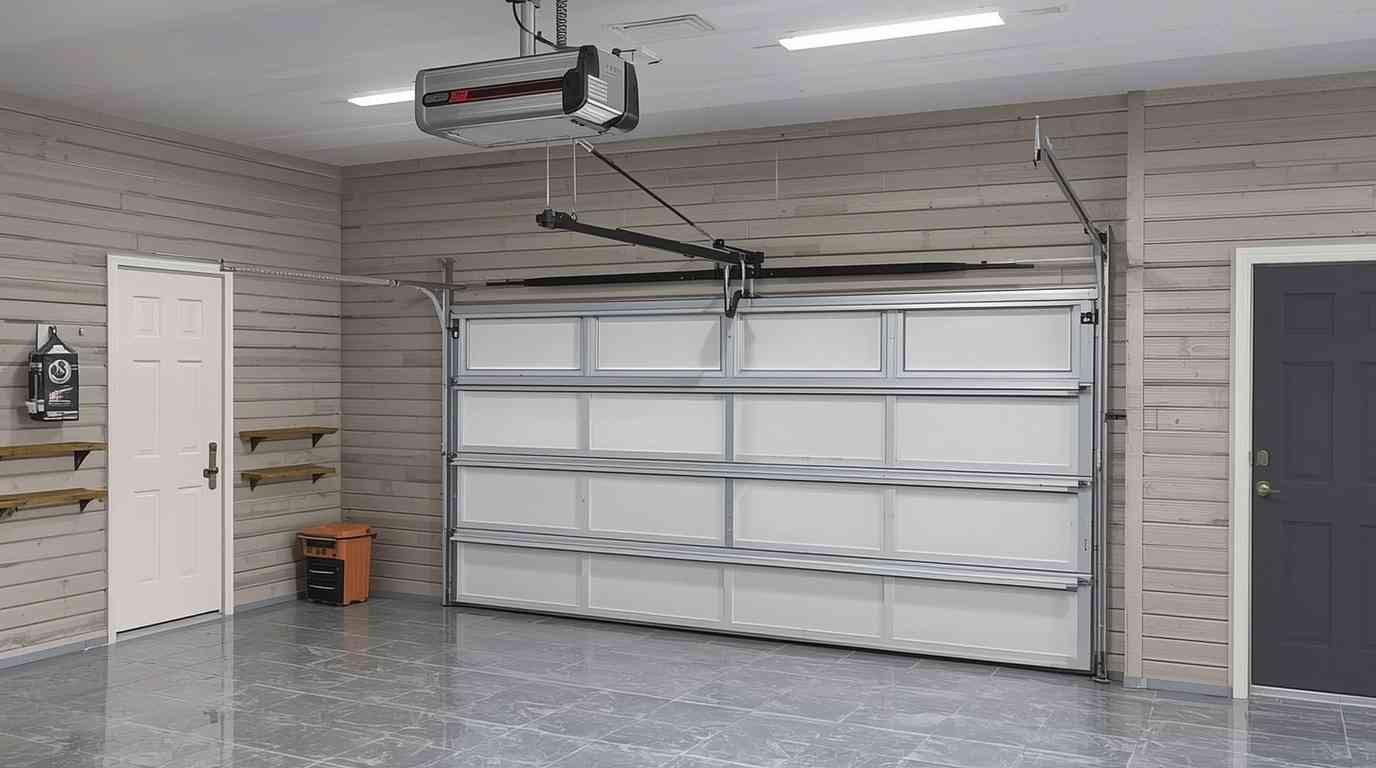
Why Low Headroom Matters
Tight ceilings can stall your project fast. A low headroom garage door opener lets the door travel smoothly without needing large overhead space.
In older homes and remodels, beams and ducts compete for space. A low headroom garage door opener brings the mechanism out of the way while preserving full opening height.
How These Systems Work
Low-profile setups re-route the door’s travel path. They pair modified tracks with spring systems to maintain lift with minimal clearance.
Some doors lift almost straight up before turning. That’s where a vertical garage door opener configuration can shine for special tracks and tall openings.
Tracks, Springs, and Lift Types
Two-piece track kits reduce the radius so the door transitions earlier. Torsion springs provide consistent torque without bulky hardware.
Standard vs High-Lift vs Vertical-Lift
Standard lift uses the full radius. High-lift adds vertical travel before curving. Vertical-lift moves straight up, best for commercial or very tall walls.
Jackshaft vs Trolley Drives
Trolley drives sit overhead and pull a rail. Jackshaft drives mount on the wall and turn the torsion shaft directly, freeing ceiling space.
Compatibility With Door Types
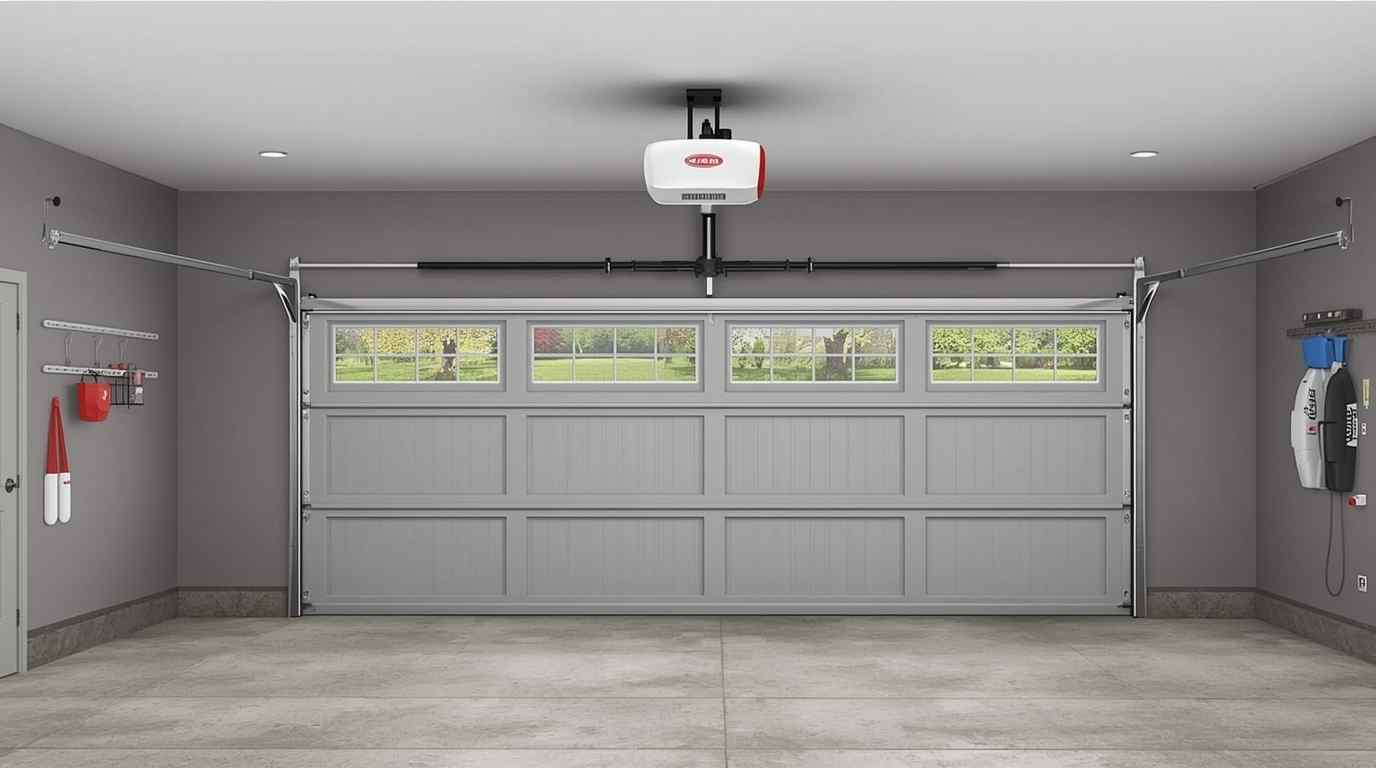
Most sectional doors adapt well. Steel sections are rigid and light, which helps efficiency with a low headroom garage door opener in compact spaces.
Wood doors can work too but may need stronger springs. Composite doors balance weight and insulation for reliable performance.
Measuring Your Space
Measure headroom from the underside of the header to the ceiling or obstruction. A low-headroom garage door opener thrives with precise measurements, not guesses.
Also, check the backroom and side room. Backroom ensures the door can fully retract. Sideroom clears tracks, drums, and any wall-mounted hardware.
Headroom, Backroom, and Sideroom
Headroom needs can be as little as a few inches with the right kit. Backroom often equals door height plus extra for travel.
A Quick Measuring Checklist
Grab a tape, level, and notepad. Map obstacles like sprinklers, lights, and ductwork. Photograph the space to assist installers.
Power, Torque, and Duty Cycle
Heavier doors need more starting torque. A low headroom garage door opener should match the door weight, balance, and spring rating to avoid strain.
DC motors offer soft-start and soft-stop for quiet operation. Continuous-duty ratings help in multi-car or frequent-use garages.
Choosing the Right Motor
Look for models that specify rated lifting force, not just peak. Efficiency under load matters more than flashy numbers.
Safety and Compliance
Photo eyes should align precisely. A low headroom garage door opener must detect resistance and reverse to prevent entrapment.
Test auto-reverse monthly. Keep force settings conservative. Safety stickers and manuals should remain accessible.
Sensors, Forces, and Auto-Reverse
Check that wiring is protected and not pinched in compact spaces. Low routing can expose cables to bumps.
Mounting Options
Wall-mount systems clear the ceiling clutter. That frees space for storage racks and lifts, which is ideal in constrained bays.
A side mount garage door opener places the motor on the torsion shaft, eliminating a long ceiling rail and reducing vibration paths.
Wall-Mount (Side) vs Ceiling-Mount
Use a wall-mount when ceilings are low or obstructed. Choose ceiling-mount if you have plenty of space and a standard door track.
When to Choose Each
If you plan ceiling storage or a car hoist, a wall-mount preserves vertical room and simplifies future changes.
Smart Features and Reliability

Wi-Fi control adds convenience without extra wall buttons. A low-headroom garage door opener with battery backup keeps operating during outages.
App alerts confirm closures, and timed-close modes reduce forgetfulness. Look for secure, encrypted connections.
Battery Backup and Connectivity
Backup systems typically offer several open-close cycles. Keep batteries fresh and test during seasonal maintenance.
Noise, Vibration, and Maintenance
Rubber isolation mounts help. A low headroom garage door opener benefits from belt or direct drive to cut noise in attached homes.
Keep rollers clean and tracks aligned. Lubricate hinges sparingly with garage-rated products for smooth travel.
Belt, Chain, and Direct Drive
Belts run quieter than chains. Direct drives remove many moving parts, lowering maintenance and resonance.
Costs, Value, and ROI
Consider total installed cost, not just the box price. A low headroom garage door opener often saves money by avoiding structural changes.
Factor in energy efficiency, warranty length, and smart add-ons. Quality hardware reduces callbacks and downtime.
What Affects Price
Door size, material, lift type, and motor class drive costs. Professional installation adds value through correct springing and setup.
Shopping Checklist
Confirm headroom, backroom, and sideroom in writing. Match the opener class to door weight and usage patterns.
Verify compatibility with your existing spring system. Some kits require torsion conversions for best performance.
Assess safety features, including motion-sensing lights and secure remotes. Check UL compliance and regional codes.
Evaluate smart integrations with your home platform. Look for auto-lock deadbolts on certain wall-mount models.
Ask about service networks and parts availability. Long warranties mean little without local support.
Install Like a Pro
Lay out hardware before mounting. Pre-drill into studs and use proper anchors where needed.
Balance the door first. An opener is a helper, not a crutch. A balanced door stays put mid-travel.
Program travel limits and force carefully. Test manual release, then verify smooth operation under power.
Common Mistakes to Avoid
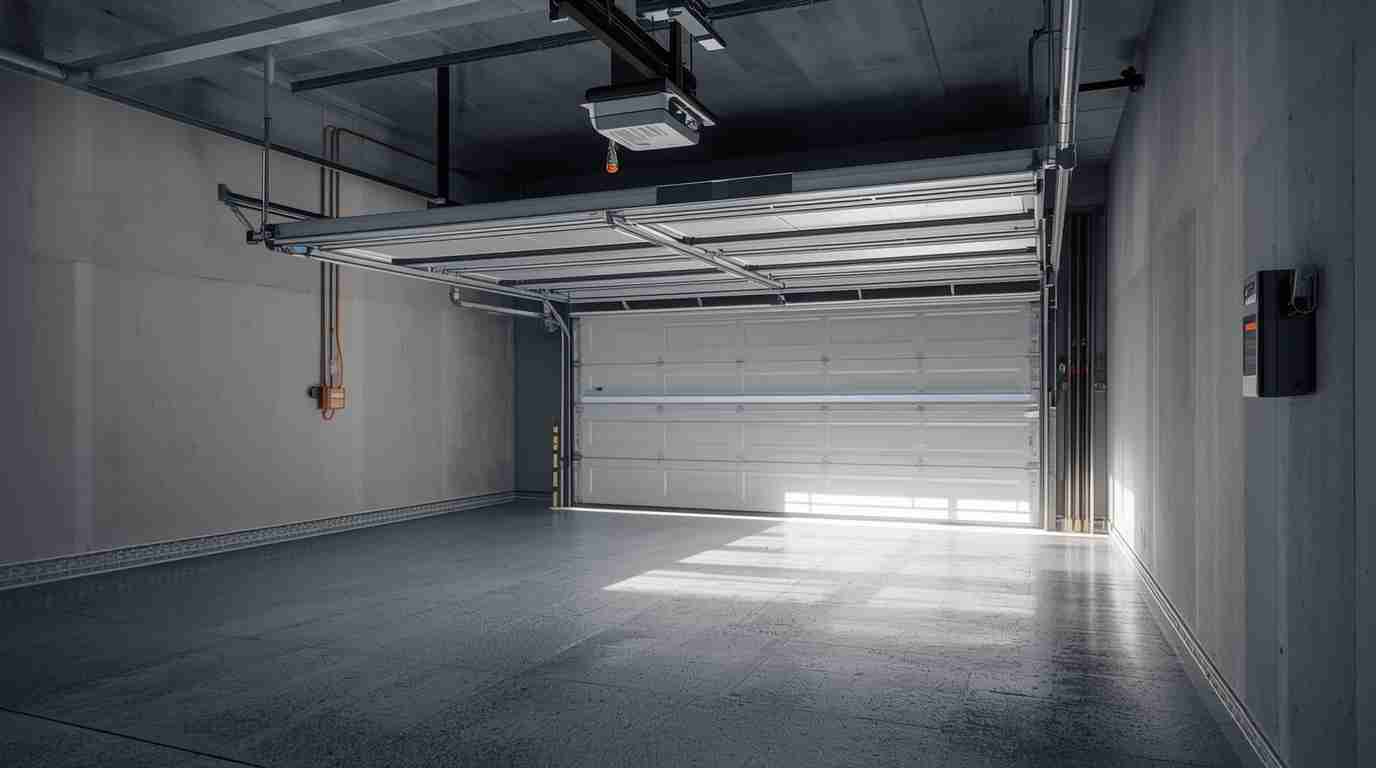
Don’t guess at spring sizes. Wrong torque shortens component life and risks safety.
Avoid routing wires across moving parts. Use conduit or clips to protect low runs.
Never skip safety tests. A quick reversal check can prevent serious injuries.
Code, Clearances, and Warranty
Local codes may set minimum safety and wiring standards. A low clearance garage door opener setup must still meet those requirements.
Keep receipts, serials, and installation photos. They help with warranty claims and future service calls.
Conclusion
Ceiling constraints don’t have to limit your plans. With the right design, a low headroom garage door opener delivers quiet, safe, and smart access.
Measure carefully, match power to weight, and choose the mount that fits your space. Your garage will feel bigger, safer, and easier to use.
FAQs
What headroom do I need for low-profile systems?
Many kits work with only a few inches above the door. Exact requirements vary by track radius, spring type, and mount style. Measure carefully before buying.
Is wall-mount better than ceiling-mount for small garages?
Often yes. Wall-mount clears overhead space and reduces clutter, great for storage and lifts. Ceiling-mount still works if you have adequate clearance.
Can I retrofit my existing sectional door?
Usually. Track and spring changes may be needed. A professional can assess balance, drum size, and safety compliance for your door.
Will the battery backup run the door during outages?
Yes, for a limited number of cycles. Capacity depends on the model and door weight. Test backup operation periodically.
How noisy are these systems in attached homes?
Modern belt or direct drives are very quiet. Isolation mounts and proper lubrication further reduce noise and vibration.
Leave a Reply