


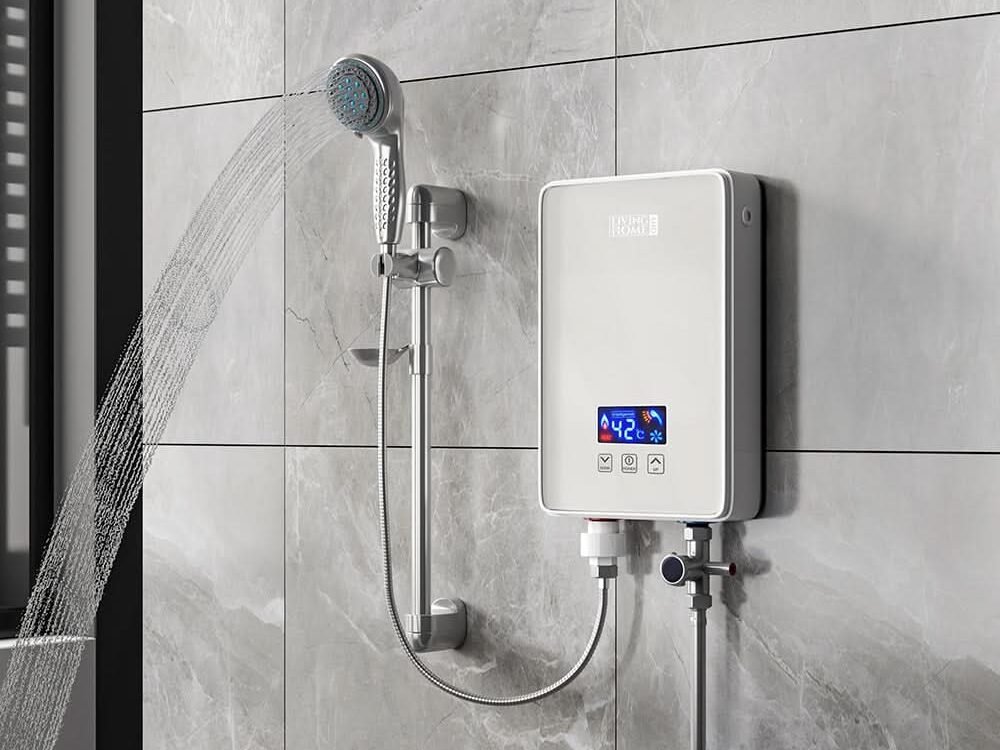
Have you ever turned on the shower expecting hot water, only to discover that it is barely warm? An electric water heater that once worked perfectly can develop problems as it ages. Fortunately, regular care can help you spot many issues before they interrupt your daily routine.
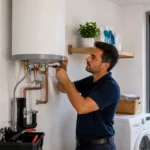
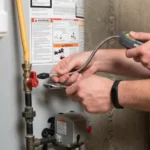
Electric water heater maintenance involves checking the unit for leaks, controlling sediment buildup, inspecting important components, and making sure the system operates safely. These steps can support reliable performance and help you plan repairs before a minor problem becomes a major expense.
In this guide, you will learn which maintenance tasks homeowners can handle, how often to inspect your heater, when professional servicing is necessary, and which warning signs deserve immediate attention. You will also discover practical ways to protect your water heater and make informed decisions about its long-term care.
Why Electric Water Heater Maintenance Matters
Electric water heaters are common in homes because they are straightforward to operate and do not require a gas burner. However, they still contain electrical parts, heating elements, thermostats, and safety devices that need proper care.
Over time, sediment can collect inside the tank, and internal components can wear out. Regular inspections help you notice these changes before they cause a complete loss of hot water.
1. It helps prevent unexpected breakdowns
A water heater often gives warning signs before it stops working. You might notice that hot water runs out faster than usual, the unit makes popping sounds, or the water temperature changes without explanation.
These symptoms can indicate sediment buildup, a failing heating element, or a thermostat problem. Identifying the cause early may help you avoid an emergency service call.
2. It supports energy efficiency
When sediment collects around the bottom of a tank, it can interfere with heat transfer and contribute to operating noise. Depending on the amount of buildup and the heater’s design, this may reduce performance.
Keeping the unit in good condition can help it heat water more reliably. However, maintenance alone cannot correct every efficiency problem, especially when the heater is old or incorrectly sized.
3. It may extend the heater’s useful life
Corrosion, leaks, and worn components can shorten a water heater’s service life. Routine checks give you an opportunity to identify problems while repairs may still be practical.
For example, noticing a small leak at a pipe connection could help you arrange a repair before moisture damages nearby flooring or cabinets.
How Often Should You Perform Electric Water Heater Maintenance?
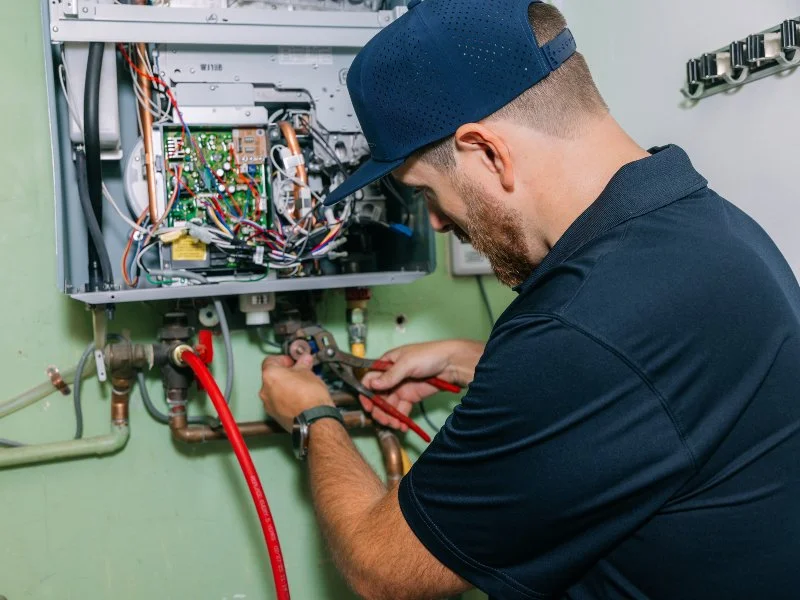
The right maintenance schedule depends on the manufacturer’s instructions, water quality, household usage, and the age of the appliance.
Use the following schedule as a general starting point, not a replacement for the owner’s manual.
| Maintenance task | Suggested timing |
| Look for leaks or moisture | Monthly |
| Check the water temperature | Occasionally and whenever it seems abnormal |
| Listen for unusual sounds | During normal use |
| Inspect accessible pipes and connections | Every few months |
| Flush the tank to remove sediment | As recommended by the manufacturer and water conditions |
| Inspect the anode rod | At the interval specified by the manufacturer |
| Test safety devices | Only as directed by the manufacturer or a qualified professional |
| Arrange professional inspection | According to the manufacturer’s service schedule |
Does hard water affect maintenance frequency?
Yes. Hard water contains minerals such as calcium and magnesium. These minerals can settle inside a storage tank and form deposits over time.
Homes with hard water may need more frequent sediment removal or anode rod inspections. If you are unsure about your water quality, a simple water test can help you decide whether additional treatment is worthwhile.
Moreover, a household that uses large amounts of hot water may experience different maintenance needs from a home with only one or two occupants.
Essential Electric Water Heater Maintenance Tasks
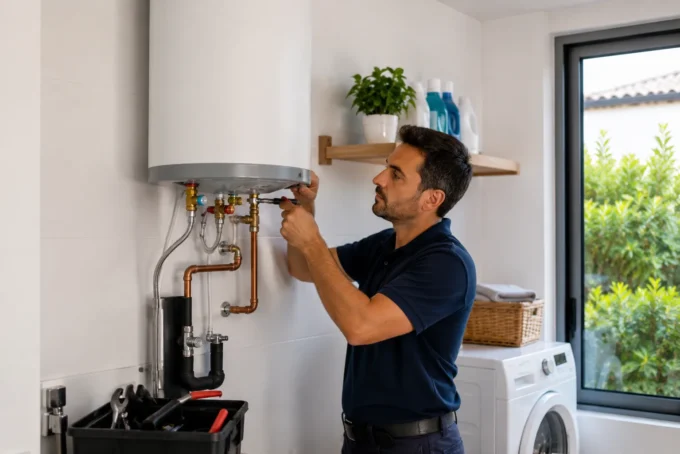
Some maintenance steps involve simple visual checks. Others require working with electricity, pressurized hot water, or safety equipment and should be handled by a trained professional.
1. Inspect the tank for leaks
Look around the base of the heater, nearby pipes, and visible connections for moisture, rust-colored stains, or dripping water.
Pay attention to the temperature and pressure relief valve discharge pipe as well. Water coming from this pipe may indicate a problem that needs assessment, although occasional discharge can have different causes depending on the system.
Never block or cap a relief valve discharge pipe. This safety device must remain able to release pressure when necessary.
If water is leaking from the tank itself, the unit may have internal corrosion. Arrange a professional inspection because a leaking tank often requires replacement rather than repair.
2. Check for unusual noises
Popping, rumbling, or crackling sounds may occur when sediment collects near the heating elements or at the bottom of the tank.
As water heats, trapped moisture beneath mineral deposits can create noise. However, sounds can also come from pipes, valves, or normal expansion.
If the noise is new, loud, or persistent, ask a qualified technician to inspect the heater. Do not assume that every sound means the tank needs flushing.
3. Flush the tank when recommended
Flushing removes loose sediment from the bottom of many storage-tank water heaters. It can be useful in areas with mineral-rich water, but the correct procedure depends on the appliance.
A typical professional flushing service may involve:
- Turning off the electrical supply using the correct procedure.
- Allowing the water to cool as required.
- Closing the appropriate water supply valve.
- Connecting a suitable hose to the drain outlet.
- Draining the tank according to the manufacturer’s instructions.
- Refilling and checking the tank before restoring power.
This is a general overview, not a complete procedure for every model. Hot water can cause severe burns, and incorrect valve operation can damage the heater.
Never energize an electric water heater until its tank is completely filled and properly purged of air. Exposed heating elements can burn out quickly if powered without water.
If you cannot confidently follow the manufacturer’s instructions, hire a plumber to perform the task.
4. Inspect the anode rod
Many storage water heaters contain a sacrificial anode rod. This metal rod helps protect the tank from corrosion by corroding in place of the tank lining.
Over time, the rod wears down and may need replacement. The inspection interval depends on the model and local water conditions.
A badly depleted anode rod may leave the tank more vulnerable to corrosion. Ask a qualified plumber to inspect it if the manufacturer recommends periodic checks.
Replacing the rod at the appropriate time may help protect the tank, but it cannot reverse corrosion that has already caused a leak.
5. Check the temperature setting
A water heater that is set too high can increase scalding risk and energy use. However, setting the temperature too low can also create health concerns under some conditions.
Follow the manufacturer’s instructions and local public-health guidance for a safe setting. In many household situations, approximately 120°F (49°C) is a common recommendation for reducing scalding risk, but the correct temperature depends on the plumbing system and household needs.
People with young children, older adults, or reduced sensitivity to heat should take extra care. If your household requires higher storage temperatures for infection control, a professional can advise on suitable temperature controls and mixing valves.
6. Keep the area around the heater clear
A clean, accessible area makes inspections and servicing easier. Keep boxes, cleaning products, and other stored items away from the unit’s electrical connections and service panels.
Also, check for signs of moisture, pests, or damage to nearby wiring. Do not remove electrical covers or touch exposed wires.
If you notice damaged wiring, burning smells, or signs of overheating, stop using the heater if it is safe to do so and arrange professional assistance.
Common Signs Your Electric Water Heater Needs Repair
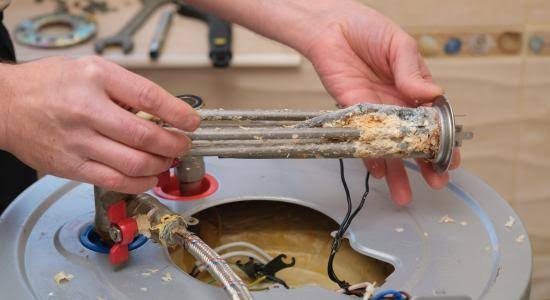
A change in hot-water performance does not always mean the heater has reached the end of its life. In many cases, a technician can identify a faulty component or another repairable problem.
Watch for these warning signs:
- Water is not hot enough: A thermostat or heating element may be failing.
- Hot water runs out quickly: One heating element may not be working, or the tank may be too small for your household.
- Water temperature changes suddenly: A control problem or another system fault may be responsible.
- The circuit breaker trips repeatedly: There may be an electrical fault that needs urgent attention.
- Rust-colored water appears: Corrosion or a plumbing issue may be involved.
- Water collects around the tank: A connection, valve, or tank may be leaking.
- The heater makes unusual noises: Sediment buildup or another mechanical issue may be present.
These symptoms can have several causes. For instance, lukewarm water might result from a faulty thermostat, a broken heating element, high household demand, or a problem elsewhere in the plumbing system.
Avoid repeatedly resetting a tripping breaker. A recurring electrical fault needs professional diagnosis.
Electric Water Heater Maintenance Mistakes to Avoid
Good intentions can sometimes lead to damaged equipment or safety risks. Avoid these common mistakes.
Ignoring small leaks
A slow drip may seem harmless, but it can damage floors, walls, and nearby electrical equipment. Find the source rather than simply placing a container underneath it.
Using an unsuitable cleaning method
Not every tank or drain valve should be serviced in the same way. Follow the manufacturer’s instructions and avoid unapproved chemicals or improvised cleaning methods.
Turning on the heater before filling the tank
This is one of the most important mistakes to avoid. Electric heating elements can overheat and fail if they are energized without water covering them.
Ignoring the pressure relief valve
Never remove, disable, or block this safety device. If it leaks repeatedly or appears damaged, have it inspected by a qualified professional.
Delaying repairs after repeated breaker trips
A breaker that trips more than once may indicate an electrical fault, damaged wiring, or a failing component. Repeatedly restoring power without identifying the cause can be dangerous.
Can You Maintain an Electric Water Heater Yourself?
Yes, homeowners can perform basic checks, but internal servicing requires more care.
Tasks most homeowners can handle
Depending on the installation, you can usually:
- Check for visible leaks and water stains.
- Keep the surrounding area clean.
- Monitor hot-water performance.
- Listen for new or unusual noises.
- Record any changes in performance.
- Check the exterior for visible corrosion.
- Review the maintenance schedule in the owner’s manual.
These tasks do not require opening the appliance or touching electrical components.
Tasks best left to a professional
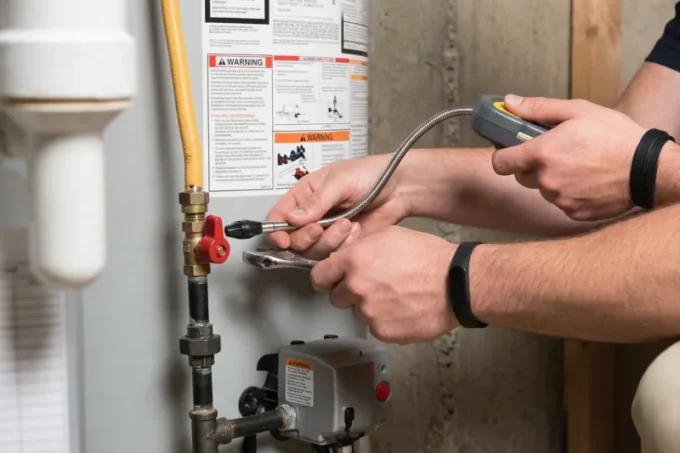
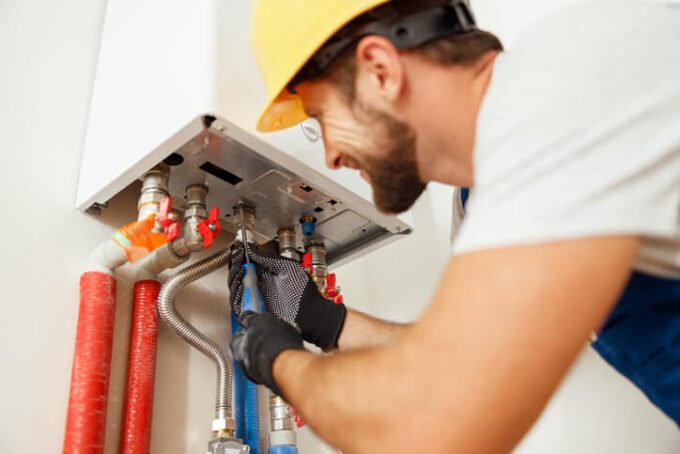
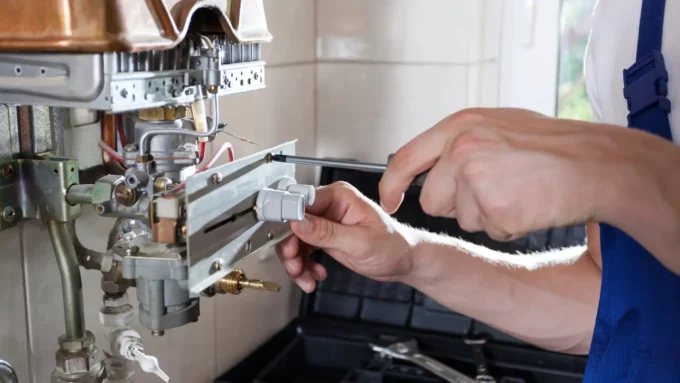
Contact a qualified plumber or electrician for:
- Replacing heating elements or thermostats.
- Inspecting internal wiring.
- Testing or replacing electrical components.
- Replacing an anode rod when access is difficult.
- Investigating recurring breaker trips.
- Diagnosing persistent leaks or pressure-related problems.
- Flushing a tank when the procedure is unfamiliar or unsafe.
Remember that water and electricity can create a serious hazard. Switch off the correct electrical supply before any approved service procedure, and never rely on the control panel alone to make internal components safe.
How to Improve Efficiency and Reduce Future Problems
A few practical habits can help your water heater operate reliably without unnecessary energy use.
Choose a suitable temperature
Avoid setting the thermostat higher than your household needs. Excessively high temperatures can increase standby heat loss and the risk of burns.
However, follow appropriate guidance for your plumbing system and household health requirements rather than lowering the temperature without considering safety.
Reduce unnecessary hot-water use
Shorter showers, efficient showerheads, and repairing dripping hot-water taps can reduce demand.
For example, a household that spreads laundry and bathing throughout the day may find that a smaller tank struggles less than one serving several long showers in quick succession.
Check for plumbing leaks
A leaking hot-water pipe can waste both water and the energy used to heat it. Look for damp patches, unexplained water use, or persistent dripping.
Keep a maintenance record
Record the date of each inspection, any repairs, and when the tank was flushed or the anode rod checked.
A simple log can help you recognize recurring faults and provide useful information when requesting a service quote.
Consider your heater’s age
As a storage water heater ages, repairs may become more frequent. If the unit repeatedly fails, leaks from the tank, or requires costly replacement parts, compare the repair estimate with the cost of a new, appropriately sized model.
Routine maintenance helps protect equipment, but it cannot prevent every failure or make an old tank last indefinitely.
Electric vs. Gas and Tankless Water Heater Maintenance
Different water heaters have different service needs. Understanding the differences can help homeowners choose the correct maintenance approach.
| Heater type | Main maintenance considerations |
| Electric storage-tank heater | Sediment, heating elements, thermostats, anode rod, electrical safety |
| Gas storage-tank heater | Sediment, burner, combustion system, venting, gas safety |
| Electric tankless heater | Inlet filters, scale buildup, electrical components, water flow |
| Gas tankless heater | Scale buildup, filters, burner, air intake, venting, gas safety |
| Heat pump water heater | Air filters or air pathways, condensate drainage, heat pump components, tank protection |
For example, tankless water heater maintenance often focuses on descaling the heat exchanger and cleaning filters, while traditional electric storage heaters also need attention to the tank, anode rod, and heating elements.
Likewise, gas water heater maintenance includes combustion and venting checks that do not apply to standard electric storage models.
Heat pump water heater maintenance may involve cleaning air filters or keeping air pathways clear, depending on the design. Always use the service instructions for the specific appliance.
Although these systems share some general principles of water heater maintenance, their procedures are not interchangeable.
How Much Does Electric Water Heater Maintenance Cost?
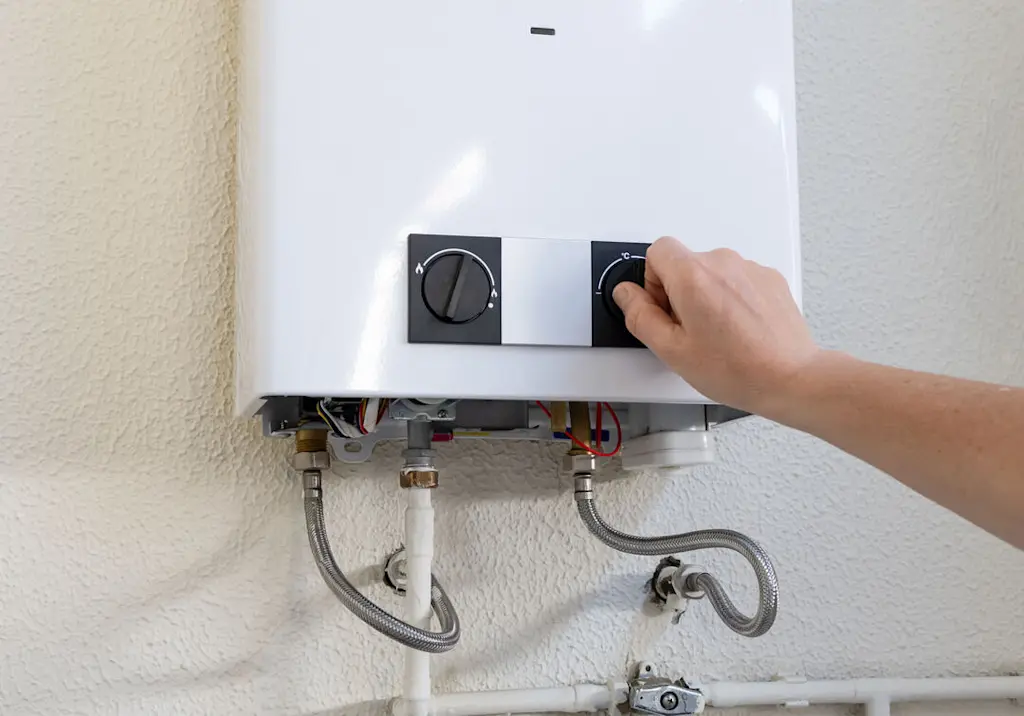
The price depends on your location, the heater’s condition, and the service required.
A basic inspection may cost less than a visit involving sediment removal, replacement of an anode rod, or diagnosis of an electrical fault. Labor rates, access to the heater, and replacement-part prices also affect the total.
When requesting a quote, ask the provider to explain:
- What the service includes.
- Whether parts and labor are included.
- Whether additional repairs are likely.
- Whether the manufacturer recommends the proposed work.
- Whether the heater may be more economical to replace.
The overall water heater maintenance cost should be considered alongside the age and condition of the unit. Preventive care may reduce avoidable repair expenses, but it does not guarantee that the heater will never fail.
Avoid choosing a service based on price alone. Proper diagnosis and safe work are especially important when electricity, hot water, and pressure-relief devices are involved.
A Simple Electric Water Heater Maintenance Checklist
Use this checklist as a reminder for routine observation.
- Check the floor around the heater for moisture.
- Inspect visible pipes and connections.
- Listen for unusual sounds.
- Notice changes in water temperature or supply.
- Check for rust or visible damage.
- Keep the area around the heater clear.
- Review the manufacturer’s recommended service schedule.
- Arrange professional service for persistent faults.
- Record inspections and repairs.
This routine takes only a little time and can make it easier to recognize changes before they become serious.
Conclusion
A reliable electric water heater depends on more than simply switching it on and forgetting about it. Regular inspections, suitable temperature settings, sediment control, and timely repairs can all help maintain dependable hot-water service.
Moreover, knowing your limits is just as important as knowing which checks to perform. Homeowners can look for leaks, monitor performance, and keep maintenance records, while qualified professionals should handle hazardous electrical work and difficult internal repairs.
The best approach is to follow the manufacturer’s instructions, adjust servicing to your water conditions, and respond quickly when something changes. A simple maintenance routine today can help you avoid unnecessary stress and make better decisions about your home’s hot-water system.
Frequently Asked Questions
1. How often should an electric water heater be flushed?
The recommended interval varies by model, water hardness, and usage. Check the owner’s manual and ask a qualified plumber whether your water conditions call for more frequent flushing.
2. What are the signs that an electric water heater needs maintenance?
Common signs include lukewarm water, unusual noises, reduced hot-water supply, visible leaks, and repeated electrical breaker trips. Persistent electrical problems should be checked by a professional.
3. Can I flush my electric water heater myself?
Some homeowners can perform the task by following the manufacturer’s instructions, but hot water, pressure, and electrical hazards make it important to use the correct procedure. If you are unsure, arrange professional service.
4. What temperature should an electric water heater be set to?
Around 120°F (49°C) is a common household recommendation for reducing scalding risk. However, the appropriate setting depends on the plumbing system, household needs, and applicable health guidance.
5. How long does an electric water heater usually last?
Many conventional storage-tank water heaters last roughly 8–12 years, although actual service life varies with water quality, maintenance, installation, and usage. Persistent leaks or frequent repairs may justify replacement sooner.






Leave a comment