


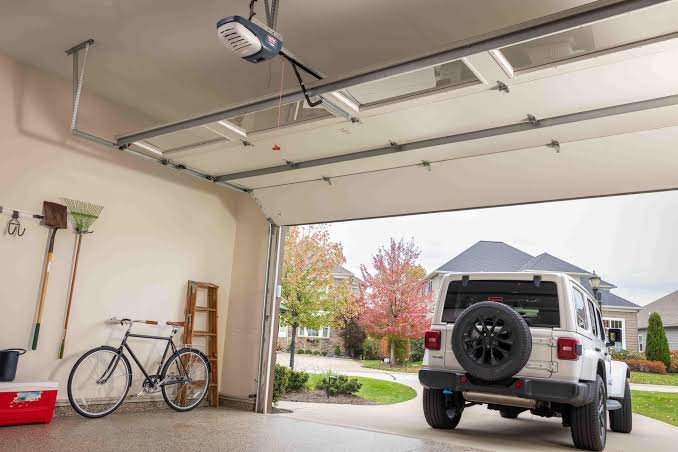
Have you ever arrived home with your hands full and wished your garage door could simply open itself? Or perhaps your old opener has started making strange noises every time you leave for work?
A garage door opener is easy to overlook, but it plays an important role in daily convenience, home security, and safe garage access. Modern models have moved well beyond basic remote controls. Many now include smartphone apps, rolling-code security, battery backup, LED lighting, motion detection, and smart-home integration.
The Best Garage Door Openers are not necessarily the most expensive models. The right choice depends on your garage door’s size and weight, available ceiling space, noise level, security needs, and the features you actually plan to use.
In this guide, we’ll look at the key features, drive systems, smart options, safety technologies, and installation considerations that can help you make a more informed decision.
What Makes the Best Garage Door Openers Stand Out?
Not every garage door opener is designed for the same situation. Before choosing one, think about how often you use your garage and what your existing door requires.
A good opener should provide reliable lifting power, smooth operation, strong safety features, and convenient controls.
Here are some of the most important factors to consider:
- Motor power: Larger or heavier doors may require more lifting capacity.
- Drive type: Chain, belt, screw, and wall-mounted systems have different strengths.
- Noise: Important when a garage is below or beside bedrooms.
- Smart controls: Useful for monitoring and controlling the garage remotely.
- Battery backup: Keeps the door usable during many power outages.
- Safety sensors: Help prevent the door from closing when something is underneath.
- Lighting: Modern LED systems can make entering and leaving the garage easier.
- Security: Rolling-code technology can reduce the risk of unauthorized access.
Moreover, compatibility matters. A powerful opener is not automatically the right opener if it is unsuitable for the type, size, or construction of your garage door.
Best Garage Door Openers: Understanding Drive Types
The drive system is one of the biggest differences between garage door openers. It determines how the motor transfers power to move the door.
Belt-Drive Openers
Belt-drive systems use a reinforced belt instead of a metal chain. They are often chosen because they provide smooth and relatively quiet operation.
This makes them particularly attractive for attached garages where noise can travel into the home.
A belt-drive opener can be a practical choice if:
- Your garage is close to living areas.
- You open and close the door frequently.
- You prefer smoother operation.
- Noise is a major concern.
Chain-Drive Openers
Chain-drive systems use a metal chain to move the garage door. They have traditionally been popular because of their durability and strong lifting ability.
However, chains can produce more vibration and mechanical noise than belt systems.
If you’re researching belt vs chain garage door opener, consider the environment rather than simply choosing one technology. A chain drive may make sense for a detached garage or a demanding door, while a belt drive can be appealing in a quiet home environment.
Screw-Drive Openers
Screw-drive systems use a threaded steel rod to move the trolley. They have fewer moving parts than some traditional designs and can provide dependable operation.
However, their suitability can vary depending on climate, door type, and manufacturer design.
Wall-Mount Openers
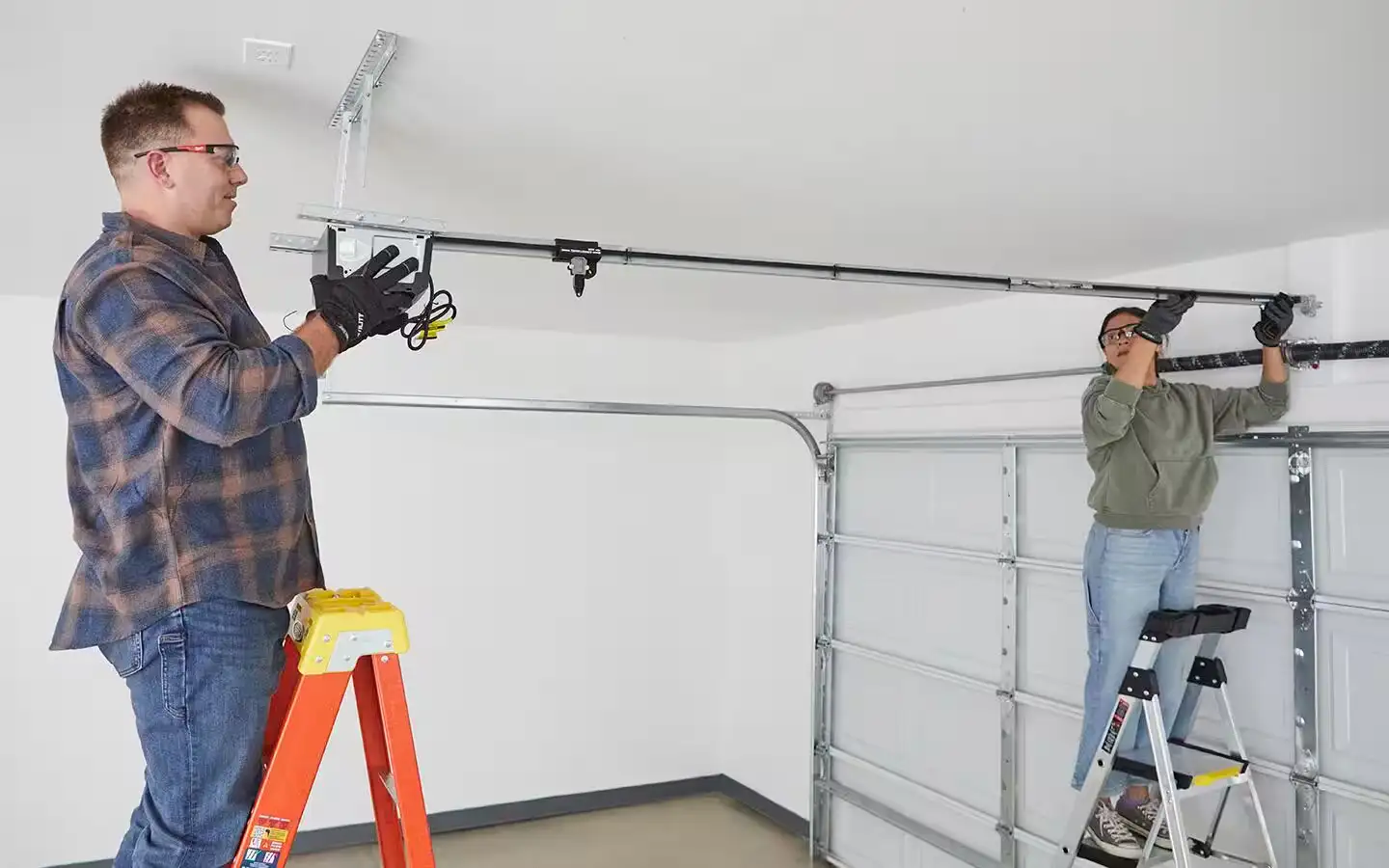
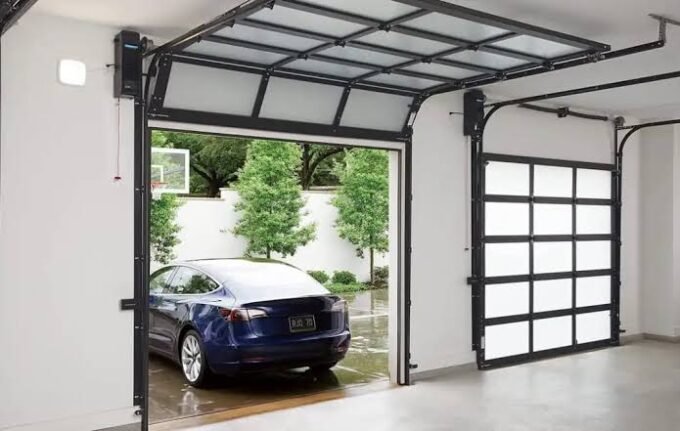
Wall-mounted systems, sometimes called jackshaft openers, are installed beside the garage door rather than on the ceiling.
They can free up ceiling space and may work especially well when the garage ceiling has unusual construction or when homeowners want a cleaner overhead area.
When comparing wall mount garage door opener vs ceiling mount, consider available space, door compatibility, installation requirements, and the location of electrical connections.
The Quietest Garage Door Opener: What Should You Look For?
Noise is often one of the first things homeowners notice after installing a new opener.
If your garage is underneath a bedroom, nursery, office, or living room, excessive vibration can become frustrating.
The quietest garage door opener for your home will generally depend on more than the motor itself.
Look for:
- Belt-drive technology
- Anti-vibration features
- Smooth trolley movement
- Proper installation
- A well-maintained garage door
That final point is particularly important.
A garage door that is poorly balanced, has worn rollers, or has damaged hardware can make significant noise even when paired with a relatively quiet opener.
Personal insight: In real-world use, homeowners sometimes focus heavily on the opener while overlooking the door itself. If the door is noisy or difficult to lift manually, replacing the opener alone may not solve the problem.
Choosing a Heavy Duty Garage Door Opener
Some garage doors are substantially heavier than standard residential doors. Wood doors, insulated doors, oversized doors, and certain custom designs may place greater demands on the opener.
A heavy duty garage door opener may be appropriate when the manufacturer specifically rates the unit for the door’s size and weight.
However, don’t assume that choosing the most powerful motor is always better.
Instead, check:
- Door dimensions
- Door weight
- Balance
- Construction
- Manufacturer specifications
- Required lifting capacity
A properly balanced garage door should move smoothly. If it feels unusually heavy when operated manually, have the door inspected rather than relying on a stronger opener to compensate.
Smart Garage Door Openers Are Changing Everyday Convenience
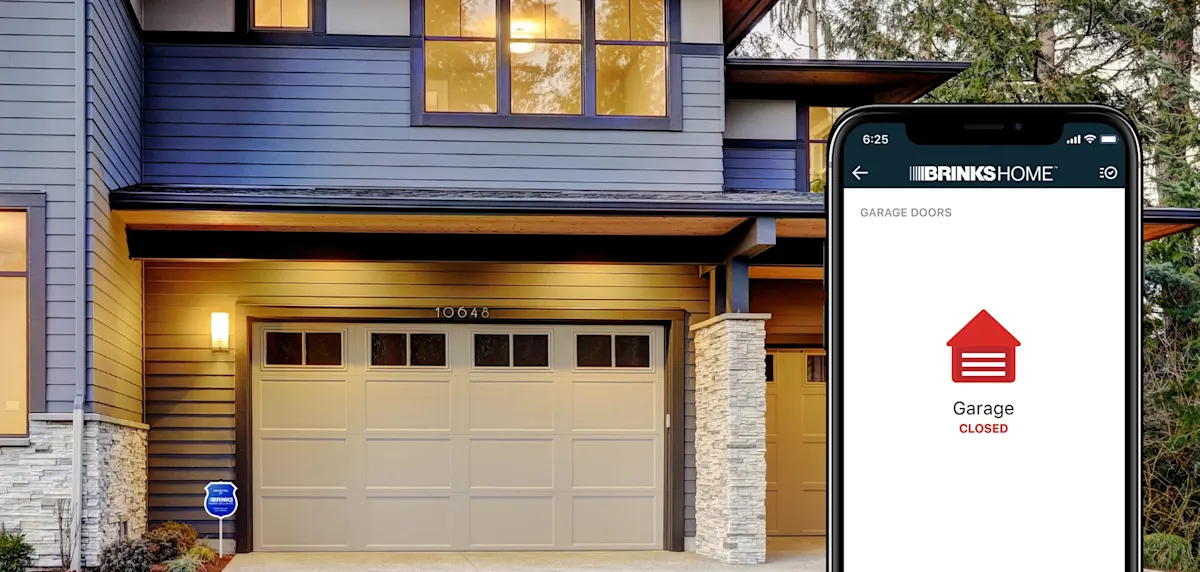
Smart technology has become one of the most noticeable developments in garage door systems.
Many modern openers can connect to Wi-Fi, allowing homeowners to control or monitor the garage through a smartphone.
Depending on the model, smart features may include:
- Remote opening and closing
- Door-status notifications
- Activity history
- Guest access
- Voice-assistant integration
- Smart-home automation
For example, you could receive a notification if the garage door remains open after you leave home.
That doesn’t mean every homeowner needs every smart feature. However, remote monitoring can be especially useful for families, frequent travelers, or anyone who regularly wonders whether they remembered to close the garage.
Why Smartphone Access Can Improve Security
A garage provides a direct entry point into many homes. For that reason, knowing whether the door is closed can be more useful than simply being able to open it remotely.
Modern systems may also use encrypted communication and rolling-code technology to help protect wireless access.
Still, smart technology should complement basic security practices rather than replace them.
Use a strong account password, enable multi-factor authentication when available, and keep the opener’s software and connected devices updated.
Battery Backup: A Feature Worth Considering
Power outages can happen during storms, extreme weather, or unexpected electrical problems.
Without battery backup, a garage door opener may stop operating electrically during an outage, although many garage doors can be disengaged and operated manually.
A battery backup system can provide additional convenience by allowing the opener to operate during a power interruption, subject to the manufacturer’s limits.
This can be particularly useful if the garage is your primary entrance.
Moreover, battery backup can reduce the need to manually lift the door when electricity is unavailable.
Safety Features You Shouldn’t Ignore
Garage doors are heavy moving systems, so safety features deserve as much attention as convenience features.
Modern residential openers commonly use photoelectric safety sensors. These sensors detect an object in the door’s path and can trigger the opener to reverse the closing motion.
Other useful features may include:
- Automatic reversing systems
- Motion detection
- Manual release mechanisms
- Automatic lighting
- Vacation or lock modes
- Warning alerts
Installation and testing also matter.
Even a well-designed opener cannot compensate for incorrectly positioned sensors or a damaged garage door system.
Homeowners should follow the manufacturer’s safety and maintenance instructions and have serious mechanical problems addressed by a qualified garage-door professional.
How to Compare Top Rated Garage Door Openers
When shoppers look at top rated garage door openers, ratings can provide useful information, but they should not be the only factor.
Instead, compare models based on your actual garage.
| Feature | Why It Matters |
| Drive system | Determines noise and operating characteristics |
| Motor capacity | Must match the door |
| Battery backup | Useful during power outages |
| Wi-Fi | Enables remote access and notifications |
| Safety sensors | Help prevent unsafe closing |
| LED lighting | Improves visibility |
| Wall mounting | Saves overhead ceiling space |
| Warranty | Provides additional ownership protection |
Reviews can also reveal practical details that specifications don’t always explain, such as installation difficulty, app reliability, or long-term noise.
However, make sure you’re comparing reviews of the same model and generation, because manufacturers can update products over time.
Installation: DIY or Professional?
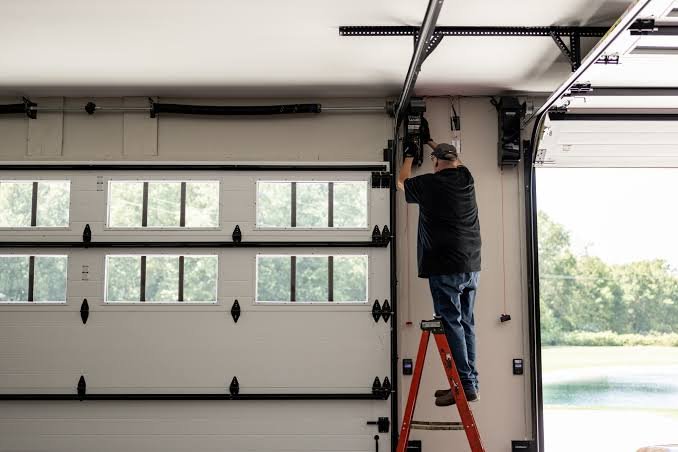
Some garage door openers are designed for homeowners who are comfortable with basic installation. Others may be more complicated.
The decision depends on the opener, garage construction, tools, and your experience.
Professional installation can be worthwhile when:
- The garage door is unusually heavy.
- The ceiling has unusual construction.
- Electrical work is required.
- Existing hardware is damaged.
- The door is poorly balanced.
- You are uncertain about sensor positioning.
A professional can also identify problems with springs, cables, rollers, tracks, and other components.
Important: Garage door springs can store substantial mechanical energy. They should not be adjusted or replaced casually without appropriate knowledge and equipment.
Maintenance Can Extend Opener Performance
Buying a quality opener is only part of the equation.
Regular maintenance can help keep the complete garage door system operating smoothly.
A simple routine can include:
- Checking the safety sensors.
- Inspecting cables and visible hardware.
- Keeping the sensor lenses clean.
- Listening for new or unusual sounds.
- Checking the door’s balance.
- Replacing remote batteries when needed.
- Following the manufacturer’s lubrication instructions.
Don’t ignore a sudden change in operation.
A grinding sound, jerky movement, repeated reversal, or unusually slow door can indicate a problem that should be investigated.
How Much Should You Spend?
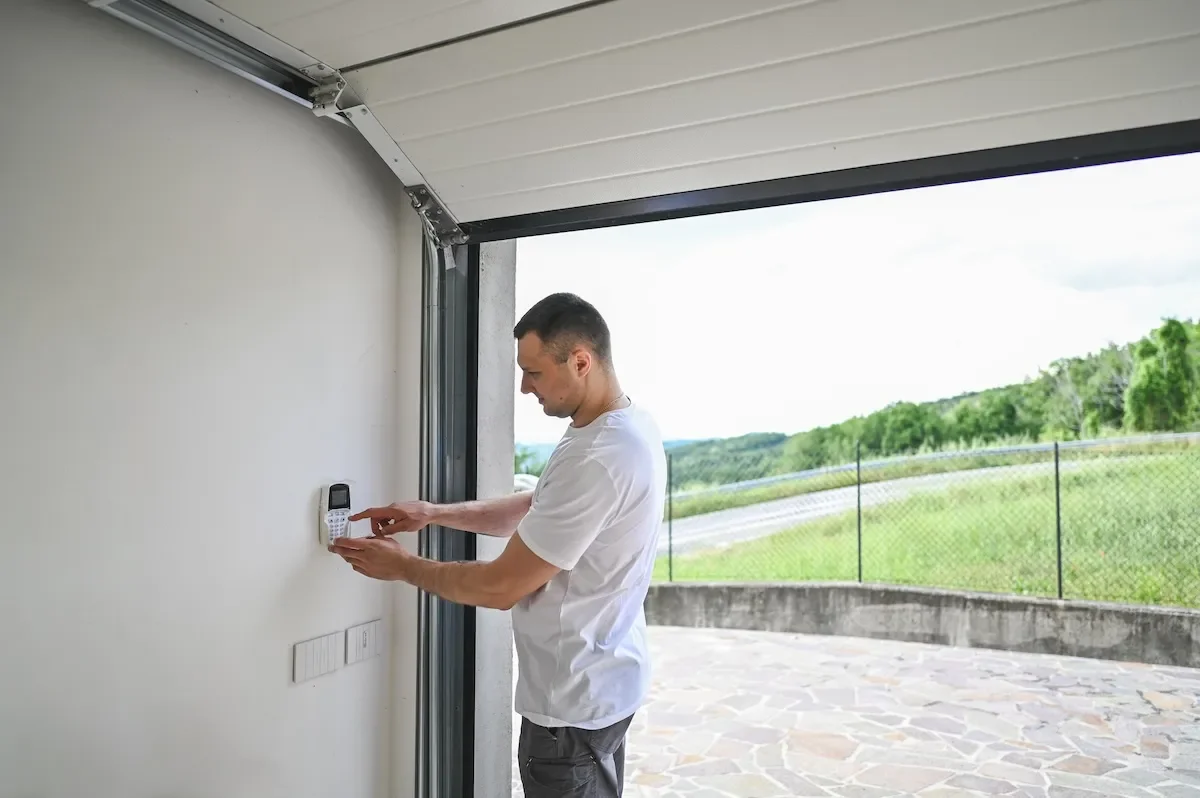
Garage door opener prices vary widely depending on motor type, smart features, battery backup, installation, and brand.
Instead of setting a budget first, determine which features you genuinely need.
For example, a homeowner with an attached garage below bedrooms may prioritize quiet operation. Someone in an area with frequent power interruptions may place greater value on battery backup.
Meanwhile, a homeowner who frequently travels may find smartphone notifications more useful than advanced lighting.
The best value is the combination of features that solves your specific problem, rather than simply buying the cheapest or most feature-packed model.
Common Mistakes to Avoid
Before purchasing an opener, watch out for these common mistakes.
1. Ignoring Door Weight
An opener must be compatible with the garage door. Check the manufacturer’s specifications carefully.
2. Choosing Only by Price
A low upfront price may not represent the best long-term value if the unit lacks features you need.
3. Forgetting Noise
For attached garages, vibration can matter almost as much as motor performance.
4. Overlooking Battery Backup
If the garage is your main entrance, consider what happens when the electricity goes out.
5. Ignoring Smart Security
If you use smartphone access, secure the associated account with a strong password and available security controls.
Conclusion
The Best Garage Door Openers combine reliable performance with features that make everyday garage access safer and easier.
For a quiet attached garage, a belt-drive system may be worth considering. For demanding applications, a properly rated heavy-duty model may be more suitable. Meanwhile, smart connectivity and battery backup can add another layer of convenience.
Most importantly, choose an opener based on your garage door, available space, noise requirements, security needs, and daily routine.
A garage door opener is something you may use several times every day. Taking a little extra time to compare the drive system, safety features, smart functions, and installation requirements can make a noticeable difference for years to come.
FAQs About the Best Garage Door Openers
What is the best type of garage door opener?
There isn’t one type that fits every garage. Belt-drive systems are often chosen for quieter operation, while chain-drive systems can be suitable for demanding residential applications.
Are smart garage door openers worth it?
Smart openers can be useful if you want remote control, door-status alerts, activity monitoring, or smart-home integration. Their value depends on how you use your garage.
Is a belt-drive opener quieter than a chain-drive opener?
Generally, belt-drive systems produce less mechanical noise and vibration. However, the condition of the garage door and the quality of installation also have a major effect on overall noise.
Do garage door openers need battery backup?
Battery backup is not essential for every homeowner, but it can be valuable when the garage is a primary entrance or when power outages are common.
How long do garage door openers last?
Lifespan varies with the model, installation, frequency of use, maintenance, and condition of the garage door. Regular inspection and maintenance can help identify problems before they become major failures.








5 Comments