


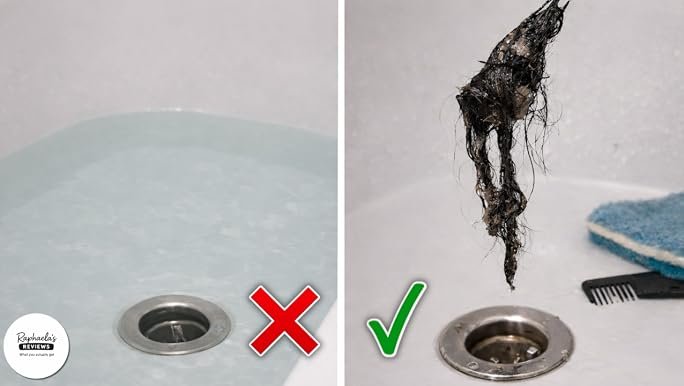
Have you ever turned on the bathroom faucet only to watch the water collect in the basin instead of flowing down the drain? Hair buildup is one common reason this happens, especially when loose strands mix with soap residue, toothpaste, and other debris.
The good news is that you can often clear a hair-clogged bathroom sink with a few simple tools. You may not need expensive drain cleaners or professional equipment. However, choosing the right method matters because forceful or unsafe cleaning can damage pipes and make the problem worse.
In this guide, you will learn how to unclog bathroom sink clogged with hair using practical, step-by-step methods. You will also discover which tools work best, what mistakes to avoid, and how to prevent the same blockage from returning.
Why Does Hair Clog a Bathroom Sink?
Hair rarely blocks a drain all by itself. Instead, loose strands become trapped around the stopper, drain opening, or inside the pipe. Over time, they collect other materials and form a thick mass that slows the flow of water.
For example, short hairs from shaving can mix with shaving cream, while longer strands may wrap around the drain mechanism. Soap residue then sticks to the hair, making the buildup harder to remove.
Several common factors can contribute to the problem.
- Hair buildup: Loose strands collect around the stopper and inside the drain.
- Soap residue: Soap can leave a film that traps hair and other debris.
- Toothpaste: Thick toothpaste residue may contribute to buildup inside narrow pipes.
- Dirt and skin oils: These materials can stick to existing debris.
- A poorly fitting stopper: Some stopper designs collect hair more easily than others.
- Narrow or damaged pipes: Certain pipe conditions can make blockages more likely.
Moreover, a sink that drains slowly for weeks may eventually stop draining altogether. Removing the buildup early is usually easier than dealing with a complete blockage.
How to Unclog a Bathroom Sink Clogged With Hair: 6 DIY Methods
Before you begin, remove items from beneath the sink and place a towel nearby. If the basin contains standing water, remove as much as possible with a small container.
Wear rubber gloves, and avoid mixing cleaning products. In particular, never combine bleach, acidic cleaners, or chemical drain openers because dangerous reactions may occur.
1. Remove Hair From the Drain Stopper
The easiest solution is often right beneath the drain opening. Many bathroom sinks have a stopper that catches hair before it moves farther into the plumbing.
What you need:
- Rubber gloves
- An old toothbrush or small cleaning brush
- A cloth or paper towels
- A flashlight, if needed
Steps:
- Put on your gloves.
- Inspect the drain opening for visible hair.
- If the stopper lifts out easily, remove it according to its design.
- Pull away any hair and debris wrapped around the stopper.
- Clean the stopper with warm water and a brush.
- Reinstall it and run the faucet briefly to test drainage.
Some stoppers connect to a metal rod beneath the sink. If yours does, you may need to loosen the retaining nut and disconnect the rod before removing the stopper. Take a photo before disassembly so you can remember how the parts fit together.
My practical tip: Start with this method even if the blockage seems serious. Hair often collects near the top of the drain, and removing it can restore normal flow in just a few minutes.
However, do not force a stopper that appears stuck. Check its design or consult the manufacturer’s instructions first.
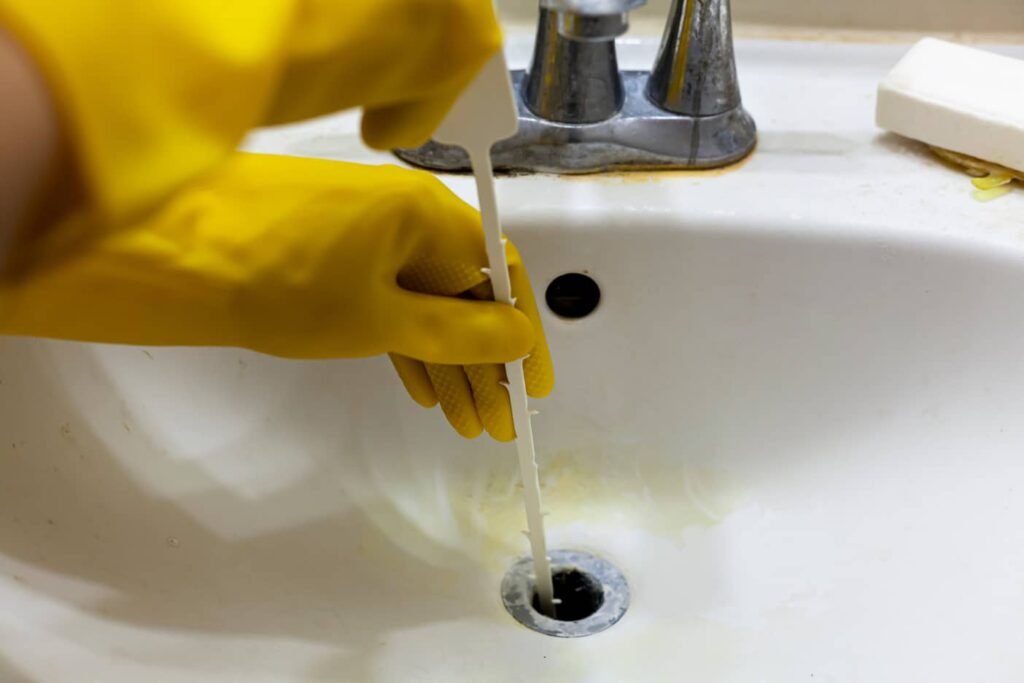
2. Use a Plastic Drain Snake
A small plastic drain snake is one of the most useful tools for removing hair. It usually has small teeth or barbs that catch strands as you pull it out.
Unlike some chemical products, a simple manual tool can remove the material causing the blockage rather than attempting to dissolve it.
How to use a drain snake:
- Remove the stopper if possible.
- Insert the plastic tool slowly into the drain.
- Move it gently until you feel resistance.
- Twist or move it slightly to catch the hair.
- Pull it out carefully without forcing it.
- Remove the collected debris and repeat if necessary.
- Flush the drain with warm tap water once the blockage has cleared.
You may need several attempts because hair can collect at different points inside the pipe.
Important: Do not push aggressively when the tool meets resistance. You could damage the stopper mechanism or push debris farther into the plumbing. If the tool cannot reach the blockage, a longer manual drain auger may be more suitable.
After removing the hair, clean the tool according to its instructions. Disposable tools should be discarded safely rather than reused.
3. Try a Sink Plunger
A small sink plunger can help loosen a blockage that sits beyond the drain opening. It works by creating pressure changes that may move debris through the pipe.
However, it is most useful when the clog is relatively loose. A dense bundle of hair may need to be removed manually.
Follow these steps:
- Remove the stopper if necessary.
- Add enough water to cover the plunger’s rubber cup.
- Cover the sink’s overflow opening with a damp cloth.
- Place the plunger directly over the drain.
- Press down gently to create a seal.
- Pump up and down several times without lifting the cup.
- Remove the plunger and check whether the water drains.
If the sink has a double-basin design, seal the other drain before plunging. This helps maintain pressure.
Do not plunge if you have recently poured a chemical drain cleaner into the sink. The liquid could splash onto your skin or eyes. Follow the product’s safety instructions and avoid any action that could expose you to the chemical.
4. Clean the P-Trap Under the Sink
If the stopper and drain snake do not solve the problem, the blockage may be inside the P-trap. This curved section of pipe sits beneath the sink and holds water to prevent sewer gases from entering your bathroom.
Hair and sludge can collect in this area, particularly around joints and changes in pipe direction.
Before starting, gather:
- A bucket
- Rubber gloves
- Old towels
- A suitable wrench, if needed
- A small brush
How to clean the P-trap:
- Place a bucket directly beneath the curved pipe.
- Clear the area so you can work comfortably.
- Loosen the slip nuts by hand if possible.
- Allow the water inside the trap to drain into the bucket.
- Remove the trap carefully.
- Clear out hair, soap residue, and other debris.
- Wash the trap and inspect the seals.
- Reinstall the trap, ensuring the washers sit correctly.
- Tighten the connections without overtightening them.
- Run water and check carefully for leaks.
If the pipes are corroded, brittle, glued together, or difficult to remove, stop and contact a plumber. Older plumbing can crack when disturbed.
This method is especially useful when a blockage has formed inside the curved pipe. Nevertheless, if the trap is clear and water still drains slowly, the obstruction may be farther downstream.
5. Flush With Warm Water and a Little Dish Soap
Warm water may help loosen greasy soap residue that holds hair together. However, it will not reliably dissolve a thick bundle of hair, so treat this method as a supporting step rather than a complete solution.
First, remove visible hair from the drain. Then add a small amount of dish soap and flush with warm tap water.
Avoid pouring boiling water into the sink. Very hot water may damage some plastic plumbing components or stress certain fixtures. Warm water is a safer choice for routine cleaning.
If water is standing in the basin and cannot drain, do not keep adding more liquid. Remove the standing water first and use a manual cleaning method.
Also, do not rely on baking soda and vinegar to clear a dense hair clog. The fizzing reaction may loosen some surface residue, but it is not a dependable way to remove a compact mass of hair.
6. Use a Manual Drain Auger for Deeper Blockages
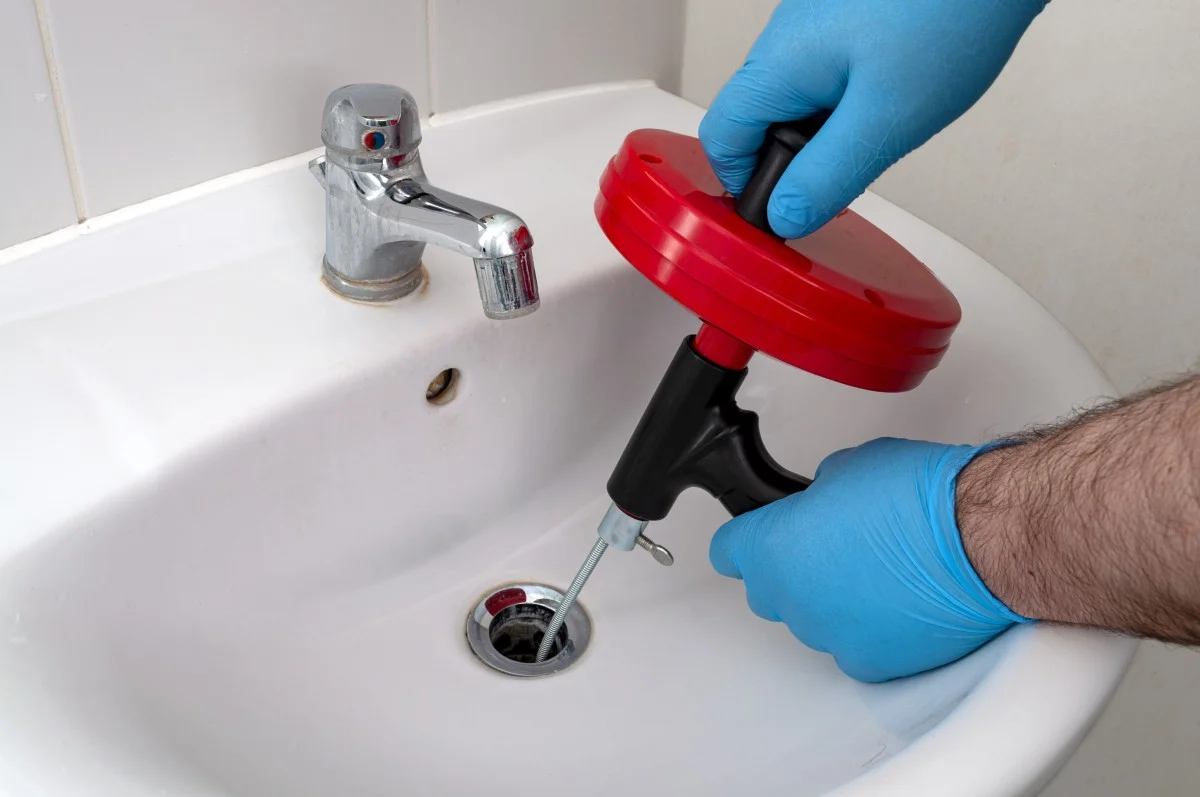
A manual drain auger, sometimes called a hand snake, has a longer flexible cable that can reach farther into the drain system than a short plastic tool.
It may help when hair has moved beyond the stopper or the P-trap.
To use one safely:
- Read the tool’s instructions.
- Remove the stopper or disconnect the P-trap if required by the tool design.
- Feed the cable slowly into the drain.
- Turn the handle gently when you encounter resistance.
- Withdraw the cable carefully.
- Remove any debris and repeat only as needed.
Do not force the cable or use a powered auger unless you understand the equipment and know it is suitable for the pipe. Excessive force can damage plumbing.
If the cable repeatedly stops at the same point, the obstruction may involve a pipe fitting, a deeper clog, or a damaged section of plumbing. A plumber can inspect the line and choose the correct tool.
How to Know Where the Hair Clog Is Located
Finding the likely location of the blockage can save time and prevent unnecessary disassembly.
| What you notice | Possible cause | Best next step |
| Water drains slowly, but eventually clears | Partial buildup near the stopper | Remove the stopper and visible hair |
| Water barely drains at all | Dense hair or debris in the drain | Try a plastic drain snake |
| The sink improves briefly, then clogs again | Debris remains farther down the pipe | Inspect the P-trap or use a suitable auger |
| Several fixtures drain slowly | A larger branch or main drain problem | Contact a plumber |
| Water backs up into the sink when another fixture runs | A shared drainage line may be blocked | Stop using affected fixtures and seek professional help |
A single slow sink often points to a local blockage. However, if a bathtub, shower, or another sink also drains poorly, the issue may be beyond the bathroom sink’s individual trap.
In that situation, repeated cleaning at the sink opening may not solve the underlying problem.
What If the Bathroom Sink Is Still Clogged?
If the basic methods fail, avoid repeating the same steps indefinitely. The next action depends on where the obstruction sits.
When the blockage is beyond the P-trap
A blockage can develop farther along the drain line. If the trap is clean but the sink remains slow, a longer manual auger may help. However, persistent resistance or repeated clogs can indicate a deeper plumbing issue.
When the clog may be inside the wall
A bathroom sink clogged behind wall may involve a drain line that cannot be reached through the sink opening or P-trap. Signs include recurring blockages, unusual gurgling, or problems affecting nearby fixtures.
A plumber may use a drain auger or inspection camera to locate the obstruction. Do not cut into the wall simply because the sink drains slowly; first rule out accessible blockages.
When water backs up into other fixtures
If using the sink causes water to appear in a shower or another drain, the problem may involve a shared drain line. Stop using the affected fixtures and arrange a professional inspection.
Likewise, if you suspect a bathroom sink clogged past trap, avoid pushing tools blindly into the pipe. The blockage could be farther downstream, where a different approach is needed.
Common Mistakes to Avoid When Removing Hair
A few seemingly helpful actions can make a drain problem worse.
- Using too much force: Aggressive plunging or pushing can damage fittings or move debris deeper into the line.
- Mixing drain cleaners: Combining chemical products can release dangerous fumes or cause other hazardous reactions.
- Pouring boiling water into plastic pipes: Excessive heat may damage some plumbing materials.
- Ignoring a leaking trap: A leak after cleaning can damage the cabinet and surrounding surfaces.
- Using sharp objects: Knives, wire hangers, and similar items can scratch pipes, become stuck, or damage the drain.
- Repeating temporary fixes: If the sink clogs again within a short time, look for the underlying cause.
Moreover, avoid dismantling glued PVC pipes or corroded metal connections unless you have the right experience. A small repair can become more expensive if a fitting breaks.
How to Prevent Hair From Clogging Your Bathroom Sink
Preventing buildup is easier than clearing a fully blocked drain. A few simple habits can make a noticeable difference.
Install a drain hair catcher
A removable drain screen or hair catcher traps loose strands before they enter the plumbing. Choose one that fits your sink and does not interfere with the stopper.
Clean it regularly. A hair catcher that remains full can slow drainage even when the pipe itself is clear.
Clean the stopper every week
Lift out the stopper when the design allows it and remove any visible hair. This quick task can prevent strands from accumulating deeper in the drain.
If several people share the bathroom, a weekly check may be especially helpful.
Avoid washing large amounts of hair into the sink
After trimming facial hair or grooming, collect loose strands with a tissue and place them in the trash. Do not deliberately rinse large clumps down the drain.
Watch for early warning signs
A slight delay in drainage is easier to address than a completely blocked sink. If water begins pooling around the drain, clean the stopper before the problem gets worse.
Keep the P-trap in good condition
Check beneath the sink occasionally for leaks, loose connections, or signs of corrosion. If you notice a problem, address it early rather than waiting for a complete blockage.
When Should You Call a Plumber?
DIY methods are useful for many hair clogs, but some problems need professional equipment or experience.
Contact a plumber if:
- The sink remains blocked after you remove the stopper and inspect the P-trap.
- The drain clogs again soon after cleaning.
- Multiple fixtures drain slowly or back up.
- You notice sewage odors, unusual gurgling, or water backing up elsewhere.
- The plumbing is damaged, corroded, or leaking.
- You suspect a blockage deep inside the drain line.
A plumber can determine whether the problem is a simple obstruction, a damaged pipe, or an issue with a shared drainage line. Depending on the cause and local labor rates, costs can vary significantly, so ask for an estimate before work begins.
If you have already used a chemical drain opener, tell the plumber which product you used and when. This information helps them take appropriate safety precautions.
Conclusion: Keep Your Bathroom Sink Draining Properly
Learning how to unclog bathroom sink clogged with hair starts with a simple principle: remove the material causing the blockage instead of relying on harsh chemicals.
Begin by cleaning the stopper, then use a plastic drain snake if hair remains deeper inside the drain. If necessary, inspect the P-trap carefully or seek professional help for a blockage farther down the line.
Most importantly, prevent future problems with a drain hair catcher and regular cleaning. A few minutes of maintenance can save you the inconvenience of standing water, repeated clogs, and unexpected plumbing costs.
The key takeaway: Start with the simplest safe method, avoid forcing tools into the pipe, and call a plumber when the signs point to a deeper problem.
FAQs
1. What is the fastest way to remove hair from a bathroom sink drain?
Removing the stopper and pulling out visible hair is often the quickest solution. If the blockage sits deeper in the drain, a plastic drain snake may help remove it without taking apart the plumbing.
2. How to unclog bathroom sink clogged with hair without chemicals?
Start by removing the stopper and clearing away visible hair. Then use a plastic drain snake or, if appropriate, a sink plunger. These methods physically remove or loosen the blockage without chemical drain cleaners.
3. Why is my bathroom sink clogged even after cleaning the drain?
The blockage may be farther down the pipe, inside the P-trap, or in a shared drain line. Hair may also remain wrapped around the stopper mechanism. If the sink clogs repeatedly, investigate beyond the drain opening.
4. Can baking soda and vinegar dissolve hair in a sink drain?
No. Although the mixture produces fizzing, it is not a reliable way to dissolve a dense hair clog. A manual drain snake is usually more effective because it physically removes the material.
5. How often should I clean my bathroom sink drain?
Check the stopper weekly if your household produces a lot of loose hair. Clean the drain catcher as needed and address slow drainage early to reduce the chance of a complete blockage.












Leave a comment