


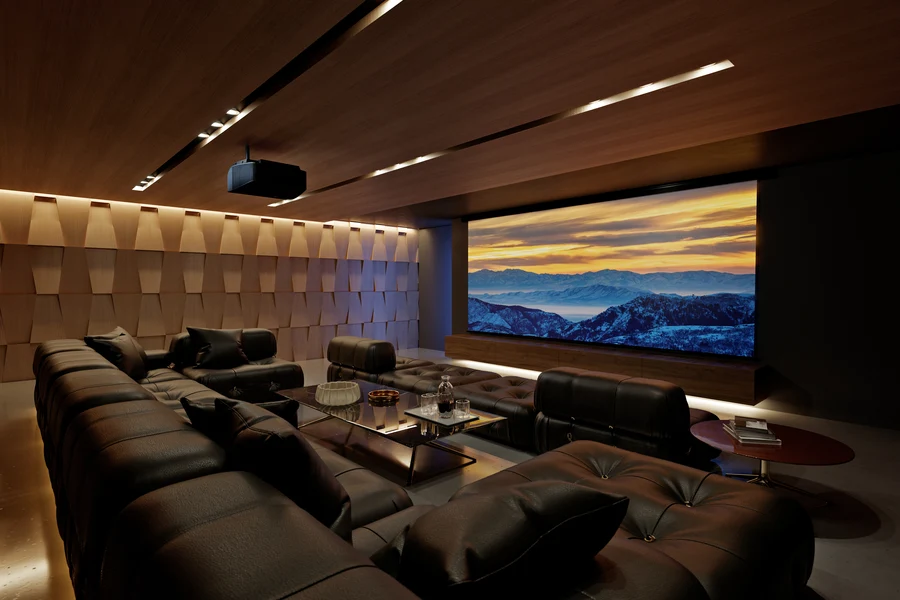
Have you ever imagined watching a movie in a room designed specifically for the experience?
A dedicated home theater can make movie nights, sports events, and gaming much more enjoyable. However, creating a theater is more complicated than putting a large television in an empty room.
The home theater renovation cost depends on the condition and size of the room, the equipment you choose, soundproofing requirements, electrical work, lighting, seating, and ventilation.
Moreover, some of the most important improvements are hidden behind walls and ceilings. Good wiring and acoustic treatment may not be visible, but they can have a major impact on the finished room.
In this guide, we will break down the main expenses, explain where homeowners should spend more, and show how to build a theater that feels impressive without wasting money.
What Determines Home Theater Renovation Cost?
Every theater project is different.
A basic media room may require little more than paint, lighting, a television, and comfortable seating. A dedicated cinema room can involve construction, acoustic treatment, electrical upgrades, specialized lighting, and professional installation.
The biggest cost factors include:
- Room size
- Existing room condition
- Audio equipment
- Display system
- Soundproofing
- Electrical work
- Lighting
- Seating
- Flooring
- HVAC and ventilation
- Smart-home controls
The room itself often matters more than the equipment.
For example, a very expensive sound system may not perform well in a room with poor acoustics.
Home Theater Renovation Cost: Basic vs. Premium Setup
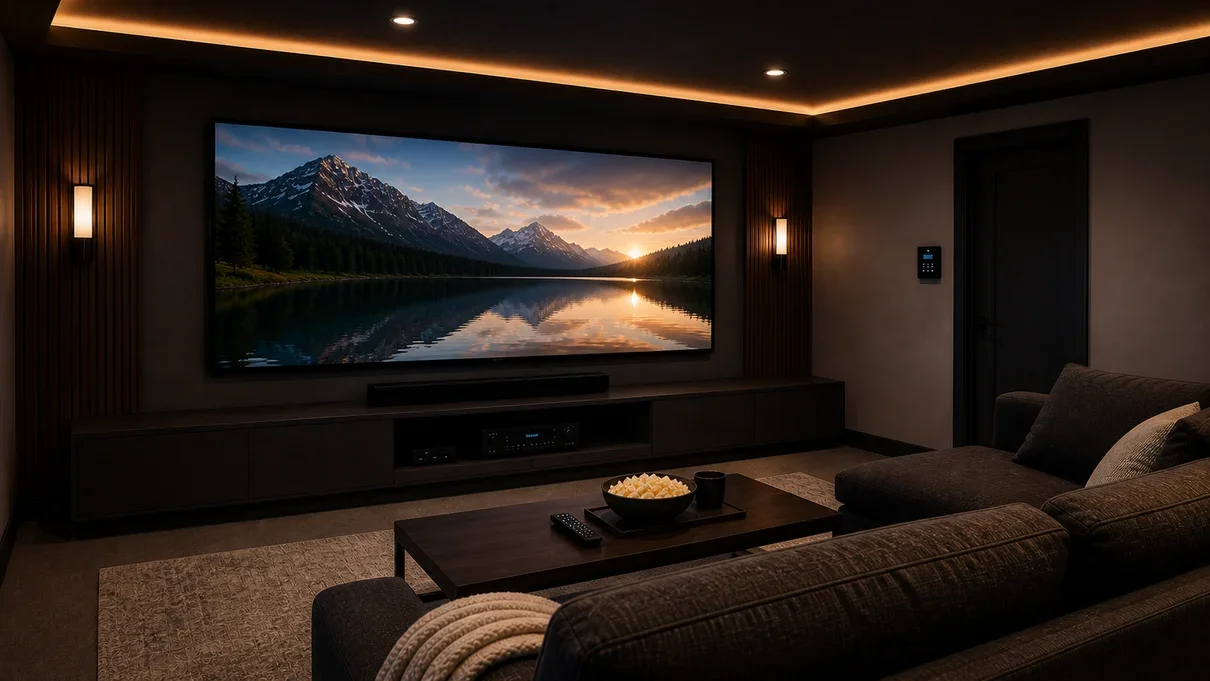
One of the easiest ways to understand the budget is to divide theater projects into levels.
| Theater type | Typical features | Budget level |
| Basic media room | TV, simple speakers, lighting | Lower |
| Mid-range theater | Projector, screen, surround sound, seating | Medium |
| Premium theater | Acoustic design, high-end equipment, custom seating | High |
A homeowner does not necessarily need a premium setup.
In fact, thoughtful room design can sometimes provide a better experience than simply buying the most expensive equipment.
The Room: Your First Investment
Before buying equipment, inspect the room.
A basement, spare bedroom, or large living room can all become entertainment spaces, but each presents different challenges.
Basement theater
Basements can be excellent because they naturally provide separation from the rest of the home.
However, you should check:
- Moisture
- Ceiling height
- Insulation
- Egress requirements
- Ventilation
- Existing electrical capacity
Moisture should be solved before expensive equipment or flooring is installed.
Spare bedroom
A spare bedroom may require less structural work.
The main challenges are often room dimensions, windows, sound leakage, and furniture placement.
Existing living room
This can be the most affordable option because major construction may not be necessary.
However, you may have fewer opportunities to control light and sound.
Soundproofing: One of the Most Important Costs
Many homeowners initially focus on the screen.
However, sound quality and sound control can make a bigger difference than expected.
Soundproofing can involve:
- Insulated wall cavities
- Acoustic panels
- Sealed doors
- Special drywall assemblies
- Ceiling treatment
- Floor treatment
- Improved wall construction
There is an important distinction between soundproofing and acoustic treatment.
Soundproofing attempts to prevent sound from moving between rooms. Acoustic treatment improves how sound behaves inside the theater.
You may need one, the other, or both.
Example
Imagine a basement theater located directly beneath a bedroom.
A powerful subwoofer could send low-frequency vibrations through the structure.
In this situation, simply adding decorative acoustic panels may not solve the problem. The construction of the floor, walls, ceiling, and room connections matters.
That is why sound planning should happen before drywall is installed.
Choosing the Display System
Your screen is one of the most visible parts of the theater.
You generally have two main choices:
Large television
A large TV can offer excellent picture quality and simple installation.
It may also be easier to use for gaming and everyday viewing.
Projector and screen
A projector creates a more traditional cinema experience.
However, the room needs appropriate light control, screen placement, projector positioning, and enough viewing distance.
The best choice depends on the room rather than simply the equipment price.
Audio Equipment and Speaker Placement
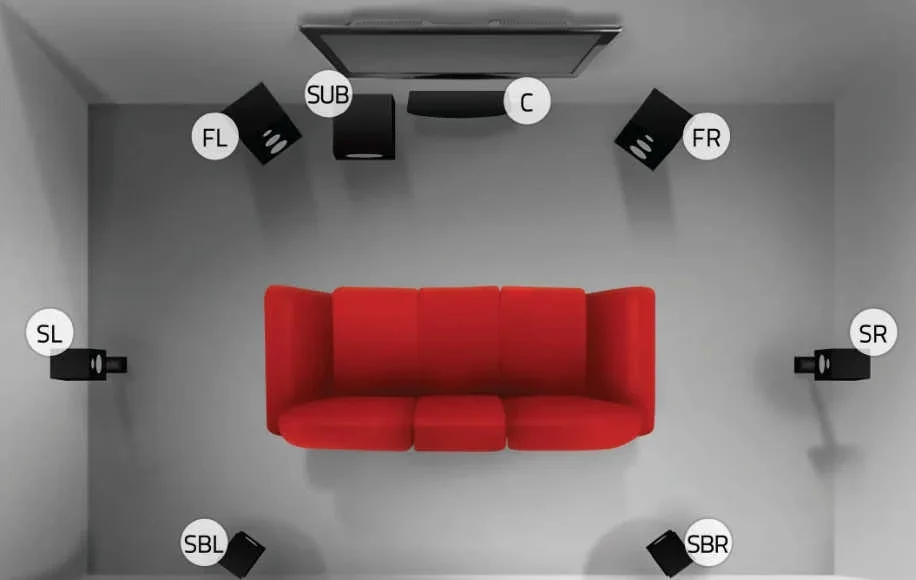
A home theater is about sound as much as the picture.
A surround-sound system may include:
- Front speakers
- Center speaker
- Rear speakers
- Subwoofer
- AV receiver
- In-wall or ceiling speakers
Speaker placement should be considered before walls are closed.
Personal insight: It is usually better to plan the speaker locations before construction rather than trying to hide wires after the room is finished.
That simple step can improve both appearance and performance.
Lighting Can Change the Entire Experience
Good theater lighting should be flexible.
Consider:
- Recessed lights
- Wall sconces
- Step lighting
- Dimmable fixtures
- LED strips
- Backlighting
- Smart controls
You do not want bright overhead lights reflecting off the screen during a movie.
Instead, use several lighting zones.
For example, the main lights can be dimmed while aisle or step lights remain slightly brighter for safety.
Seating and Room Layout
Comfort matters.
A theater can have excellent technology but still feel disappointing if the seating is uncomfortable or badly positioned.
Before buying chairs, consider:
- Viewing distance
- Number of seats
- Walking space
- Screen height
- Door position
- Speaker placement
Reclining theater seats can be attractive, but they take more space than ordinary sofas.
Therefore, measure the room carefully before ordering furniture.
Flooring and Walls
Flooring should be selected based on the room’s use.
Carpets can help absorb sound and create a traditional theater feel. Luxury vinyl or other hard surfaces may be easier to clean.
Walls can also contribute to the room’s appearance and acoustic performance.
Dark, low-reflective colors are often practical because they reduce distracting reflections around the screen.
However, homeowners should balance appearance with ventilation, maintenance, and personal preference.
Electrical Work and Wiring
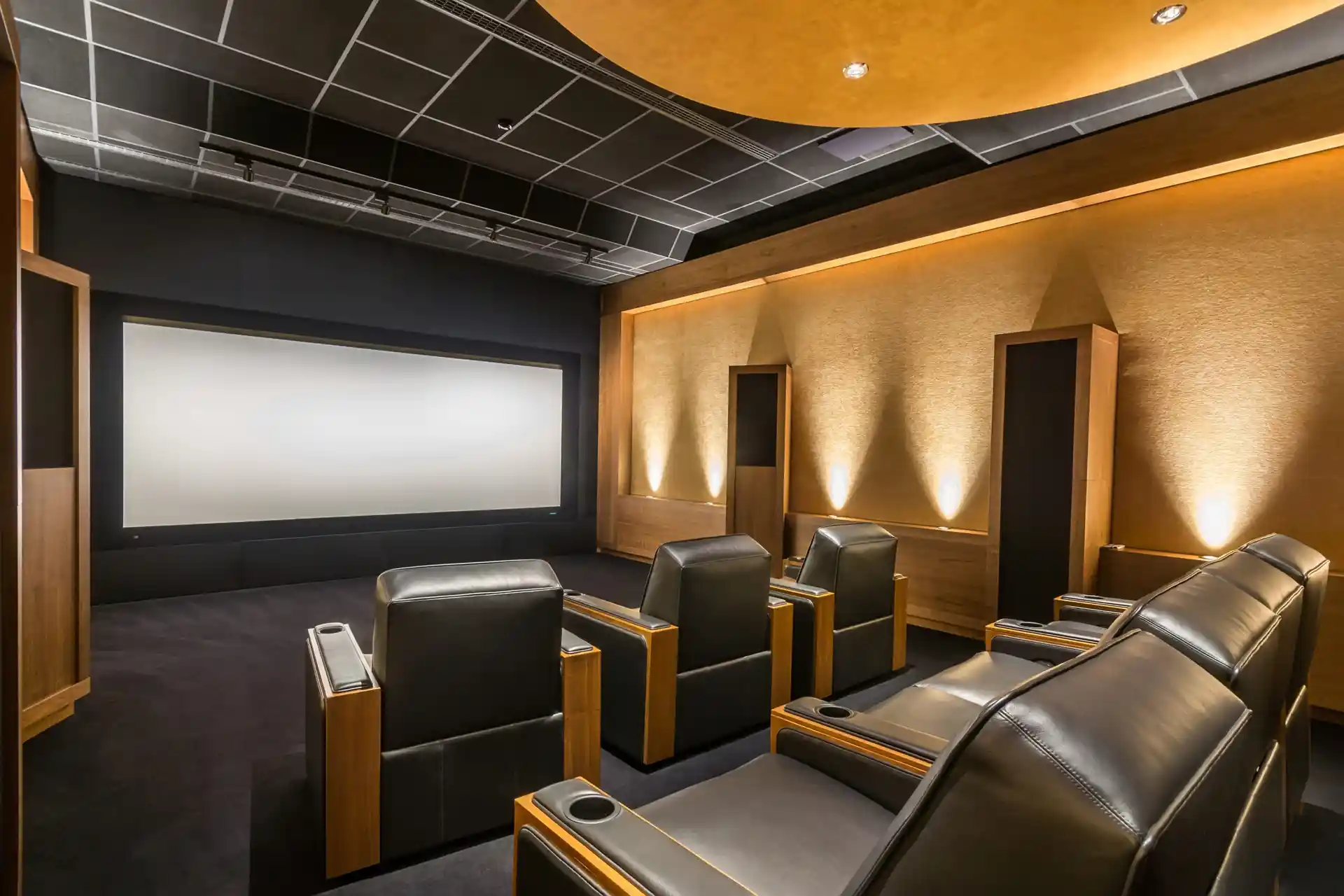
A theater can require more electrical planning than a normal bedroom.
You may need power for:
- Projector
- Television
- AV receiver
- Speakers
- Gaming systems
- Streaming devices
- Lighting
- Subwoofer
- Smart-home controls
Cable management should also be planned early.
Running wires inside walls during renovation is generally easier than hiding them after construction is complete.
If electrical capacity needs to be changed, have the work evaluated and completed according to local requirements.
Ventilation and Temperature Control
A room full of electronics can generate considerable heat.
Projectors, receivers, gaming equipment, and other devices can warm a small room quickly.
Therefore, ventilation should not be an afterthought.
A comfortable theater may require:
- Improved air circulation
- HVAC adjustments
- Quiet ventilation
- Additional return-air capacity
- Equipment ventilation
The goal is simple: keep the room comfortable without creating distracting background noise.
How Home Theater Renovation Cost Compares With Other Projects
Homeowners often compare different renovation projects before deciding how to use an available budget.
For example, a person researching home office renovation cost may prioritize electrical outlets, lighting, storage, and internet connectivity.
Someone researching home gym renovation cost may focus more on flooring, mirrors, ventilation, and equipment.
Meanwhile, homeowners considering the full home renovation cost are dealing with a much broader project.
A theater is different because much of its value comes from the combination of technology and room design.
Average Home Renovation Cost vs. Theater Renovation
The average home renovation cost is not a particularly useful number when planning a dedicated theater.
Why?
Because theater projects have specialized components that normal room renovations may not include.
These can include:
- Projector systems
- Acoustic treatment
- Surround sound
- Specialized seating
- Smart lighting
- Soundproofing
- AV equipment
Therefore, create a room-specific budget rather than applying a general renovation figure.
What About a Mobile Home?
Entertainment spaces can also be created in manufactured homes.
However, the mobile home renovation cost may be affected by the home’s construction, available space, electrical capacity, and floor plan.
A compact media room may be more practical than a large dedicated theater.
In smaller homes, a wall-mounted television, compact speakers, comfortable seating, and good lighting can create an excellent entertainment area without major construction.
Does a Full Gut Renovation Include a Theater?
Sometimes.
A homeowner completing a full gut home renovation cost analysis may decide to create a dedicated entertainment room during the larger project.
This can be an excellent opportunity because wiring, insulation, walls, lighting, and HVAC can be planned before the renovation is complete.
However, adding specialized theater equipment can still increase the overall budget.
Smart Ways to Reduce Theater Renovation Cost
You do not need a luxury cinema to enjoy a great movie room.
Keep the room’s existing structure
Avoid moving walls unless there is a strong reason.
Structural changes can increase labor, material, and design costs.
Plan wiring early
Running cables during construction is generally easier than opening finished walls later.
Spend money on acoustics
A moderately priced sound system in a well-designed room can outperform a much more expensive system in a poorly treated room.
Choose equipment based on the room
Do not buy the biggest screen or most powerful speakers simply because they are available.
Room dimensions should guide equipment selection.
Use smart lighting strategically
You do not need dozens of expensive fixtures.
A few well-planned dimmable zones can create a much better atmosphere.
A Simple Example Budget Strategy
Imagine you have a limited renovation budget.
Instead of spending most of it on a premium projector, you could divide the money across the room:
- Room preparation
- Electrical and wiring
- Basic sound treatment
- Quality display
- Surround sound
- Comfortable seating
- Lighting
- Décor
This approach creates a balanced theater rather than one impressive component surrounded by unfinished details.
Conclusion
The home theater renovation cost depends on much more than the price of a television or projector.
The room itself, soundproofing, acoustics, electrical work, wiring, lighting, seating, ventilation, and equipment all influence the final result.
However, you do not need to build an expensive luxury cinema to create an impressive entertainment space.
Plan the room first, then choose the technology.
Focus your budget on the improvements that will have the biggest effect on comfort and performance. Moreover, handle wiring, acoustics, and ventilation before the walls are finished.
In short, the best home theater is not necessarily the most expensive one. It is the one that is properly planned for the room, the people using it, and the budget available.
FAQs
How much does a home theater renovation cost?
The cost varies widely depending on the room, construction work, soundproofing, equipment, seating, lighting, and electrical requirements. A simple media room can cost much less than a custom cinema.
What is the most important part of a home theater?
Room design and acoustics are extremely important. A quality display and sound system will perform much better when the room has appropriate speaker placement, lighting, and acoustic control.
Is a projector better than a large TV?
Not always. Projectors can provide a more traditional cinema experience, while large TVs often offer easier installation and excellent picture quality. The right choice depends on room size, lighting, and viewing preferences.
Should I soundproof my home theater?
Soundproofing can be worthwhile if you want to prevent noise from reaching bedrooms or neighboring rooms. However, acoustic treatment and soundproofing solve different problems.
Can I build a home theater in a small room?
Yes. A small room can work well with a properly sized screen, compact speakers, comfortable seating, and controlled lighting. Good planning is more important than having a very large space.




Leave a comment